5.8 Million Refugee Children Are Locked Out of School — Here's What That Means
Robert Smith ·
Listen to this article~4 min
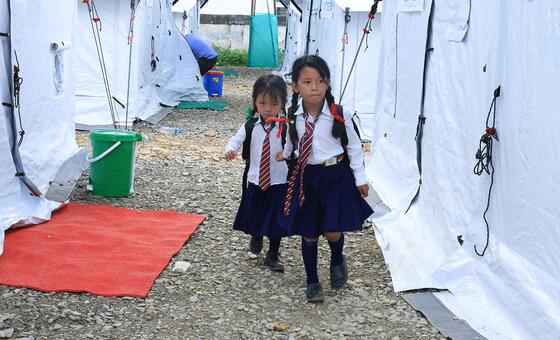
In 2025, nearly 6 million refugee children are out of school. UNHCR warns funding cuts could make it worse. Here's what's happening and why it matters.
In 2025, nearly six million refugee children around the world didn't set foot in a classroom. That's not just a statistic — it's a generation at risk. The UN Refugee Agency (UNHCR) dropped that number on Friday, and it hit hard. We're talking about kids who've already lost homes, stability, and sometimes family. Now they're losing their shot at an education, too.
You might be wondering how we got here. Honestly, it's a mix of old problems and new ones. Conflicts drag on longer than they used to. Climate disasters keep forcing families to flee. And then there's the funding crisis — the kind that makes even the most dedicated aid groups throw up their hands.
### The Funding Cliff That's Pushing Kids Out
Global funding for refugee education has been shrinking for a few years now. Governments are tightening belts, and humanitarian budgets are often the first to get cut. UNHCR says that without urgent support, millions more children could be locked out of school. We're talking about reversing years of slow, hard-won progress.
Think about it this way: you can't rebuild a country if half its kids can't read. Education isn't a luxury — it's the foundation for everything else. When refugee children miss out, we all feel it down the line. Less stability, fewer economic opportunities, more cycles of poverty and displacement.
> "Education is the one thing that can't be taken away from a child — unless we let it happen."
That quote from a refugee teacher stuck with me. She's right. We have the tools and the know-how to get these kids into classrooms. What we're missing is the will and the wallet.
### What's Actually Happening on the Ground
Let's get specific. In camps from Kenya to Jordan to Bangladesh, schools are overcrowded or simply not there. Teachers are unpaid. Supplies run out. Girls are often the first to be pulled out when money gets tight.
- **Overcrowded classrooms:** In some camps, one teacher handles 100+ students.
- **No safe transport:** Kids, especially girls, can't get to school without risking their safety.
- **Language barriers:** Many refugee children don't speak the local language, and there aren't enough bilingual teachers.
- **Funding gaps:** UNHCR reports a $1.5 billion shortfall for education programs this year alone.
Those numbers are staggering. But behind each one is a kid with a name and a dream. A girl who wants to be a doctor. A boy who wants to rebuild his village. They're not asking for much — just a chance.
### Why This Matters to All of Us
You might think, "I'm not a refugee, so why should I care?" Fair question. Here's the thing: instability doesn't stay in one place. When millions of kids grow up without education, it fuels conflict, extremism, and mass migration. It's a global problem with local consequences.
And on a human level, it's just not right. We can do better. Countries like Germany and Canada have shown that integrating refugee students works — when the funding is there. But right now, the money isn't flowing.
### What Can You Do?
You don't have to be a policymaker to make a difference. Here are a few practical steps:
- **Donate to reputable organizations** that focus on refugee education. Even $10 helps buy supplies.
- **Raise your voice.** Contact your representatives and ask them to support humanitarian aid.
- **Share stories.** The more people know, the harder it is to ignore.
- **Volunteer remotely.** Many nonprofits need tutors and mentors online.
It's easy to feel helpless when the numbers are this big. But small actions add up. And if enough of us care, maybe we can keep those six million kids from becoming a lost generation.
We've seen progress before. Let's not let it slip away.