6 Million Refugee Kids Shut Out of School—What Now?
Jennifer Moore ·
Listen to this article~3 min
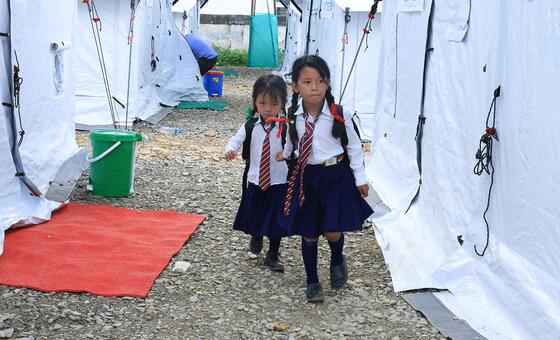
In 2025, nearly six million refugee children missed school, warns UNHCR. Funding cuts threaten to leave millions more behind. Here's why it matters and what can be done.
### A Number That Should Stop Us Cold
Nearly six million refugee children didn't step into a classroom in 2025. That's not a statistic—it's six million individual stories of potential slowly fading. The UN Refugee Agency (UNHCR) dropped this news on Friday, and it's the kind of update that should make us pause.
We're talking about kids who've already lost homes, stability, and often family. Now they're losing their shot at an education too. It's a quiet crisis that doesn't trend on social media, but it shapes futures in ways we can't undo.
### Why This Is Happening
Global funding cuts are the main culprit. When budgets shrink, refugee education is often the first thing to go. It's not that governments don't care—it's that they're making impossible choices. But here's the thing: education isn't a luxury. It's the foundation for everything that comes next.
> "Education is the one thing that can't be taken away from a child. When we deny it, we're not just failing them—we're failing our own future."
UNHCR warns that without immediate action, millions more children could be locked out of learning. And once they're out, getting them back in becomes exponentially harder.
### The Ripple Effect
When refugee kids miss school, the consequences stretch far beyond the classroom. They face higher risks of exploitation, forced labor, and early marriage. They're more likely to live in poverty as adults. Communities lose future doctors, teachers, and leaders.
Think about it: a child who misses five years of school may never catch up. That's not just a personal loss—it's a global one. We're talking about an entire generation being sidelined.
### What Can Be Done
- **Sustained funding:** Donor countries need to prioritize refugee education even when budgets are tight.
- **Flexible learning:** Programs that meet kids where they are—whether in camps, urban areas, or host communities.
- **Local integration:** Letting refugee children attend local schools benefits everyone.
- **Technology where it works:** But not as a replacement for real teachers and classrooms.
None of this is easy. But the alternative—doing nothing—costs far more in the long run.
### The Bottom Line
Six million children. That's roughly the population of Missouri. Imagine if every kid in Missouri suddenly couldn't go to school. We'd call it a national emergency. But because these children are refugees, the world often looks away.
We can't afford to keep looking away. Not if we believe in a future where every child gets a fair shot. The funding decisions made today will echo for decades. Let's make sure they echo with opportunity, not regret.