860,000 Displaced Lebanese Return Home — But the Crisis Isn't Over
Emily Brown ·
Listen to this article~5 min
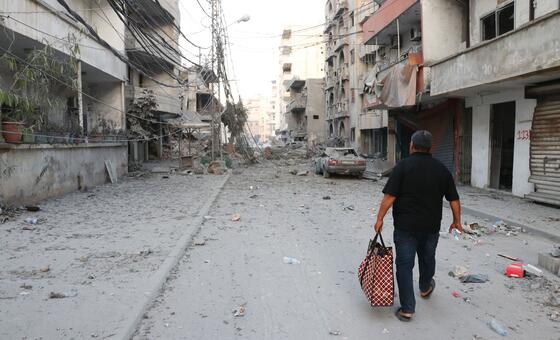
Nearly 860,000 displaced Lebanese have returned to their neighborhoods, but a lack of services, widespread damage, and instability mean the crisis is far from resolved.
It's a headline that feels like a win, right? Nearly 860,000 people who were forced to flee their homes because of the fighting in Lebanon have made their way back to their neighborhoods. You'd think that would mean the worst is behind them.
But here's the thing about returning home after a conflict: it's rarely a clean, triumphant ending. For a lot of these families, coming back means stepping into a scene of destruction, uncertainty, and a daily struggle for the most basic needs. The journey home is just the beginning of a whole new set of challenges.
Let's unpack what this number really means, what these returnees are facing, and why a return doesn't equal recovery.
### The Numbers Behind the Return
The official figure is around 860,000 people. That's roughly the entire population of a mid-sized U.S. state like Montana or Delaware. In human terms, that's a massive wave of movement, all happening in a country that's still dealing with instability on multiple fronts.
To put it in perspective, this isn't just a handful of families trickling back. We're talking about a significant portion of the internally displaced population deciding that whatever awaits them at home is better than living in temporary shelters or with host families. It's a powerful statement about human resilience, but also a stark indicator of how dire the alternatives must have felt.
### What "Home" Looks Like After the Bombs
Here's where the story gets complicated. The physical act of returning doesn't magically restore what was lost. Many of these returnees are walking into neighborhoods that have been heavily damaged or even flattened.
- **Housing damage:** Many homes are structurally unsafe, missing roofs, windows, or even entire walls.
- **Broken infrastructure:** Power grids are unreliable, water supplies are often contaminated or cut off, and sewage systems are damaged.
- **Economic collapse:** Jobs are scarce, and the local economy that people relied on has been shattered.
- **Lingering danger:** Unexploded ordnance and landmines are a very real and deadly threat in many areas.
So, while the address is the same, the life they left behind is gone. The return is more about reclaiming a piece of land than it is about resuming a normal life.
### The Services Gap: No Power, No Water, No Hope
One of the most immediate and brutal realities for returnees is the absence of basic services. Imagine coming home to a place where you can't turn on a light, can't get a glass of clean water from the tap, and can't find a doctor within a reasonable distance.
That's the daily reality for many. The state's capacity to provide these services is stretched incredibly thin, if not entirely absent. This creates a situation where people are physically present but still living in a state of emergency. It's a slow-burn crisis that doesn't make the evening news but is devastating for the families enduring it.
### A Return, Not a Resolution
It's crucial to understand that this mass return is not a signal that the crisis has ended. It's a shift in the crisis's shape. Instead of a displaced population in camps, you now have a struggling population piecing together life amid ruins.
This puts a massive strain on local communities, aid organizations, and the already fragile economy. The international community's attention might be waning, but the needs are not. In fact, the needs are becoming more complex, moving from emergency shelter to long-term reconstruction, psychological support, and economic recovery.
### The Road Ahead: What Needs to Happen
The next phase requires a coordinated effort that goes beyond just "going home." It's about rebuilding lives, not just structures.
- **Security first:** Clearing unexploded bombs and establishing a stable security environment is non-negotiable.
- **Essential services:** Restoring power, water, and healthcare must be the top priority.
- **Economic lifelines:** Providing cash assistance, micro-loans, and job opportunities so people can start earning a living again.
- **Long-term housing:** Moving beyond temporary fixes to actually repairing and rebuilding homes that are safe and livable.
### Final Thoughts: Resilience vs. Reality
The return of 860,000 people is a testament to the unbreakable spirit of the Lebanese people. It's a story of people refusing to be permanently uprooted from their land and their communities.
But we can't let that story overshadow the immense hardship that awaits them. Their resilience is not an excuse for the international community to look away. It's a call to action to help them turn a fragile return into a sustainable recovery. The journey home was the first step; the long road to rebuilding has just begun.