This AI Could Save Georgia's Native Cattle Breeds
David Taylor ·
Listen to this article~4 min
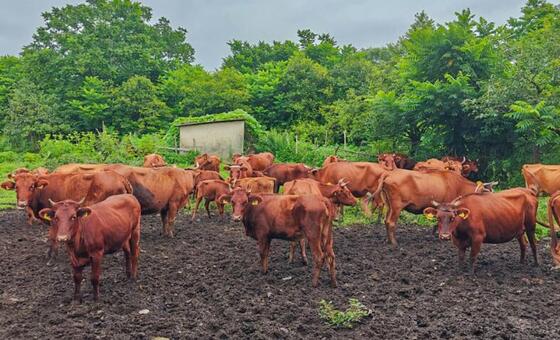
Georgia is developing an AI-powered recognition system to identify and preserve its native cattle breeds, protecting genetic diversity that could be critical for the future of farming.
When you think about technology and agriculture, your mind probably jumps to drones, automated tractors, or maybe those robotic milkers you've seen in viral videos. But here's something you might not have considered: artificial intelligence helping to identify and preserve local cattle breeds. That's exactly what's happening in the country of Georgia, and it's a project that could have big implications for genetic diversity in farming.
Georgia isn't just famous for its wine and stunning Caucasus mountain views. The country also has a rich agricultural heritage, including several native cattle breeds that have adapted to its unique climate and terrain over centuries. But here's the catch: many of these breeds are at risk. As commercial farming pushes toward a handful of high-yield global breeds, local varieties are slowly disappearing. And once genetic diversity is gone, it's gone for good.
That's where the new digital initiative comes in. The project aims to build an AI-powered recognition system specifically trained to identify Georgian cattle breeds. Think of it like facial recognition for cows, but with a much more important purpose than unlocking your phone.
### Why Genetic Diversity Matters More Than You Think
You might be wondering, "Why should I care about a few local cow breeds on the other side of the world?" It's a fair question. Here's the thing: genetic diversity in livestock isn't just about preserving tradition for its own sake. It's about resilience.
When a disease sweeps through a region, or when climate conditions shift dramatically, a genetically diverse herd has a much better chance of survival. If every cow on the planet belongs to the same few high-yield breeds, a single disease could be catastrophic. Local breeds often carry unique traits, like disease resistance, heat tolerance, or the ability to thrive on poor-quality forage. Losing those genes is like deleting a backup file you might desperately need someday.
The AI system being developed in Georgia could help farmers, researchers, and government agencies track these breeds more effectively. Instead of relying on manual identification, which is time-consuming and prone to human error, the AI can quickly and accurately recognize specific breeds from photos. That data can then be used to monitor population sizes, identify at-risk herds, and make informed conservation decisions.
### How the AI System Works
While the project is still in its early stages, the concept is straightforward. Researchers are collecting thousands of images of Georgian cattle breeds, tagging them with detailed information about physical characteristics. The AI model learns to recognize the subtle differences between breeds, like coat color patterns, horn shapes, and body proportions.
Once the system is trained, it could be deployed through a simple mobile app. A farmer in a remote mountain village could snap a photo of a cow and instantly get information about its breed. That's a game-changer for data collection. Instead of sending researchers to every corner of the country, the data comes to them.
### A Blueprint for Other Countries
Here's why this project is so exciting: it's not just about Georgia. This approach could be replicated in other countries facing similar challenges. If AI can successfully identify and track cattle breeds in Georgia, the same technology could be adapted for sheep, goats, pigs, or even endangered wildlife species.
Of course, there are challenges ahead. Training an AI model requires a massive amount of high-quality data, and collecting that data takes time. There's also the question of access, making sure that small-scale farmers, who are often the ones raising these native breeds, can actually use the technology.
But the potential payoff is huge. By combining cutting-edge AI with age-old farming traditions, Georgia is showing that technology doesn't have to replace tradition; it can help protect it. And in a world where genetic diversity is shrinking every year, that's a project worth watching.
So the next time you see a cow grazing in a field, take a moment to appreciate it. It might just be carrying genes that could one day prove invaluable to the future of farming.