How Brazil's Indigenous Youth Are Using Art to Fight for Their Future
Amanda Moore ·
Listen to this article~4 min
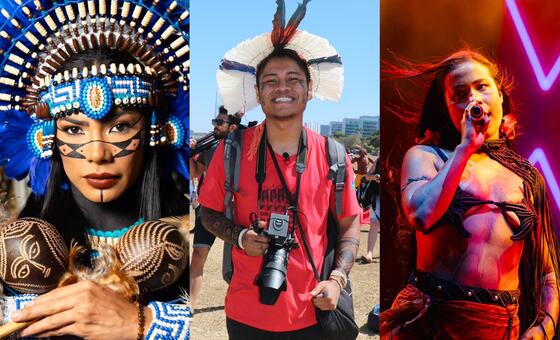
Brazil's indigenous youth are turning to social media, music, photography, and dance to resist climate change and cultural erasure. This is how art becomes a weapon of memory and a bridge to the world.
Climate change is redrawing the map of Brazil's indigenous lands, and the people who have called those territories home for centuries are feeling the shift in deeply personal ways. Temperatures are climbing, wildfires are tearing through forests that once felt eternal, and the food sources that sustained entire communities are vanishing. But here's the thing: a new generation is stepping up, and they're not just marching or petitioning. They're creating.
This isn't your grandfather's protest movement, and that's exactly the point. Young indigenous artists are finding that a photograph, a song, or a dance video can travel further and hit harder than a printed pamphlet ever could. In a world where attention is the scarcest resource, they're claiming it on their own terms.
### The Digital Frontier as a Gathering Place
Think about what social media has done for movements everywhere. Now imagine what it means for a young person from a remote village whose stories have been ignored or romanticized by outsiders for generations. Platforms like Instagram, TikTok, and YouTube give them a direct line to the world, no gatekeepers required.
- A short clip of a traditional dance can rack up millions of views in days
- A photo essay on deforestation can put faces to statistics that politicians prefer to keep abstract
- A song in an indigenous language can become a viral anthem, introducing millions to melodies that were never meant to be lost
It's not about going viral for the sake of it. It's about shifting the conversation. When a young indigenous woman posts a video of her grandmother teaching her to weave, she's not just sharing a craft. She's documenting a living culture that refuses to be museumified.
### Art as a Weapon of Memory
Here's the part that often gets overlooked: art isn't just expression for these communities. It's preservation. When a language has only a few hundred speakers left, a song sung in that language becomes an act of resistance. When a ritual dance is filmed and shared, it becomes a record that can't be burned or bulldozed.
"We're not just artists," one young activist from the Xingu region told me last spring. "We're archivists of a future that some people want to erase." She's right. The fires that swept through the Amazon in recent years didn't just destroy trees. They destroyed habitats, histories, and homes. But every photo, every track, every frame of video is a seed that can regrow somewhere else.
### What This Means for the Rest of Us
If you're reading this from a city apartment or a suburban home, it's easy to feel like this is someone else's fight. But the climate crisis doesn't respect borders, and neither does culture. When indigenous lands shrink, we all lose a piece of the planet's biological and cultural diversity. When those communities thrive, they offer models of stewardship that industrial societies have forgotten.
So what can you actually do? It starts with listening. Follow indigenous creators, amplify their work, and push back when media outlets reduce them to stereotypes. Support organizations that fund indigenous-led conservation and arts programs. And when you see a video of a young Brazilian artist dancing in a clearing that used to be forest, don't just scroll past. Understand that you're watching resistance in its most beautiful form.
The tools have changed. The stakes haven't. And the young people of Brazil's indigenous nations are proving that when the world tries to erase you, sometimes the most powerful thing you can do is create something the world can't ignore.