Brazil's Indigenous Youth Are Fighting for Their Land With Art
Klaus Fischer ·
Listen to this article~5 min
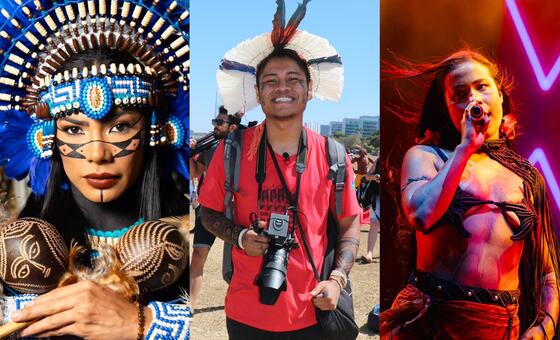
As climate change reshapes Indigenous lands in Brazil, a new generation fights back—not with spears, but with cameras, music, and social media. Their art is becoming a powerful tool for survival and resistance.
The Amazon isn't just burning. It's changing in ways that are hard to watch from the outside, and even harder to live through on the ground. For Brazil's Indigenous communities, the climate crisis isn't a distant headline—it's a daily reality that reshapes rivers, kills crops, and pushes animals further into the forest. But here's the thing: a new generation is stepping up, and they're not using spears or protests alone. They're using cameras, microphones, and social media feeds.
These young Indigenous artists and activists are turning their pain into a powerful visual language. They're documenting the fires that rage through ancestral lands, the rivers that shrink to muddy streams, and the food sources that vanish with each dry season. And in doing so, they're building a digital archive of resistance that the world can't ignore.
### The Climate Crisis Hits Home
If you've ever spent a summer in the U.S. Southwest, you know what oppressive heat feels like. Now imagine that heat arriving earlier, staying longer, and bringing wildfires that never seem to end. That's what many Indigenous communities in Brazil are experiencing—except their homes are often deep in the rainforest, where fire was once a rarity.
Temperatures in parts of the Amazon have risen by about 1.5 degrees Fahrenheit over the past few decades. That might not sound like much, but for ecosystems that rely on humidity and shade, it's a tipping point. Rivers that once provided fish for entire villages are now too warm or too shallow. Crops like manioc and corn are failing in areas where they've grown for centuries.
The result? Food insecurity. Families that used to live off the land now depend on government aid or travel miles to find food. And when your food source disappears, so does your culture. Recipes, ceremonies, and stories tied to specific plants and animals start to fade.
### Art as a Weapon of Resistance
Here's where the story takes a hopeful turn. Instead of waiting for permission to be heard, young Indigenous creators are making their own platforms. They're posting short videos on Instagram and TikTok that show the reality of life on the front lines. They're releasing music that blends traditional chants with modern beats. They're photographing their elders, their rituals, and their daily struggles.
This isn't just self-expression. It's strategy.
- **Social media** lets them bypass traditional media gatekeepers who often ignore or misrepresent Indigenous issues.
- **Music** carries emotion in a way that statistics can't. A song about a dying river hits harder than a report about water levels.
- **Photography** creates a visual record that can be used in legal battles over land rights.
- **Dance** preserves traditions that might otherwise be lost, while also attracting younger audiences who grew up online.
One young activist from the Xingu region put it this way: "When I post a video of my grandmother planting cassava, I'm not just showing the world our life. I'm saying we're still here, and we're not leaving."
### Digital Tools, Real-World Impact
What's exciting is that this digital resistance is translating into tangible wins. Land demarcation cases have gained traction when video evidence goes viral. International NGOs have used Indigenous-shot footage to pressure Brazilian authorities. And young creators are building networks that connect remote villages to urban allies.
Of course, there are challenges. Internet access is still patchy in many areas, and some activists face threats from loggers and ranchers who don't want their activities documented. But the momentum is real.
### Why This Matters Beyond Brazil
You might be reading this from a city in the U.S., wondering what this has to do with your life. The answer is everything. The Amazon produces about 20% of the world's oxygen and absorbs massive amounts of carbon dioxide. When Indigenous people protect their land, they're protecting the entire planet's climate system.
Plus, there's a lesson here for all of us: when the systems we rely on start to crumble, creativity becomes a survival tool. These young artists are showing that you don't need a seat at the table to change the conversation. Sometimes, you just need a phone, a story, and the courage to hit record.
The fight for Brazil's Indigenous lands is far from over. But with this new generation leading the charge, the world is finally starting to listen.