How Brazil's Indigenous Youth Are Fighting Back With Art
Sarah Jenkins ·
Listen to this article~4 min
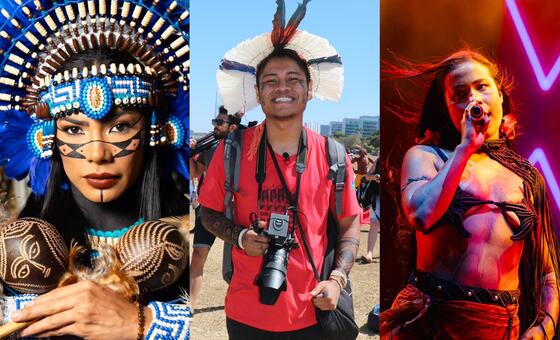
As climate change reshapes Brazil's Indigenous lands, a new generation is turning to social media, music, photography, and dance to fight for their rights and their future.
The Amazon isn't just a place on a map. For Brazil's Indigenous peoples, it's home—a living web of memory, language, and tradition that has survived centuries of pressure. But now, a new kind of threat is reshaping that home, and it's moving faster than anyone expected.
Climate change is redrawing the boundaries of everyday life. Temperatures are climbing, dry seasons stretch longer, and wildfires that once felt rare now roar through the forest with terrifying regularity. For many Indigenous communities, the land their grandparents walked is becoming harder to read. Food sources are shifting. Rivers behave differently. The ground itself feels less certain.
Yet out of this uncertainty, something remarkable is happening. A younger generation—born into a digital world their elders never imagined—is stepping forward. They're not just enduring the changes. They're pushing back, using tools that didn't exist a generation ago.
### A New Kind of Resistance
For years, the fight for Indigenous rights in Brazil was fought in courts, in protests, and on the front lines of deforestation. Those battles are far from over. But today, a parallel struggle is unfolding online, where young Indigenous creators are turning social media, music, photography, and dance into a powerful form of resistance.
Think about what that means. A teenager in a remote village can now share a photo of a burning hillside with the world in seconds. A dancer can post a traditional ritual and have it seen by millions. A musician can blend ancestral rhythms with modern beats, creating something that feels both ancient and urgently new.
This isn't just about visibility, though that matters. It's about control over narrative. For too long, outsiders told the story of Brazil's Indigenous peoples—often through a lens of pity or exoticism. Now, young Indigenous voices are taking the microphone themselves.
### Art as a Weapon and a Bridge
Art has always been central to Indigenous cultures in Brazil. Body paint, song, storytelling, and ceremony are not separate from life; they are life. What's changed is the stage.
Digital platforms offer something unprecedented: scale. A single viral post can reach more people than a year of advocacy work might have a decade ago. And unlike traditional media, these platforms are relatively accessible. You don't need a production studio or a press pass. You need a phone, a signal, and something to say.
But the younger generation is doing more than broadcasting. They're building bridges between worlds. They translate their grandparents' knowledge into digital formats, making it accessible to non-Indigenous audiences. They collaborate with environmental activists, journalists, and educators. They're not retreating from the modern world—they're reshaping it from within.
### The Stakes Couldn't Be Higher
Here's the sobering reality: the challenges are immense. Climate change doesn't pause for hashtags. Land rights are still contested, and violence against Indigenous communities remains a serious concern. The digital divide is real too—many villages lack reliable internet access, and connectivity can be expensive.
Still, there's a momentum that's hard to ignore. Young Indigenous Brazilians are showing that resilience isn't just about surviving. It's about adapting, creating, and refusing to be silenced. They're proving that the fight for their land is also a fight for their culture—and that both can be waged with a camera, a song, or a dance.
### What This Means for the Rest of Us
For those of us watching from outside, there's a lesson here. The climate crisis often feels abstract—a problem for future generations or distant places. But the Indigenous youth of Brazil remind us that it's personal, immediate, and deeply human. They're not waiting for permission to speak. They're not waiting for the perfect conditions.
They're creating their own platform, their own art, their own future. And in doing so, they're showing us all what genuine resistance looks like in the 21st century—rooted in tradition, fluent in technology, and unafraid to be seen.