How Brazil's Indigenous Youth Are Using Art to Fight Back
Ethan Cross ·
Listen to this article~5 min
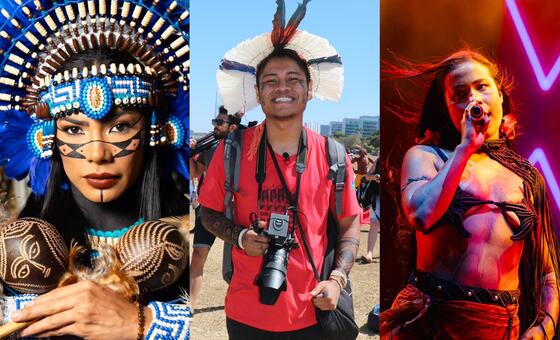
Brazil's Indigenous youth are facing climate-driven devastation head-on. Instead of retreating, they're using music, photography, dance, and social media to fight for their lands, their culture, and their future.
The Amazon is changing, and not in a good way. Temperatures are climbing, wildfires are tearing through the rainforest, and ancestral lands that have sustained Indigenous communities for centuries are disappearing. For Brazil's native peoples, this isn't a distant threat or a headline on a news feed. It's happening in their backyards, and it's reshaping their way of life.
But here's the thing about crisis: it often sparks creativity. A new generation of Indigenous Brazilians is stepping into the spotlight, and they're armed with something unexpected — art. Through social media, music, photography, and dance, these young activists are turning their culture into a powerful form of resistance. They're not just fighting to survive; they're fighting to be heard, seen, and understood on their own terms.
### The Ground They're Losing
Let's talk about what's at stake. The lands that Indigenous communities depend on are under siege from multiple directions at once.
- **Rising temperatures** are altering the delicate balance of the rainforest ecosystem, making it harder for traditional crops to grow.
- **Wildfires** — many of them intentionally set to clear land for cattle ranching and soy farming — are destroying habitats that have existed for millennia.
- **Food sources** that have sustained families for generations are vanishing, forcing communities to adapt or go hungry.
- **Illegal mining and logging** continue to encroach on protected territories, often with little consequence.
These aren't just environmental issues. They're existential ones. When you lose your land, you lose your history, your language, your connection to your ancestors. It's a domino effect that threatens the very fabric of Indigenous identity.
### Why Art Matters Now
So why art? Why would a young person choose to pick up a camera or a microphone when their homeland is literally burning?
Because art cuts through. It reaches people in ways that statistics and policy briefs can't. A single photograph of a charred forest can say more than a thousand pages of environmental reports. A song sung in an ancestral language can make someone on the other side of the world feel the weight of what's being lost.
Digital platforms have leveled the playing field. Twenty years ago, Indigenous voices were largely confined to local communities or academic circles. Today, a teenager in a remote village can post a video that reaches millions. That's not just visibility — that's power.
### The Tools of Resistance
Here's what this new wave of Indigenous activism actually looks like in practice:
**Social media** has become a megaphone. Young activists are using Instagram, TikTok, and YouTube to document their daily lives, share their traditions, and call out injustices in real time. It's raw, unfiltered, and incredibly effective.
**Music** is carrying ancestral languages into the mainstream. Artists are blending traditional rhythms with contemporary beats, creating a sound that's both rooted in history and utterly modern. It's a way of saying: we're still here, and we're not going anywhere.
**Photography** is providing a counter-narrative to the images that dominate global media. Instead of showing Indigenous people as victims or relics of the past, these photographers capture resilience, joy, and everyday life. They're controlling their own representation.
**Dance** is preserving cultural practices that could otherwise be lost. When young people learn the dances of their grandparents, they're not just performing — they're keeping a lineage alive.
### A Generation Refusing to Be Silent
The most striking thing about this movement is its refusal to accept the narrative that Indigenous peoples are passive victims of climate change. They're active agents in their own story, finding innovative ways to push back.
"Our ancestors fought for this land with their lives," says one young activist from the Xingu region. "We're fighting for it with our voices, our art, and our presence in spaces we were never meant to occupy."
That sentiment captures something essential. This isn't just about preserving the past — it's about building a future where Indigenous voices are impossible to ignore. The art they're creating today will be part of the historical record for generations to come.
### What the Rest of Us Can Learn
There's something profoundly hopeful about this story, even amid the devastation. It reminds us that creativity can flourish in the darkest times, and that the tools we have at our disposal — our phones, our platforms, our talents — can be used for something greater than ourselves.
The young Indigenous artists of Brazil are showing us that resistance doesn't always look like protest signs and barricades. Sometimes it looks like a dance video, a song on Spotify, or a photograph that captures a moment of pure, defiant beauty.
And that's a lesson worth paying attention to, no matter where you live.