How Brazil's Indigenous Youth Are Turning Art Into Resistance
Eleanor Vance ·
Listen to this article~5 min
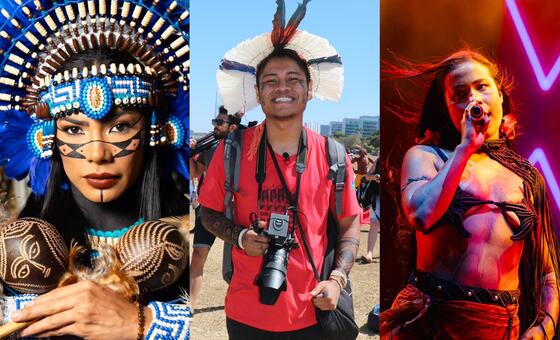
Brazil's Indigenous youth are using music, photography, and social media to fight climate change and protect their ancestral lands. This is how art became their most powerful tool.
When you think about resistance movements, your mind might jump to protests, legal battles, or political speeches. But in Brazil, something different is happening. A new generation of Indigenous creators is picking up cameras, microphones, and paintbrushes instead. And honestly? It's working in ways that traditional activism often can't reach.
Climate change is redrawing the map of Indigenous lands across Brazil. Temperatures are climbing, wildfires are tearing through the Amazon, and ancestral territories are shrinking. Food sources that families have relied on for generations are disappearing. It's a crisis that feels overwhelming, especially when you're watching it happen in real time.
Yet here's the twist: the same digital age that amplifies climate disasters also gives young Indigenous voices a global stage. Social media, music, photography, and dance have become more than creative outlets. They're now frontline tools for survival, visibility, and change.
### The Digital Frontier as a New Territory
For decades, Indigenous communities fought for physical land rights. That fight is far from over, but today's youth are also claiming space in a different kind of territory: the digital world. Platforms like Instagram, TikTok, and YouTube let them bypass traditional media gatekeepers and speak directly to millions of people.
This isn't just about posting pretty pictures. It's about narrative control. When young Indigenous creators share their own stories, they push back against centuries of outsiders defining who they are. They show the world the real, living, breathing cultures that refuse to be erased.
Some of the most powerful content comes from documenting what's being lost. A short video of a drying riverbed. A photo series of a forest after a fire. A song that carries the rhythm of a language spoken by only a few hundred people left. These aren't just artistic statements. They're evidence, memory, and mourning all at once.
### Music, Dance, and the Language of the Body
Music has always been central to Indigenous life in Brazil, but young artists are now blending ancestral sounds with contemporary genres. The result is something entirely new, yet deeply rooted. These tracks travel far beyond village borders, finding listeners in São Paulo, New York, and London.
Dance serves a similar purpose. Traditional movements carry stories that words sometimes can't express. When performed on a digital stage, they become a living archive. One that can't be burned or bulldozed.
What's striking is how these art forms create community across distances. An Indigenous teenager in a remote village can watch a dance tutorial from another tribe hundreds of miles away. They can learn, adapt, and share their own version. It's cultural exchange powered by Wi-Fi.
### The Power of Visual Storytelling
Photography has become particularly potent. A single image can capture what pages of reports cannot. The grief in an elder's eyes. The resilience of a child planting seeds in scorched earth. The defiant beauty of traditional dress against a backdrop of smoke.
These photos circulate widely, often picked up by international outlets. They humanize a crisis that can feel abstract when you're reading statistics from afar. They remind us that climate change isn't just about rising temperatures. It's about people losing their homes, their histories, and their futures.
Here's what makes this moment different from past movements:
- **Speed**: A post can reach millions within hours, no press conference needed
- **Authenticity**: Content comes directly from community members, not outside reporters
- **Continuity**: The digital record persists even when physical spaces are destroyed
- **Solidarity**: Indigenous groups across Brazil and beyond can coordinate and support each other
### Why This Matters Beyond Brazil
The stakes here go far beyond one country. The Amazon affects global weather patterns. Indigenous knowledge holds keys to sustainable land management that scientists are only beginning to understand. When these cultures thrive, everyone benefits.
But there's something more personal at stake too. Watching young people turn pain into art, grief into action, and loss into beauty, is genuinely inspiring. It's a reminder that creativity isn't a luxury. Sometimes it's the most practical tool we have.
As one young photographer put it, "They took our land, but they can't take our stories." That sentiment captures the spirit of this movement. The land may be under threat, but the narrative is being reclaimed, frame by frame, note by note, step by step.
This is resistance for the 21st century. Rooted in tradition, powered by technology, and carried forward by a generation that refuses to be silent. And honestly, it gives you hope. Not the naive kind, but the real, grounded hope that comes from watching people fight for what matters with everything they've got.