Brazil's Indigenous Youth Are Turning to Art to Fight for Their Land
Astrid Nilsson ·
Listen to this article~5 min
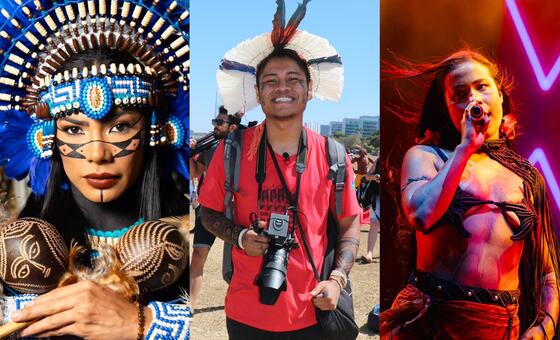
As climate change reshapes Indigenous lands in Brazil, a new generation of artists is using social media, music, photography, and dance to fight for their rights and preserve their culture.
The Amazon isn't just a place on a map. For Brazil's Indigenous peoples, it's home—a living library of ancestral knowledge, medicine, and memory. But as climate change redraws the boundaries of their territories, a new generation is stepping up. They're not marching with spears alone. They're picking up cameras, microphones, and dance shoes, and turning art into one of the most powerful tools of resistance they've ever had.
It's easy to think of climate change as a distant problem—something we'll deal with later. But for these communities, the effects are already here. Temperatures are climbing, rivers are running dry, and wildfires are consuming land that has sustained families for generations. Traditional food sources are vanishing, and the ground beneath their feet feels less certain every year.
Yet amid this upheaval, something remarkable is happening. Young Indigenous artists are using social media, music, photography, and dance to reclaim their narratives. They're not waiting for permission to be heard. They're creating their own platforms, and the world is starting to listen.
### The Digital Frontier as a New Territory
For decades, the fight for Indigenous rights in Brazil was fought in courts, on the streets, and sometimes in the shadows. Today, it's also being fought online. Social media has become a kind of digital territory—a space where young voices can reach millions without needing a major media outlet to amplify them.
Think about it: a short video of a traditional dance, filmed on a smartphone and posted to Instagram, can travel further in a day than a tribal elder's testimony might travel in a year. That's not a replacement for the real thing, but it's a powerful complement. It builds visibility, and visibility builds pressure.
- **Instagram and TikTok** are being used to document daily life and environmental changes in real time.
- **YouTube channels** are teaching traditional songs and languages to a global audience.
- **Podcasts and live streams** are creating spaces for dialogue between Indigenous and non-Indigenous communities.
This isn't just about going viral. It's about building a movement that can't be ignored.
### Music as a Voice for the Voiceless
Music has always been central to Indigenous culture, but today's artists are fusing ancestral rhythms with contemporary beats to create something entirely new. These songs aren't just entertainment—they're anthems of resistance. They carry stories of loss, resilience, and hope, and they invite listeners to feel what words alone can't express.
Take the rise of Indigenous rap and funk in Brazil's cities. Young artists are using these genres to talk about land rights, police violence, and environmental destruction in ways that resonate with urban audiences. It's a bridge between two worlds, and it's changing how people think about who belongs in the Amazon.
### Photography and Dance: Documenting What's at Stake
A photograph can freeze a moment in time, but for these artists, it does more than that. It creates evidence. When a forest is burned or a river is poisoned, having visual proof is crucial. But photography also captures beauty—the faces of elders, the patterns of traditional dress, the quiet strength of a community that refuses to disappear.
Dance, too, has become a form of storytelling. It's not just performance; it's prayer, protest, and preservation all at once. Through movement, young dancers honor their ancestors while making space for new expressions of identity. In a world that often tries to erase them, dancing is a way of saying, "We are still here."
> "Art doesn't just reflect reality—it shapes it. When we dance, we're not just moving our bodies. We're moving the conversation."
### Why This Matters Beyond Brazil
This isn't a local story. The Amazon is often called the lungs of the Earth, and what happens there affects the entire planet. When Indigenous communities lose their land, we all lose—biodiversity, carbon storage, and irreplaceable cultural knowledge.
But there's also a lesson in hope. These young artists are showing that creativity can be a form of survival. They're proving that even when the ground shifts beneath you, you can find new ways to stand firm.
The next time you scroll past a video of a Brazilian Indigenous dancer or hear a song with rhythms you've never encountered before, take a moment. You're not just seeing art. You're witnessing a generation fighting for their future—and for all of ours.