Brazil's Indigenous Youth Are Fighting Back With Art and the Internet
William Taylor ·
Listen to this article~5 min
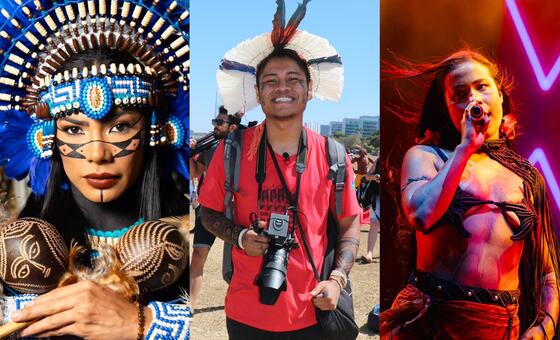
As climate change reshapes Brazil's Indigenous lands, a new generation is fighting back with music, photography, and social media—turning digital spaces into powerful tools for resistance and cultural preservation.
Climate change is redrawing the map of Brazil, and nowhere is that more visible than on Indigenous lands. Temperatures are climbing, wildfires are tearing through forests, and ancestral territories are shrinking by the year. For the young people raised in these communities, the losses are personal: they're watching their grandparents' homelands disappear, along with the food sources their families have relied on for generations.
But here's the thing about this new generation: they're not just sitting back and watching it happen. They're picking up cameras, microphones, and paintbrushes, and they're turning their grief into something powerful. Social media, music, photography, and dance have become their weapons of choice, and honestly? It's working.
### A Digital Frontline
The internet isn't just a place for memes and cat videos. For Indigenous youth in Brazil, it's become a lifeline. Platforms like Instagram and TikTok let them share their realities with the world, bypassing the traditional media outlets that have often ignored or misrepresented their communities. A single photo of a burning forest or a video of a traditional dance can reach millions of people in a matter of hours.
What makes this so effective is the authenticity. These aren't polished PR campaigns or corporate social responsibility reports. This is raw, real, and unapologetically personal. When a young Kayapó woman posts about the river that her family has fished in for centuries, you feel it. When a Guarani teenager films his grandmother teaching him the old songs, you understand what's at stake.
### Art as Resistance
Art has always been a form of resistance for marginalized communities, and Brazil's Indigenous youth are proving that this tradition is alive and well. Music, in particular, has become a powerful tool. Young artists are blending traditional rhythms with modern beats, creating a sound that's both rooted in their heritage and undeniably contemporary.
Photography is another medium that's gaining traction. These young photographers aren't just documenting their lives; they're reclaiming their own narrative. For decades, outsiders have controlled the images of Indigenous peoples, often reducing them to stereotypes. Now, the tables have turned. They're showing the world who they really are, in all their complexity and beauty.
Dance, too, plays a crucial role. Traditional dances that were once performed only in village ceremonies are now being shared online, preserving them for future generations while also educating outsiders. It's a beautiful way to say, "We're still here, and we're not going anywhere."
### The Stakes Couldn't Be Higher
Let's be clear about what's driving this movement. The Amazon rainforest, which covers roughly 2.1 million square miles of Brazil, is losing trees at an alarming rate. In 2022 alone, deforestation increased by 22% compared to the previous year, according to Brazil's National Institute for Space Research. For Indigenous communities, this isn't just a statistic; it's the loss of their homes, their medicine, and their spiritual connection to the land.
The effects are immediate and physical. Temperatures in some parts of the Amazon have risen by as much as 4 degrees Fahrenheit over the past few decades. Wildfires, once rare, now rage across thousands of acres every dry season. And as the land degrades, so do the traditional food sources that have sustained these communities for centuries.
### Why This Matters to You
You might be wondering why you should care about what's happening in a rainforest thousands of miles away. Here's the thing: the Amazon produces about 20% of the world's oxygen and is home to an estimated 10% of all known species. What happens there affects the global climate, which affects everything from weather patterns in the United States to the price of your groceries.
But there's another reason to pay attention. The way these young people are using art and technology to fight for their rights is a lesson for all of us. They're showing that you don't need millions of dollars or political connections to make your voice heard. Sometimes, all you need is a smartphone, a creative spark, and the courage to share your story.
### A New Chapter
This movement is still young, but it's already making waves. Indigenous influencers are gaining massive followings. Music festivals are featuring Indigenous artists on main stages. And perhaps most importantly, the broader Brazilian society is starting to listen.
There's a long road ahead. Land rights battles are still being fought in courts and in the streets. The government's policies on Indigenous territories remain inconsistent at best. But this new generation has something that their ancestors didn't: a global audience. And they're using it to ensure that their voices, and their cultures, don't just survive—they thrive.