Can Clean Energy Infrastructure Actually Restore the Land It Sits On?
William Moore ·
Listen to this article~4 min
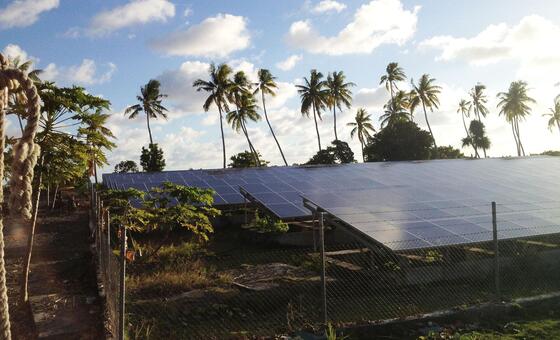
What if renewable energy infrastructure could heal the land it sits on? Experts at the UN desertification conference in Mongolia are showing how solar and wind projects can restore soil, boost biodiversity, and fight climate change—all at once.
What if the infrastructure we build to fight climate change could also help heal the very ground beneath it? That's the bold question experts tackled at the United Nations Convention to Combat Desertification, held in Ulaanbaatar, Mongolia. And honestly, the answer might surprise you.
For years, we've thought of renewable energy and land conservation as competing interests. Solar farms need acres of open space. Wind turbines need wide corridors. But what if we could flip that script? What if the same panels that generate clean power could also protect soil, boost biodiversity, and bring degraded land back to life?
### The Land-Energy Dilemma
Here's the tension: clean energy demands land—lots of it. A single utility-scale solar project can cover hundreds of acres. Wind farms stretch across miles. And as we ramp up renewable capacity to meet climate goals, that footprint is only going to grow.
But here's the twist: much of that land isn't pristine wilderness. In the United States, for example, we're often talking about retired farmland, overgrazed rangeland, or abandoned industrial sites. These are places that have already lost much of their natural vitality. So why not use them for dual purposes?
### Restoration as a Byproduct
That's exactly what some forward-thinking projects are doing. In Mongolia—a country where desertification is a pressing threat—experts are exploring how solar and wind installations can be designed to support soil health and vegetation. The shade from solar panels can reduce evaporation, helping moisture stay in the ground. Wind turbines can be positioned to break harsh winds that dry out topsoil.
One presenter shared how a solar farm in the American Southwest, once a dusty patch of overgrazed land, is now home to native grasses and pollinators. The panels provide just enough shade to let seedlings take root. Bees and butterflies have returned. Even small mammals have shown up. All while the farm generates clean electricity for thousands of homes.
### Real-World Examples That Work
- **Agrivoltaics in the U.S.**: Farmers in places like Colorado and Massachusetts are pairing solar panels with crops. The panels protect plants from extreme heat while generating power. Yields often stay stable, and the soil improves because it's not being tilled as heavily.
- **Wind Corridors as Wildlife Havens**: In the Great Plains, wind turbines are being placed on land that was previously degraded by overgrazing. With careful planning, these corridors can become safe passages for pronghorn antelope and other species.
- **Solar Grazing**: Some solar sites now host sheep that keep vegetation down naturally. The sheep fertilize the soil with their manure, and the land becomes healthier over time.
### How We Can Scale This Up
Here's the good news: we don't need to reinvent the wheel. Many of these practices are proven and cost-effective. But scaling them requires a shift in how we think about renewable energy projects. Instead of just minimizing harm, we can design them to actively restore ecosystems.
That means:
- Choosing sites that are already degraded, not pristine land.
- Using native plants in landscaping around panels and towers.
- Designing drainage systems that prevent erosion and capture rainwater.
- Working with local communities and ecologists from the start.
### A Win-Win for Climate and Land
The conversation in Ulaanbaatar reminded us that climate action and land restoration aren't enemies—they're partners. Every acre of solar panels can be an acre of restored prairie. Every wind turbine can stand in a field that's greener than before.
It's not just about producing clean energy anymore. It's about healing the land we've already used. And that's a future worth building.
So the next time you see a solar farm or a wind turbine, take a closer look. You might be witnessing something more than clean power. You might be seeing the beginning of a land revival.