Civilian Toll in Ukraine Hits a Grim Milestone This July
Sarah Atkinson ·
Listen to this article~5 min
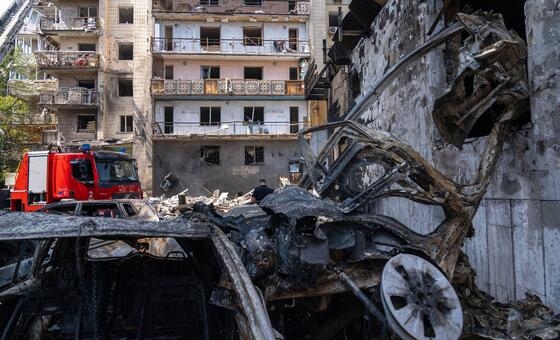
The UN reports July 2026 saw the highest civilian casualties in Ukraine since March 2022. A sobering look at the numbers, why this month was so deadly, and what it signals for the future.
When the numbers came out this week, they landed like a punch to the gut. The UN's Human Rights Monitoring Mission in Ukraine reported that July 2026 saw the highest number of civilian casualties—both killed and wounded—in any single month since March 2022. That's over four years of relentless conflict, and yet this past July somehow managed to be the deadliest stretch we've seen in that entire time.
It's the kind of statistic that's easy to gloss over in a news feed, but it deserves a pause. We're not talking about abstract figures on a spreadsheet. We're talking about real people—families, neighbors, kids—whose lives were upended or ended in just thirty-one days. So let's break down what this report actually tells us, why it matters, and what it might mean for the months ahead.
### What the UN Report Actually Says
According to the UN monitoring mission, the casualty count for July 2026 exceeded every other month since the full-scale invasion began back in early 2022. That includes the brutal early months of the war, which many thought would be the peak. The fact that we're seeing higher numbers now, years later, is a sobering reality check.
The report doesn't just tally deaths; it includes the wounded, which gives us a fuller picture of the human cost. And while the mission didn't break down every single incident in this initial summary, the trend line is unmistakable—the violence is not easing. If anything, it's intensifying in ways that are hitting civilians harder than before.
### Why This Month Was So Devastating
There's no single reason for the spike, but a few factors likely played a role. Increased use of long-range weapons, more frequent strikes on residential areas, and a general escalation in frontline fighting all contribute. When you combine that with the fact that many people have nowhere safe to go, the result is a tragic math problem where civilians bear the brunt.
It's also worth noting that this isn't just about the front lines. Urban centers far from the actual combat zones have seen more attacks, which means the danger is spreading. That's a shift from earlier phases of the war, when most casualties were concentrated in specific regions.
### The Bigger Picture: A Four-Year Trend
To put this in perspective, consider the timeline. In March 2022, the world watched in horror as the invasion unfolded, and the casualty numbers were staggering. For a long time, those early months stood as the grim benchmark. Now, July 2026 has surpassed it. That's not just a statistical blip; it's a signal that the conflict is entering a new, more dangerous phase.
- **Civilian deaths are rising** despite international calls for restraint.
- **Wounded numbers are climbing** as medical infrastructure struggles to keep up.
- **Geographic spread is widening**, putting more people at risk.
These aren't just bullet points; they're warnings. Every month that passes without a meaningful de-escalation makes the next month more dangerous.
### What This Means for the Future
If July's numbers are any indication, the coming months could be even worse. Winter is approaching, and historically, that's when both sides have launched major offensives. The UN's monitoring mission will keep tracking, but their reports are only as good as the access they have. And in a war zone, access is never guaranteed.
For those of us watching from the outside, it's easy to feel helpless. But staying informed is part of the equation. The more attention this gets, the harder it is for the international community to look away. So while this report is bleak, it's also a call to action—a reminder that these numbers represent lives that deserve better.
### A Moment to Reflect
I'll be honest—writing about this isn't easy. It's tempting to focus on strategy, politics, or the broader geopolitical implications. But at the end of the day, this is about people. Every single casualty number in that UN report has a name, a story, and people who loved them. That's the part that's easy to forget when we're scrolling through headlines.
So here's the takeaway: July 2026 will be remembered as a dark month in an already dark conflict. But it doesn't have to be the new normal. The fact that we're talking about it, that the UN is documenting it, and that people are paying attention—that's a start. It's not enough, but it's something. And in a war that's dragged on this long, holding onto that something might be all we can do.