Clean Energy Needs Land. Could It Also Help Restore It?
Sarah Davis ·
Listen to this article~4 min
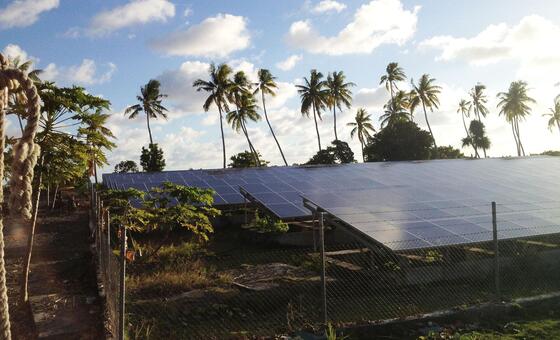
Can renewable energy projects actually restore the land they occupy? Experts at a UN conference think so, and real-world examples show how solar and wind farms are helping revive degraded soil.
What if the very infrastructure we build to fight climate change could also breathe new life into the ground beneath it? It's a question that sounds almost too good to be true, but experts at a recent United Nations conference in Ulaanbaatar, Mongolia, believe it's not just possible—it's already happening.
The event, focused on combating desertification, brought together specialists from around the globe to tackle a tricky puzzle: how do we scale up renewable energy without sacrificing the health of the land we depend on? The answer, it turns out, isn't about choosing one over the other. It's about finding ways to make them work together.
### The Tension Between Green Energy and Healthy Soil
Here's the thing about solar and wind farms: they take up space. A lot of it. A utility-scale solar installation can require anywhere from 5 to 10 acres per megawatt. When you're talking about powering entire cities, that adds up to thousands of acres of land that might otherwise be used for farming or left as natural habitat.
For a long time, the conversation was pretty black and white. You either had a solar panel or you had a crop field. You either had a wind turbine or you had grazing land. But that binary thinking is starting to crack, and what's emerging is a more nuanced approach that could be a game-changer for rural communities and ecosystems alike.
### Real-World Examples That Are Already Working
During the conference, participants shared success stories from different corners of the world, and they're genuinely inspiring. In some regions, solar farms are being designed with pollinator-friendly plants growing between and beneath the panels. These aren't just pretty wildflowers—they're creating habitats for bees and butterflies that have been struggling for decades.
Other projects are taking a more direct approach to land restoration. In arid areas, the shade from solar panels actually helps retain soil moisture, making it possible to grow drought-resistant crops that wouldn't stand a chance in the open sun. It's a clever little ecosystem where the infrastructure and the land support each other.
Here are a few of the most promising strategies being discussed:
- **Agrivoltaics**: Growing crops under and around solar panels, which can increase water efficiency by up to 30% in some cases
- **Silvopasture with wind turbines**: Combining livestock grazing with tree planting and wind energy on the same acreage
- **Dual-use grazing**: Sheep and other animals keeping vegetation down at solar sites, reducing maintenance costs while supporting local ranchers
### Why This Matters for the United States
Look, this isn't just a problem for far-off places. The United States is facing its own land-use challenges as we push toward renewable energy goals. By 2035, the Department of Energy estimates we'll need millions of acres for solar and wind development. That's a massive footprint, but it's also a massive opportunity.
If we can build these projects in a way that restores degraded land—think abandoned mine sites, former industrial zones, or overgrazed pastures—we're not just generating clean power. We're actively reversing decades of environmental damage. That's a win-win that feels rare in today's policy debates.
### The Road Ahead
The experts in Ulaanbaatar didn't pretend this was easy. There are real challenges, from upfront costs to regulatory hurdles to simply changing how we think about land use. But the momentum is there, and the examples are mounting.
The next time you see a solar farm from the highway, take a closer look. What you might be seeing isn't just a source of electricity—it could be a small piece of the solution to our land crisis too. And that's a future worth building toward.