Clean Energy Needs Land. Could It Also Restore It?
Michael Davies ·
Listen to this article~4 min
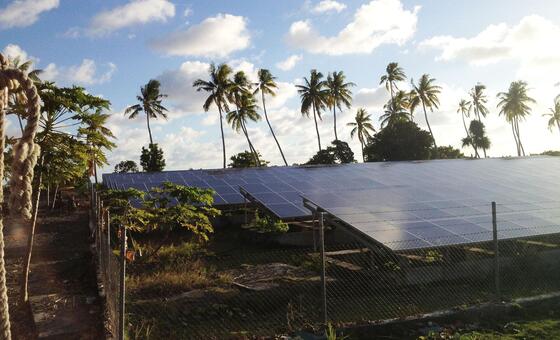
Can renewable energy infrastructure actually restore the land it sits on? Experts at a UN conference in Ulaanbaatar say yes, and here's how.
What if the very infrastructure we build to fight climate change could also heal the ground beneath it? That question took center stage at the United Nations Convention to Combat Desertification in Ulaanbaatar, Mongolia, where experts gathered to explore a bold idea: pairing renewable energy development with land restoration.
It sounds almost too good to be true, right? We're used to thinking of solar farms and wind turbines as necessary but somewhat intrusive. They gobble up acres of open space, and we rarely stop to ask what's happening to the soil underneath. But a growing movement of researchers and energy developers is flipping that script.
### The Overlooked Connection Between Energy and Soil
Here's the thing: renewable energy doesn't just consume land. It can actively improve it. Solar panels, for instance, provide shade that reduces soil temperature and retains moisture. In arid regions, that simple shade can be the difference between barren dirt and a patch of thriving grass.
Wind turbines, meanwhile, can help by altering local wind patterns, which reduces evaporation and keeps topsoil from blowing away. It's not a miracle cure, but it's a real, measurable effect that many projects are starting to capitalize on.
The experts in Ulaanbaatar didn't just theorize about this. They brought concrete examples from around the world, showing how countries are already combining clean energy with ecological recovery. The results aren't just green in the energy sense. They're literally green with new vegetation.
### Real-World Success Stories Worth Noting
One standout approach involves what's called agrivoltaics, where farmers grow crops beneath elevated solar panels. This dual-use strategy means the land isn't just occupied by machinery. It's still producing food while generating power.
- In semi-arid zones, shade from panels has boosted crop yields by up to 20 percent.
- Grazing livestock can coexist with solar installations, keeping grass short and reducing fire risk.
- Wind farms in degraded grasslands have seen native plant species return within just a few seasons.
These aren't isolated experiments. They're increasingly being baked into national energy strategies, especially in countries where land degradation is a pressing concern.
### Why This Matters for the United States
You might be wondering what Mongolia's desertification conference has to do with life in the States. More than you'd think. The U.S. has vast stretches of degraded land, especially in the Southwest, where overgrazing and drought have left soils fragile.
As America races to expand solar and wind capacity, we have a unique opportunity to design these projects with restoration in mind from day one. Instead of treating land as a necessary sacrifice, we can treat it as a partner in the energy transition.
That means planting native grasses under panels, designing wind farms to minimize soil compaction, and working with local ranchers to integrate energy production with sustainable grazing. It's not just environmentally smarter. It's economically smarter, too, because healthier land holds more carbon and supports more productive agriculture.
The takeaway from Ulaanbaatar is simple but powerful: we don't have to choose between clean energy and healthy land. With thoughtful planning, we can have both. And that's a future worth building toward, one solar panel and one restored acre at a time.