In Colombia's Quake Zone, Strangers Become Lifelines
Jessica Albright ·
Listen to this article~4 min
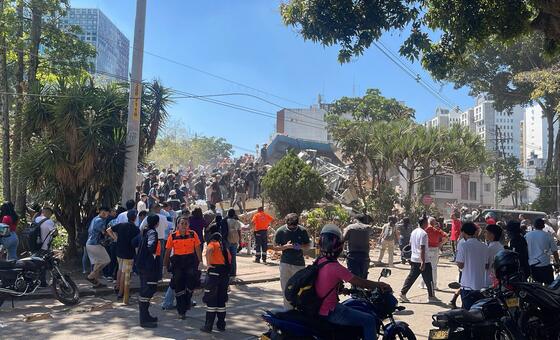
In Cali, one of the cities hardest hit by Colombia's recent earthquake, hundreds still wait for news of missing loved ones. Rescue teams search the rubble while ordinary residents dig with bare hands, showing what community solidarity really looks like.
When the ground started shaking in Cali, no one was prepared for what came next. The earthquake that hit Colombia's Pacific region didn't just crack walls and topple buildings—it unraveled the everyday lives of thousands of people in a matter of seconds. Now, days later, the city is still catching its breath, and the scene on the ground is equal parts heartbreaking and inspiring.
Cali was one of the hardest-hit cities in the recent quake, and the numbers tell a grim story. Hundreds of residents are still waiting for news about missing family members, friends, and neighbors. The uncertainty is agonizing. You can feel it in the air—a mix of hope, fear, and exhaustion that hangs over the makeshift gathering points where people cluster around lists of names and phone numbers.
### The Search Under the Rubble
Rescue teams have been working around the clock, listening for any sign of life beneath the collapsed structures. It's painstaking work. Every shift of debris, every creak of twisted metal, every faint sound could mean the difference between a rescue and a tragedy. The crews are using trained dogs, acoustic sensors, and thermal imaging to pinpoint where survivors might be trapped.
But here's the thing that's hard to put into words: the professionals aren't doing this alone. Ordinary residents—shopkeepers, students, retirees, people who've never touched a rescue tool in their lives—are right there beside them. They're digging through rubble with their bare hands, passing buckets of debris down human chains, and bringing water and food to the exhausted workers. It's raw, uncoordinated, and utterly beautiful in its chaos.
### When Community Becomes Family
There's a particular moment that sticks with me from the reports coming out of Cali. A woman in her sixties, who lost her own home in the quake, was seen walking through the streets with a thermos of coffee, offering cups to anyone who looked like they needed a break. She didn't know anyone's name. She just knew they were hurting, and that was enough.
That kind of spontaneous solidarity is what you see when the worst brings out the best in people. It's not organized. It's not funded. It's just human instinct kicking in when it matters most.
- Neighbors are checking on elderly residents who live alone, making sure they have food and medicine.
- Local restaurants are cooking free meals for rescue workers and displaced families.
- Teenagers are using their phones to create digital maps of areas that haven't been searched yet.
- Small businesses are donating supplies—gloves, masks, flashlights, batteries—anything that helps.
### The Long Road to Recovery
Here's the hard truth: the rescue phase is just the beginning. Once the last survivor is pulled from the rubble, the real work starts. Rebuilding homes, restoring utilities, and helping people process what they've been through will take months, if not years. The emotional scars don't heal on a timeline, and neither does the sense of loss.
But if there's one thing this earthquake has shown, it's that Cali's spirit isn't broken. The same hands that dug through debris will be the ones that lay new bricks. The same voices that called out names in the dark will be the ones that fill the streets with laughter again. It won't be easy, and it won't be quick, but it will happen—because that's what communities do when they refuse to give up on each other.
If you're looking for a way to help from afar, the best thing you can do is support reputable relief organizations that are already on the ground in Colombia. Every dollar counts, and every gesture of kindness, no matter how small, sends a message that the world is watching and that Cali is not alone. Because in the end, that's what solidarity really means—showing up, even when it's hard, and especially when it matters most.