Colombia Earthquake: The Unsung Heroes Digging Through Rubble
Emily Brown ·
Listen to this article~5 min
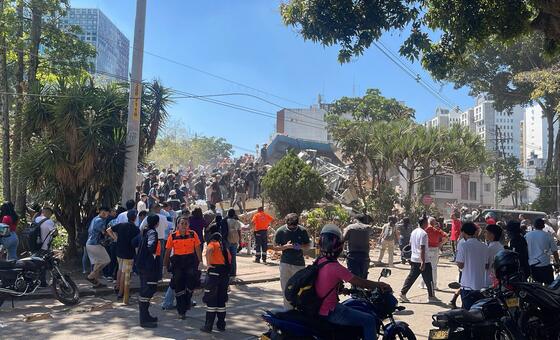
In Cali, one of the cities hit hardest by Colombia's recent earthquake, hundreds still wait for news of missing loved ones. Rescue teams work alongside ordinary citizens, who are digging through rubble with bare hands, showing what collective resilience really looks like.
When the ground stopped shaking in Cali, the silence that followed was almost as terrifying as the tremor itself. In one of the cities hit hardest by the recent earthquake in Colombia, hundreds of people are still waiting for news about missing relatives, friends, and neighbors. The dust hasn't even settled, and the real fight has already begun.
Rescue teams are working around the clock, listening for any sign of life beneath collapsed buildings. But here's the thing that's hard to wrap your head around: they're not alone. Ordinary citizens—people who just lost their own homes, their own sense of safety—are right there beside them, often digging through the debris with nothing but their bare hands.
### The Race Against Time
Every hour matters in an earthquake rescue. After 72 hours, the chances of finding survivors drop dramatically. That's why the scene in Cali is so urgent. Professional rescuers have the tools and the training, but they don't have enough hands. So the community stepped in.
It's not glamorous work. It's hot, it's exhausting, and it's heartbreaking. But these volunteers aren't waiting for permission or for someone else to take the lead. They're moving chunks of concrete, calling out names, and passing water to the exhausted rescue dogs. They're doing whatever needs to be done.
> "We can't just stand here and do nothing," one volunteer told reporters, his voice cracking with emotion. "These are our people. These are our neighbors."
### What Makes People Risk Everything?
It's a question that's easy to ask from a safe distance: why would someone put themselves in danger to help strangers? The answer, as it turns out, is simpler than you'd think. It's connection. It's the understanding that in a disaster, the lines between "me" and "we" blur completely.
Psychologists call this "collective resilience"—the way communities come together in crisis. And it's not just about the big gestures. It's about the small things too:
- Neighbors sharing whatever food and water they managed to save
- Families opening their doors to those who lost everything
- Local businesses donating supplies and equipment
- Kids running messages between rescue teams
- Teenagers using their phones to help people file missing person reports
These aren't heroic acts in the Hollywood sense. They're human acts. And they matter just as much as the heavy machinery and the trained professionals.
### The Emotional Toll on Rescuers
What we often forget in the aftermath of a disaster is the emotional weight carried by those who respond. The volunteers in Cali aren't detached professionals. They're people who might know the victims personally. They might have played soccer with a man trapped under a building. They might have taught a missing child in school.
That's a burden that doesn't end when the rescue operation does. Many of these volunteers will carry the images of what they've seen for the rest of their lives. And yet, they keep going. They keep digging. They keep hoping.
### The Road Ahead for Cali
Once the rescue phase ends, the real work begins. Rebuilding a city isn't just about bricks and mortar. It's about rebuilding trust, rebuilding routines, and rebuilding a sense of normalcy that seems impossibly distant right now. The earthquake didn't just topple buildings—it shattered the illusion of safety that most people take for granted.
But if there's one thing this disaster has revealed, it's the strength of the human spirit. The same hands that are bleeding from digging through rubble will be the ones that rebuild homes. The same hearts that are breaking over losses will find the courage to start again.
Cali will recover. It will take months, maybe years, but it will happen. And when it does, it won't be because of some grand plan or government initiative. It will be because ordinary people refused to give up on each other.
For now, the search continues. The calls for missing loved ones still echo through the streets. But so does the sound of shovels hitting concrete, of voices calling out names, of a community refusing to let despair win. That's not just resilience. That's love in its most practical, most desperate, and most beautiful form.