Colombia Quake: Millions Still Cut Off After 10 Days
Amanda Smith ·
Listen to this article~4 min
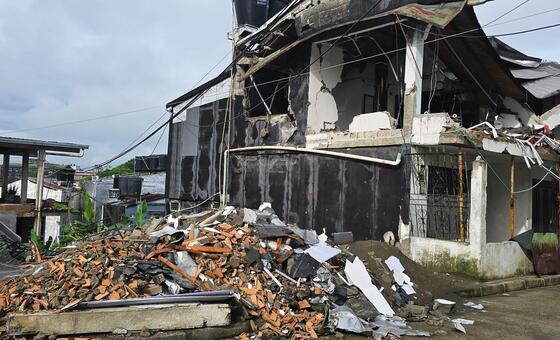
Ten days after a powerful earthquake struck western Colombia, an estimated 1.2 million people are in urgent need of humanitarian aid. Rescue workers and relief missions are still struggling to reach several isolated communities, leaving countless individuals without essential support. The situation
You know, it's been over a week and a half now since that really powerful earthquake hit western Colombia. Can you imagine? Ten whole days. And the situation? Well, it's pretty dire, to be honest. The United Nations is estimating that around 1.2 million people are in urgent need of humanitarian aid. That's a huge number, isn't it? It's not just about food and water; it's about shelter, medical care, and just basic survival. It really puts things into perspective.
### The Lingering Challenge of Access
What makes this whole situation even more heartbreaking is that rescue workers and humanitarian teams still can't reach some of these communities. Think about that for a second. There are folks out there, maybe injured, definitely without resources, and help just can't get to them. It's not for lack of trying, of course. These teams are working tirelessly, but the damage from the quake has made roads impassable, and communication lines are down in so many places. It's a logistical nightmare, and every day that passes, the need grows more desperate for those isolated populations.
### The Human Impact
When we talk about 1.2 million people, it's easy for that number to just become a statistic. But each one of those is a person, with a family, a home that might now be rubble, and a life completely turned upside down. Imagine losing everything in a matter of seconds, then waiting days, maybe even longer, for someone to reach you. The emotional toll alone must be immense. Children are displaced, parents are worried sick, and the sense of uncertainty must be overwhelming. It's a stark reminder of how fragile life can be and how quickly things can change.
### What Aid Looks Like
So, what kind of aid are we talking about here? It's a broad spectrum, really, but the immediate priorities are always the same after a disaster like this. We're talking about clean drinking water – absolutely essential to prevent disease. Then there's food, of course, and temporary shelters to keep people safe from the elements. Medical supplies are critical for treating injuries and ongoing health concerns. And let's not forget the psychological support; that's often overlooked but incredibly important for people who've experienced such trauma.
### Overcoming Obstacles
Getting this aid to where it's needed is a monumental task. Helicopters are often the only way to reach some of these cut-off areas, but even that has limitations. Fuel, weather, and the sheer scale of the affected region all play a part. Engineering teams are working hard to clear roads, but landslides and damaged infrastructure mean it's a slow and painstaking process. It's a race against time, and every minute counts. The international community, led by organizations like the UN, is mobilizing resources, but the challenges on the ground are immense. It truly takes a global effort to tackle a crisis of this magnitude.
### How You Can Help
For those of us watching from afar, it's natural to feel a sense of helplessness. But there are ways to contribute. Many reputable international organizations are on the ground providing assistance. Consider supporting groups that specialize in disaster relief. Even a small contribution can make a difference in providing essential supplies or helping to rebuild lives. It's about showing solidarity and offering a helping hand when people need it most. Every bit of support, whether it's financial or spreading awareness, helps to bring hope to those affected.