A Critical Lifeline for Millions Hangs in the Balance
Jennifer Wilson ·
Listen to this article~4 min
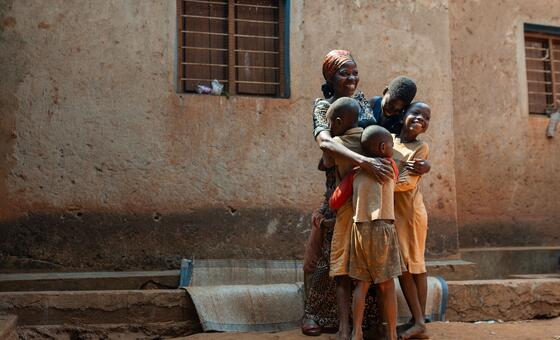
A UNHCR report warns nearly 8.3 million refugees and displaced people risk losing vital aid due to severe funding shortfalls, forcing critical program cuts.
Let’s talk about something that’s easy to ignore but impossible to forget once you see the numbers. We’re looking at a situation where the most basic support systems for some of the world’s most vulnerable people are teetering on the edge. It’s a story about funding, yes, but more importantly, it’s about the real human cost when that funding dries up.
According to a stark new report from the UN Refugee Agency (UNHCR), nearly 8.3 million refugees, internally displaced persons, and stateless individuals are at immediate risk of losing access to vital humanitarian aid. That’s a number so large it’s hard to wrap your head around. Picture a line of people stretching from New York City to Los Angeles... and then back again. That’s the scale we’re discussing.
### Why This Crisis Is Unfolding Now
The core of the problem isn’t a mystery. It’ s a severe and sustained shortfall in international funding. The money that keeps the lights on in refugee camps, that provides clean water, basic medical care, and food rations, is simply not materializing at the needed levels. Major displacement crises around the globe are now operating on a financial knife-edge.
Think of it like this: these support networks are the scaffolding holding up entire communities. When you pull key pieces of that scaffolding away due to budget cuts, the whole structure becomes unstable. The UNHCR is being forced into an impossible position—having to scale back or shutter core programs that millions depend on for daily survival.
### Who Is Most At Risk?
The term "vulnerable populations" covers a lot of ground, but in this context, it refers to specific groups:
- **Refugees** who have fled conflict or persecution across international borders.
- **Internally Displaced Persons (IDPs)** who are uprooted within their own countries, often with even fewer legal protections.
- **Stateless Individuals** who lack any nationality and the fundamental rights that come with it.
For these groups, the aid provided by agencies like the UNHCR isn’t just assistance; it’s often the only barrier between them and catastrophe. We’re talking about essentials:
- Shelter from the elements
- Safe drinking water
- Nutritional support, especially for children
- Primary healthcare services
- Protection from violence and exploitation
When these programs shrink or vanish, the consequences aren’t abstract. They’re measured in increased malnutrition, the spread of preventable diseases, and a deepening cycle of poverty and instability.
### The Domino Effect of Underfunding
It’s tempting to see this as a far-away problem, but the instability created by collapsing support systems has a way of echoing far beyond camp borders. Regions hosting large displaced populations feel the strain on their own resources. The lack of opportunity and hope can fuel further displacement and conflict. As one expert recently put it, "Humanitarian aid isn’t just charity; it’s a critical investment in global stability."
What’s particularly alarming is that this funding crisis hits amid what the UN calls some of the "largest displacement crises" in modern history. Needs are skyrocketing just as the resources to meet them are evaporating. It creates a perfect storm where the international community’s capacity to respond is being systematically eroded.
The path forward requires a renewed commitment. It means recognizing that consistent, reliable funding is the bedrock of any effective humanitarian response. Without it, we’re not just cutting budgets—we’re cutting lifelines. The report from the UNHCR isn’t just a collection of statistics; it’s a warning bell. And it’s one we all need to hear.