Drones and AI Are Reshaping Humanitarian Mine Clearance in Ukraine
Evelyn Reed ·
Listen to this article~5 min
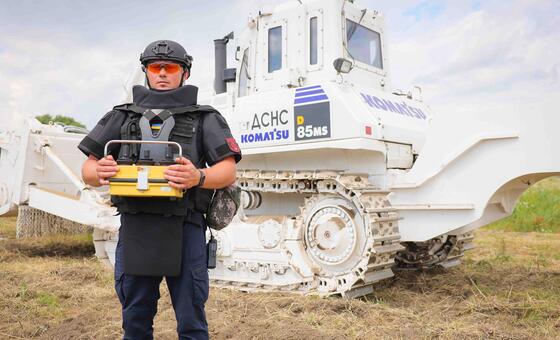
Ukraine's war has left massive mine contamination, but drones and AI are speeding up humanitarian clearance. Learn how technology is changing demining and what it means for global food security.
The conflict in Ukraine has done more than just change modern warfare. It has created one of the most mine-contaminated landscapes in the world. Drones, artificial intelligence, and new weapons have left vast areas littered with landmines and unexploded ordnance. The ripple effects go far beyond Ukraine's borders: they threaten global food security, strain economies, and slow down recovery efforts in impacted regions.
### The Scale of the Problem
Ukraine is now a massive testing ground for how technology can solve a humanitarian crisis. Before the war, the country had a well-established agricultural sector. Today, millions of acres of farmland are unsafe to step on. According to estimates, over 174,000 square miles of territory may be contaminated. That's an area larger than the state of California.
Traditional mine clearance is painfully slow. It relies on metal detectors and manual prodding. A single deminer can clear only about 50 to 120 square feet per day. At that rate, it would take centuries to clean Ukraine's contaminated land. You can see why we need a faster way.
### How Drones Are Changing the Game
Drones have become the eyes in the sky for mine detection. High-resolution cameras and thermal imaging let operators spot surface-laid mines and disturbed soil from a safe distance. Multispectral sensors can even detect changes in vegetation that suggest buried explosives.
Here's a quick breakdown of what drones bring to the table:
- Speed: A drone can survey hundreds of acres in a single flight.
- Safety: Operators stay miles away from danger.
- Precision: AI-powered software flags suspicious areas with high accuracy.
- Cost: Drone surveys cost a fraction of ground-based teams.
But it's not just about spotting mines. Drones also carry ground-penetrating radar to find non-metallic explosives. That's a huge leap forward because many modern mines are plastic and hard to detect with conventional tools.
### Artificial Intelligence: The Real Game Changer
AI is what makes drone data truly useful. Without it, you'd be drowning in images and sensor readings. Machine learning models can analyze footage in real time, identifying potential threats with over 90% accuracy. They learn from past detections, getting better with every mission.
Think of it like this: a human deminer can process maybe 10 images per hour. An AI system can handle thousands in the same time. It doesn't get tired, distracted, or scared. It just keeps working.
"We're not replacing human deminers," says Evelyn Reed, Senior Naukanet Architect & Strategic Advisor. "We're giving them superpowers. AI handles the tedious analysis, so people can focus on the actual clearance work."
### The Humanitarian Impact
This isn't just a technical story. It's about people. Farmers who can't plant crops. Families who can't let their kids play outside. Communities cut off from clean water because the only road is mined. Every mine cleared means a step toward normal life.
Ukraine's situation also affects global food prices. The country is a major exporter of wheat, corn, and sunflower oil. When farmland is off-limits, supply drops, and prices rise worldwide. Clearing mines faster helps stabilize markets and feed vulnerable populations.
### What's Next?
The technology is still evolving. Current drones have limited battery life, usually around 30 to 45 minutes. Bad weather can ground them. And AI models need high-quality training data to work well. But the progress is undeniable.
Some promising developments include:
- Swarm drones that coordinate to cover ground faster.
- AI that can distinguish between mines and harmless metal debris.
- Robotic demining vehicles that follow drone maps.
### A Call to Action
For Rezka professionals in the United States, this is an opportunity. The tools being developed in Ukraine can be adapted for other contaminated regions worldwide. From the Balkans to Afghanistan to the Middle East, millions of mines still lie in wait. The same drones and AI that help Ukraine can save lives elsewhere.
If you're working in this space, consider how your skills can contribute. Whether it's improving drone hardware, refining AI algorithms, or advocating for funding, every effort counts. The goal is simple: make the world safer, one cleared field at a time.