Why Drones Are Rewriting the Rules of Modern Warfare
William Johnson ·
Listen to this article~4 min
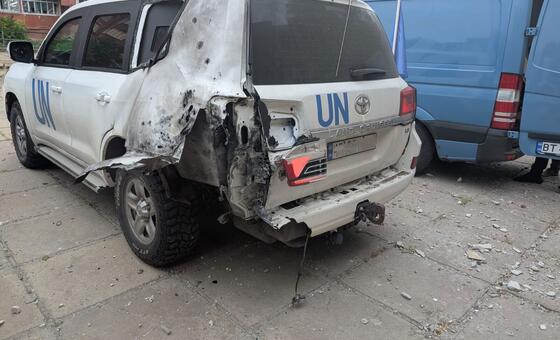
UN relief chief Tom Fletcher says drones are changing the nature of war after visiting Kherson, Ukraine. Here's what that means for civilians and humanitarian aid.
When you think about how wars are fought today, the image that probably comes to mind isn't a soldier on the ground. It's a drone buzzing overhead, silent and precise, changing everything about how conflicts unfold. That's exactly the point Tom Fletcher, the UN's emergency relief coordinator and Deputy Secretary-General, made after wrapping up a two-day visit to Kherson, Ukraine.
Speaking to journalists via video link from the UN headquarters in New York, Fletcher didn't mince words. He called Kherson one of the "epicenters" of drone use against civilian areas. That's not just military jargon—it's a stark reminder that the front lines of this war extend into neighborhoods, hospitals, and homes.
### The Changing Face of Conflict
For decades, warfare followed a certain playbook. You had front lines, artillery barrages, and infantry pushes. But drones have flipped that script. They're cheap, they're everywhere, and they've made the battlefield far more personal—and far more dangerous for civilians.
What struck me about Fletcher's comments is how matter-of-fact he was. He didn't dwell on the politics or the broader strategy. He focused on what he saw on the ground: a city under constant threat from above, where the distinction between soldier and civilian has all but vanished.
This isn't just about Ukraine, though. It's a pattern we're seeing in conflicts around the globe. Drones have democratized air power in ways we never anticipated. A $500 quadcopter can now do what a $50 million fighter jet once did—at least in terms of surveillance and targeted strikes.
### What This Means for Civilians
Here's the uncomfortable truth: drones have made war more intimate. When a missile comes from a jet, you might not know it's coming. But a drone? It can hover for hours, watching, waiting. That psychological toll is immense.
Fletcher's visit to Kherson wasn't just a diplomatic gesture. It was a fact-finding mission to assess humanitarian needs in a city that's been battered relentlessly. He saw firsthand how drone attacks disrupt daily life—schools closing, markets empty, families huddled in basements.
Some key takeaways from his report:
- Drones are being used systematically against civilian infrastructure, not just military targets.
- The psychological impact on residents is severe, with many living in constant fear.
- Humanitarian access remains a challenge, as drone activity makes aid delivery risky.
### The Humanitarian Toll
The UN's role here is critical. Fletcher's job isn't to pick sides—it's to ensure that aid reaches those who need it most. And that's getting harder every day as drones make already dangerous zones even more volatile.
He described Kherson as a city under siege, but not in the traditional sense. There's no encircling army or trench warfare. Instead, there's a constant, invisible threat from the sky. It's a new kind of siege, and it's reshaping how humanitarian organizations operate.
Aid workers now have to factor in drone activity when planning deliveries. They're using armored vehicles, timing their movements to avoid peak attack hours, and relying on local networks to navigate the chaos. It's slower, riskier, and far more expensive than before.
### What Comes Next
Fletcher's comments should serve as a wake-up call. If drones are changing the nature of war, then the international community needs to change how it responds. That means new rules of engagement, better protection for civilians, and more robust humanitarian frameworks.
This isn't an easy problem to solve. Drones are here to stay, and their use will only grow. But that doesn't mean we should accept the status quo. The question isn't whether drones will be used in future conflicts—it's how we'll protect the people caught in the crossfire.
For now, the situation in Kherson remains dire. But thanks to people like Fletcher, the world is paying attention. And that attention matters. Because when the international community watches, it's harder for atrocities to happen in the shadows.
The war in Ukraine has already taught us so much about modern conflict. The drone revolution is just one chapter in that story—but it might be the most important one yet.