Why Drones Are Rewriting the Rules of Modern War
Eleanor Vance ·
Listen to this article~5 min
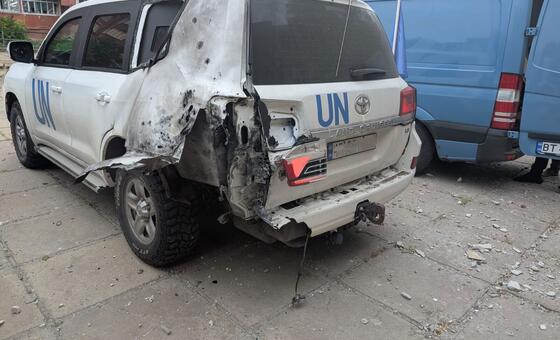
UN relief chief Tom Fletcher warns that drones are transforming modern warfare after visiting Kherson, where civilian areas face constant aerial threats.
When Tom Fletcher, the UN's emergency relief coordinator and deputy secretary-general, wrapped up his latest trip to Ukraine, he didn't just deliver a standard briefing. He came back with a stark observation that's hard to shake: drones are fundamentally changing how war is fought.
Fletcher spent two days in Kherson, a city he described as one of the “epicenters” of drone strikes against civilian areas. Speaking to journalists at UN headquarters in New York via video link, he didn't mince words. The picture he painted isn't just about military tactics—it's about what everyday people are enduring.
### What Fletcher Saw in Kherson
Kherson isn't a front-line city in the traditional sense. It's a place where families try to live normal lives—going to work, shopping for groceries, sending kids to school. But according to Fletcher, the skies above have become a constant threat.
- Drones are being used not just for reconnaissance, but for direct attacks on residential neighborhoods.
- Civilians are the primary targets, not collateral damage.
- The psychological toll is immense, as the buzzing of a drone overhead can signal an imminent strike.
This isn't a distant, abstract problem. It's happening in real time, and it's reshaping how aid workers, military strategists, and international observers think about conflict.
### The Changing Face of Warfare
For decades, war was largely defined by tanks, artillery, and infantry. Drones have flipped that script. They're cheap, relatively easy to deploy, and can be operated from miles away. That means the battlefield isn't just a defined geographic area anymore—it's wherever a drone can reach.
Fletcher's comments highlight a grim reality: the distinction between combatants and civilians is blurring. In Kherson, the threat isn't just from incoming missiles or ground troops. It's from small, agile aircraft that can appear without warning.
> "We're seeing a new kind of warfare where the sky itself has become a weapon," Fletcher said, according to his briefing.
That shift has huge implications. For one, it makes protection of civilians far more complicated. Traditional air defense systems are designed for larger threats, not small drones. And for aid organizations, it means delivering supplies—even basic necessities—can become a life-threatening operation.
### Why This Matters Beyond Ukraine
What's happening in Kherson isn't just a Ukrainian problem. It's a preview of what future conflicts might look like. If drones can be used this effectively against civilian populations, other nations and non-state actors are taking notes.
The UN's role here is critical. Fletcher's visit wasn't just about observing—it was about assessing how to respond. Humanitarian corridors, ceasefires, and international law all need to adapt to this new reality. But adaptation takes time, and the people on the ground don't have that luxury.
There's also a broader question about accountability. When a drone strike hits a residential building, who's responsible? How do you investigate, document, and prosecute these acts under existing legal frameworks? These are questions the international community is still grappling with.
### The Human Cost
The numbers and strategies can feel abstract, but the human cost is anything but. Fletcher's report is a reminder that behind every statistic is a family, a home, a life interrupted. In Kherson, the sound of a drone isn't just noise—it's a warning to run, hide, or say goodbye.
Aid workers on the ground are doing what they can, but they're stretched thin. The constant threat of drone attacks makes it harder to reach those in need, and every delay can mean the difference between life and death.
### What Comes Next
Fletcher's trip is over, but the conversation is just beginning. The UN is likely to push for more robust mechanisms to protect civilians in drone-affected zones. But without concrete action, the trend is clear: drones will continue to play a central role in conflicts, and civilians will continue to bear the brunt.
For those of us watching from afar, the takeaway is sobering. War is changing, and the rules we've relied on for decades may no longer be enough. The question isn't whether drones will be used in future conflicts—it's whether we'll be ready for the consequences.
As Fletcher's briefing makes clear, the time to act is now. Not just for Ukraine, but for the future of warfare itself.