Ebola's Latest Front Line: Inside the DRC Camps Now at Risk
Sarah Wilson ·
Listen to this article~5 min
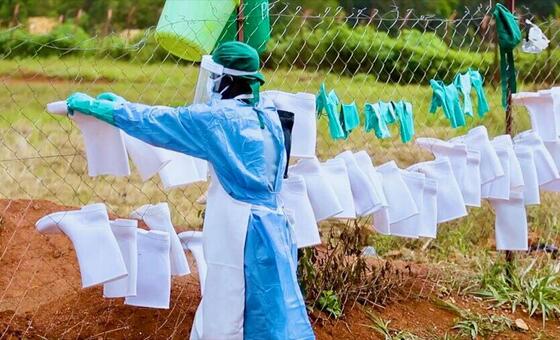
The Ebola outbreak in the DRC has reached displacement camps, with 19 cases and 5 deaths among internally displaced persons. UN agencies are on high alert as the Bundibugyo strain spreads in crowded, vulnerable communities.
The Democratic Republic of the Congo is facing a public health emergency that just got a whole lot more complicated. The ongoing Ebola outbreak, caused by the Bundibugyo strain, has now reached displacement camps—places where thousands of vulnerable people live in cramped, close quarters. And that's a scenario that keeps health officials up at night.
According to the United Nations High Commissioner for Refugees (UNHCR), 19 internally displaced persons have already been infected, and five of them have died. Those numbers might sound small, but in an environment like a camp, they're a red flag waving hard.
### Why Camps Are a Perfect Storm for Ebola
Here's the thing about displacement camps: they're not designed for social distancing. Families share tents, cooking spaces, and latrines. Water is often scarce, and soap might be a luxury. Ebola spreads through direct contact with bodily fluids, so when you have people living elbow-to-elbow with limited hygiene infrastructure, the virus finds it easy to hop from person to person.
That's why UN humanitarian agencies are now on high alert. This isn't just about treating 19 patients. It's about preventing a spark from becoming a wildfire.
### The Bundibugyo Strain: What's Different?
You might have heard of the Zaire strain of Ebola—that's the one that caused the devastating 2014-2016 West Africa outbreak. But Bundibugyo is a different beast. It's generally considered to be slightly less lethal, but it's still a serious threat. The fatality rate for Bundibugyo typically hovers around 25% to 40%, which is lower than Zaire's 60% to 90%, but still alarmingly high.
What makes it tricky is that the symptoms can be easy to mistake for other illnesses, like malaria or typhoid. That means people might not realize they're infected until they've already passed the virus along to others.
### The Human Toll Behind the Numbers
Behind every statistic is a person. Think about what it means to be internally displaced: you've already lost your home, your community, and your sense of safety. You're living in a temporary shelter, hoping to return someday. And now, on top of all that, you're facing an outbreak of a virus that's known for its brutal symptoms—fever, vomiting, diarrhea, and in severe cases, internal and external bleeding.
For the five families who lost loved ones, this isn't just a news headline. It's a devastating loss that happened far from home, without the comfort of familiar surroundings.
### What's Being Done Right Now
UN agencies and local health teams are moving fast. Here's what the response looks like on the ground:
- **Contact tracing:** Teams are working to identify everyone who came into contact with the infected individuals, which is no small task in a crowded camp.
- **Isolation units:** Temporary treatment centers are being set up to keep infected patients separate from the general population.
- **Community education:** Health workers are going tent-to-tent to explain how Ebola spreads and what people can do to protect themselves.
- **Vaccination efforts:** While there's no licensed vaccine specifically for Bundibugyo, the Ervebo vaccine (approved for Zaire) is being studied for cross-protection, and ring vaccination strategies are being considered.
### The Bigger Picture
The DRC has been dealing with Ebola outbreaks for decades, and each time, they've managed to contain them—eventually. But the challenges here are unique. Displacement camps are transient, populations move, and trust in authorities can be low, especially in conflict-affected regions. That makes communication and community engagement just as important as medical supplies.
We should also remember that this outbreak isn't happening in a vacuum. The DRC is a country with a fragile health system, ongoing conflict, and a history of dealing with multiple public health crises at once—from measles to cholera. It's a reminder that global health security is only as strong as the weakest link.
### What You Can Take Away From This
This story is a stark reminder that outbreaks don't respect borders, and they don't wait for ideal conditions. The situation in the DRC is evolving, and the next few weeks will be critical. For now, the focus is on containment and care—and on hoping that the international community doesn't lose interest before the job is done.
We'll be watching this one closely, and we'll update you as more information becomes available. If you want to help, consider supporting reputable humanitarian organizations that are working on the ground in the DRC. Even a small donation can go a long way in providing clean water, protective gear, and essential health services to those who need them most.