Ebola Death Toll in Congo Surpasses 2,000 as Outbreak Accelerates
David Davis ·
Listen to this article~5 min
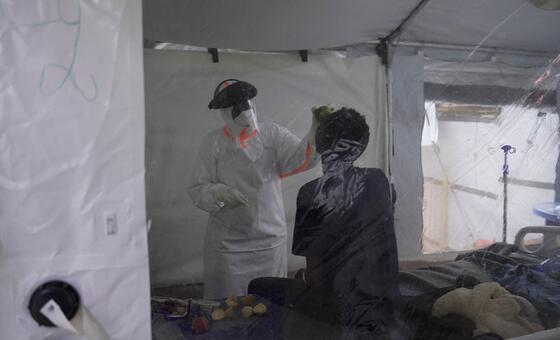
Ebola deaths in the DRC have surpassed 2,000, with half occurring in just 20 days. Here's what's driving the rapid spread and what it means for global health.
The Ebola outbreak in the Democratic Republic of Congo has crossed a grim milestone, with more than 2,000 deaths now recorded. What's even more alarming? Half of those fatalities happened in the last 20 days alone. That's a staggering acceleration, and it's raising serious concerns among health officials and global observers alike.
This isn't just another headline about a distant crisis. For professionals tracking global health trends, this outbreak represents a critical moment in how we respond to emerging infectious diseases. Let's break down what's happening, why it matters, and what it could mean going forward.
### What's Driving the Rapid Spread?
The numbers tell a sobering story. According to the United Nations, citing DRC authorities, the death toll from Ebola—specifically the Bundibugyo virus strain—has now exceeded 2,000. But the pace is the real concern. When you see half of all deaths occurring in less than three weeks, it signals that containment efforts are struggling to keep up.
Several factors are fueling this acceleration:
- **Community resistance**: In some areas, distrust of health workers and government officials has led to delays in seeking treatment or even attacks on response teams.
- **Geographic spread**: The outbreak has moved into regions that are harder to reach, making it tougher for medical teams to track and isolate cases.
- **Security concerns**: Ongoing conflict in parts of the DRC has disrupted response efforts, forcing some programs to pause or scale back.
These aren't just logistical hurdles. They're human dynamics that complicate an already difficult public health challenge.
### Why This Strain Is Different
You might be wondering: isn't Ebola something we've more or less figured out? Not quite. The Bundibugyo strain is less well-known than the Zaire strain that caused the devastating 2014–2016 West Africa epidemic. While it's generally considered less lethal, it still carries a significant fatality rate, and it presents its own set of challenges for diagnosis and treatment.
What's more, the current outbreak in North Kivu and Ituri provinces has been going on since August 2018. It's now the second-largest Ebola outbreak in history, and it's showing no signs of slowing down. That's a sobering reality for anyone who thought we'd moved past the worst of these viral threats.
### The Human Toll Behind the Numbers
Behind every statistic is a person—a parent, a child, a neighbor. The outbreak has devastated families and communities, many of whom are already dealing with poverty, displacement, and limited access to basic healthcare. When you consider that the DRC has some of the weakest health infrastructure in the world, the challenges become even more stark.
One health worker on the ground put it this way: "We're not just fighting a virus. We're fighting fear, misinformation, and decades of neglect." That's a powerful reminder that public health isn't just about vaccines and treatments—it's about trust and community engagement.
### What This Means for Global Health
For professionals in the United States and elsewhere, this outbreak offers some hard lessons. First, infectious diseases don't respect borders. A flare-up in Central Africa can become a global concern within days, given modern travel patterns. Second, we can't afford to be complacent. Just because a disease feels "contained" or "far away" doesn't mean it will stay that way.
There's also the economic angle. Outbreaks like this disrupt trade, tourism, and regional stability. The cost of inaction—or slow action—can be measured in billions of dollars, not to mention the immeasurable human cost.
### Looking Ahead: What Needs to Happen
The path forward isn't simple, but it is clear. The international community needs to step up funding and logistical support. Local health systems need more training and resources. And perhaps most importantly, community engagement needs to be prioritized—not as an afterthought, but as a core component of the response.
Vaccines and treatments exist, and they're being deployed. But they only work if people trust them and if health workers can reach the communities that need them most.
### Final Thoughts
The fact that we're still dealing with major Ebola outbreaks in 2020 is a wake-up call. It's a reminder that global health security is a shared responsibility, and that the gap between rich and poor countries can have consequences for everyone.
For now, the numbers keep climbing. The question is whether the world will respond with the urgency this crisis demands—or wait until it's too late.