Ebola Death Toll Surpasses 2,000 in Congo as Outbreak Accelerates
Robert Smith ·
Listen to this article~4 min
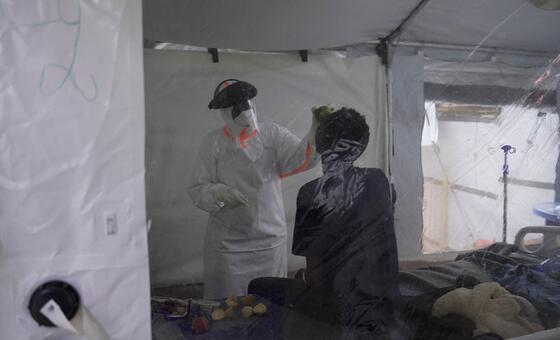
Ebola deaths in the Democratic Republic of Congo have surpassed 2,000, with half occurring in just 20 days. The UN reports the outbreak is accelerating amid conflict and mistrust.
The numbers are staggering. More than 2,000 people have now died from Ebola in the Democratic Republic of Congo, and here's the part that really grabs your attention: half of those deaths happened in just the last three weeks. That's not a slow burn. That's a fire that's spreading fast.
According to the United Nations, which is citing Congolese government officials, the death toll from the Ebola virus disease—specifically the Bundibugyo strain—has officially crossed the 2,000 mark. But it's the pace that's got health workers on edge. When you see half of all fatalities recorded in a 20-day window, you're not looking at a contained outbreak. You're looking at something that's slipping out of control.
### What Makes This Outbreak Different?
This isn't just another Ebola flare-up. This is the second-deadliest Ebola outbreak in history, trailing only the devastating West Africa epidemic from 2014 to 2016. What makes it uniquely challenging is the combination of factors on the ground. The affected regions are active conflict zones, which means health workers can't always reach the people who need help. There's also deep community mistrust, fueled by misinformation and years of instability, which makes people reluctant to seek treatment or accept vaccines.
The Bundibugyo strain is particularly concerning because it's less common than the Zaire strain that most people associate with Ebola. That means fewer existing treatments and less familiarity among local healthcare providers. It's a reminder that this virus doesn't stay in one place. It moves. It adapts. And it exploits every gap in the response.
### The Human Cost Behind the Numbers
Let's step back for a second. Behind every one of those 2,000-plus deaths is a family that's lost a parent, a child, a breadwinner. The outbreak has devastated entire communities, and the psychological toll is just as heavy as the physical one. People are scared to touch their loved ones when they're sick. Funerals have changed. Normal life has been turned upside down.
- Health workers are being attacked and kidnapped in the line of duty
- Vaccination campaigns are being disrupted by armed groups
- Contact tracing is nearly impossible in some areas due to insecurity
- Many people are dying at home, never reaching a treatment center
These are not just statistics. These are the real-world consequences of a crisis that the global community has been slow to fully address.
### Why the Recent Spike Matters
The fact that half the deaths occurred in the last 20 days is a warning sign. It suggests the virus is gaining momentum, not losing it. Some experts believe the recent spike is linked to increased population movement as people flee violence in the region. Others point to gaps in funding and staffing. Either way, the trend is clear: the outbreak is accelerating, and the response needs to accelerate with it.
### What's Being Done About It?
The World Health Organization and other partners are on the ground, working with local authorities to contain the spread. Experimental vaccines and treatments are being deployed, and there have been some successes. But the challenges are immense. The response requires not just medical resources but also security, community engagement, and political will. Without all three, the virus will keep finding ways to survive.
### The Bottom Line
This outbreak is far from over. The 2,000-death milestone is a grim reminder of what happens when a deadly virus meets a fragile healthcare system. But it's also a call to action. The world has the tools to stop Ebola—we've proven that before. The question is whether we have the commitment to use them where they're needed most.
For now, the focus remains on saving lives and stopping the spread. Every day counts. And the next 20 days could determine whether this outbreak becomes a footnote in history or a full-blown catastrophe.