Ebola Deaths Top 2,000 in Congo as Virus Spreads Fast
William Brown ·
Listen to this article~5 min
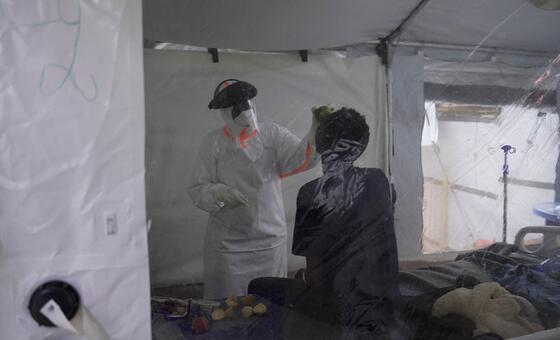
Ebola deaths in the DRC have surpassed 2,000, with half occurring in the last 20 days. Here's what's driving the surge and what's being done to stop it.
The Ebola outbreak in the Democratic Republic of Congo has taken a grim turn. According to the United Nations, citing Congolese authorities, the death toll from the virus has now surpassed 2,000 people. What's even more alarming? Half of those fatalities were recorded in just the last 20 days. That's a staggering acceleration.
If you've been following this story, you know the outbreak has been going on for a while. But this recent spike feels different. It's not just a slow burn anymore; it's a rapid fire. The numbers are climbing faster than health workers can keep up, and that's a worrying sign for everyone involved.
### What's Driving the Sudden Surge?
So, why the sudden jump? Health officials point to a mix of factors. For one, community mistrust remains a huge hurdle. In some areas, people are still reluctant to accept help from aid workers, which means cases go undetected and the virus spreads quietly. There's also the issue of insecurity. Armed groups in the region have attacked treatment centers before, forcing responders to pause their work just when they need to be most aggressive.
Add to that the sheer geography of the outbreak. The affected regions are remote, with poor roads and limited infrastructure. Getting vaccines and medical supplies to the front lines is a logistical nightmare. It's like trying to put out a forest fire with a garden hose when the wind is picking up.
### The Human Cost Behind the Numbers
Behind every one of those 2,000-plus deaths is a family torn apart. We're not just talking about statistics here; we're talking about mothers, fathers, children, and neighbors. The emotional toll is immense. In many villages, funerals have become a daily occurrence, and the fear of contracting the virus is palpable. People are scared, and rightfully so.
One of the most heartbreaking aspects is how the outbreak affects children. Many have lost one or both parents to the disease. Orphanages and extended families are stepping in, but the trauma runs deep. It's a crisis that will leave scars for years, even after the virus is finally contained.
### What's Being Done to Stop It?
On the positive side, the response has been ramping up. Vaccination campaigns are reaching more people, and experimental treatments are being deployed in some clinics. The World Health Organization and other partners are working around the clock to trace contacts and isolate suspected cases. But here's the thing: these efforts only work if they can reach the people who need them most.
There's also a push to engage local leaders and community influencers. When a respected chief or a religious figure speaks up in favor of vaccination, it can do more than a dozen government announcements. Trust is the real vaccine here, and it's in short supply.
- Community education programs are being expanded to counter misinformation.
- Mobile health units are being sent to remote villages to screen for symptoms.
- Security escorts are being provided to protect health workers in volatile zones.
### What This Means for the Region
The outbreak isn't just a health crisis; it's an economic and social one too. Cross-border trade has been disrupted, schools have closed in some areas, and farmers are afraid to go to their fields. The ripple effects are felt far beyond the hospital walls. For a country that was already struggling with poverty and conflict, this is another heavy blow.
Neighboring countries are on high alert as well. Uganda, Rwanda, and South Sudan have all ramped up screening at border crossings. The fear is that a single infected traveler could spark a new cluster elsewhere. So far, those efforts seem to be holding, but the margin for error is razor-thin.
### Looking Ahead
There's no sugarcoating it: the next few weeks will be critical. If the current trend continues, the death toll could climb even higher. But there's also reason for cautious optimism. The tools we have today—vaccines, treatments, and better surveillance—are far more advanced than what we had during the West African outbreak in 2014. The problem isn't a lack of science; it's a lack of access and trust.
As the world watches, the message from health officials is clear: this is not over. It's a marathon, not a sprint, and the finish line keeps moving. What happens in the DRC in the coming months will shape the region's future for a generation. Let's hope the international community stays engaged and the people on the ground get the support they deserve.
If you're looking for more updates on this evolving story, keep an eye on trusted sources like the WHO and local health ministries. And if you're in a position to help—whether through donations or advocacy—now's the time to step up. Every bit counts.