Ebola Deaths Surpass 2,000 in Congo as Virus Spreads Rapidly
James Taylor ·
Listen to this article~4 min
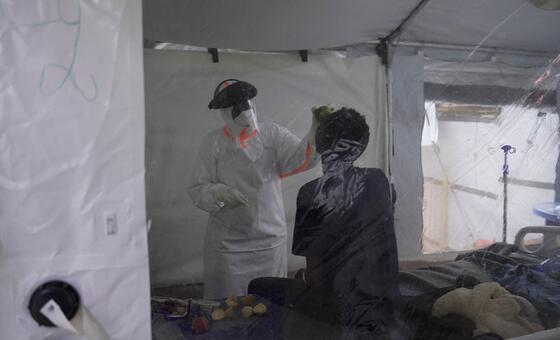
Ebola deaths in the DRC have surpassed 2,000, with half occurring in just 20 days. The rapid spread is alarming health officials as the response faces funding and security challenges.
The Ebola outbreak in the Democratic Republic of Congo has officially crossed a grim milestone. More than 2,000 people have now died from the virus, and what's especially alarming is that half of those deaths happened in just the last 20 days. That's a staggering acceleration, and it's raising serious concerns among health officials and international agencies.
### What's Happening in the DRC?
The United Nations, citing the Congolese government, confirmed the numbers. The outbreak, which began over a year ago, has been one of the most challenging in history. It's not just the virus itself that's the problem—it's the conditions on the ground. Conflict, mistrust of health workers, and remote geography have all made containment a nightmare.
But the recent spike is different. It's not just a steady trickle of cases anymore. The virus is spreading faster, and communities are struggling to keep up. Health workers are stretched thin, and the response teams are facing attacks in some areas, which makes it nearly impossible to do their jobs safely.
### Why Is the Death Toll Climbing So Fast?
There are a few reasons. First, the virus is moving into new areas, including densely populated cities. That changes everything. In rural villages, outbreaks can be contained more easily. In a city, it's a whole different ballgame.
Second, public health messaging isn't reaching everyone. Some people don't trust the responders, and that's understandable given the history. There's been misinformation, fear, and even violence against health workers. When people don't come in for treatment early, the virus spreads silently.
Third, the response is underfunded and under-resourced. The World Health Organization and other groups have been sounding the alarm, but money and supplies are always tight. Every day of delay means more infections, more deaths.
### The Human Cost Behind the Numbers
It's easy to get lost in the statistics, but let's pause for a second. Two thousand people isn't just a number. That's 2,000 families who lost a parent, a child, a spouse. Many of these deaths are in communities that are already dealing with poverty, conflict, and displacement. The Ebola outbreak isn't happening in a vacuum—it's piling onto existing crises.
And here's the thing: the virus doesn't discriminate. It hits everyone, but the poor and the marginalized suffer the most. They're the ones with less access to healthcare, less ability to quarantine, and less information about how to protect themselves.
### What Needs to Happen Next?
The international community has a window, but it's closing fast. Here's what experts are calling for:
- **More funding:** The response is underfunded by hundreds of millions of dollars. That has to change.
- **Community engagement:** You can't just show up with vaccines and expect people to trust you. You need to work with local leaders, address fears, and build relationships.
- **Security for health workers:** Attacks on responders have to stop. They're risking their lives every day, and they need protection.
- **Better surveillance:** Tracking the virus in real time is critical. That means more lab capacity, more contact tracing, and more data sharing.
### The Bottom Line
This outbreak is far from over, and the recent surge is a wake-up call. The world has the tools to stop Ebola—vaccines, treatments, and protocols—but only if they're deployed effectively and quickly. Every day that passes without a coordinated, robust response means more families mourning loved ones.
We're not just watching a health crisis unfold from afar. We're seeing a preventable tragedy happen in real time. The question is whether the global community will step up before it gets even worse.