Ebola's New Front: Displacement Camps in Congo Face Rising Threat
Jessica Williams ·
Listen to this article~5 min
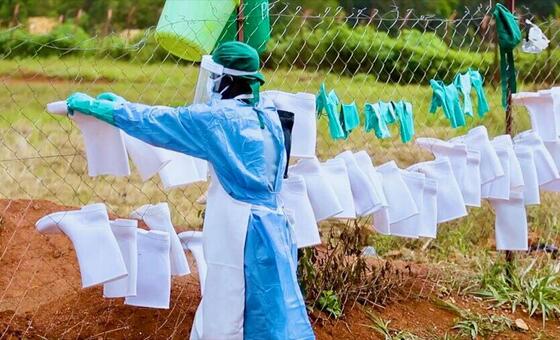
Ebola has reached displacement camps in the DRC, infecting 19 people and killing five. Here's why this is a critical turning point and what's being done to stop the spread.
The Democratic Republic of Congo (DRC) is facing a grim new reality. The Bundibugyo strain of Ebola, which has been spreading through the country, has now reached camps for internally displaced people. The United Nations refugee agency (UNHCR) confirmed that 19 displaced individuals have been infected, and five of them have already died.
This isn't just another headline about Ebola. This is a signal that the outbreak is moving into some of the most vulnerable communities on the planet. And when Ebola hits a displacement camp, the consequences can be catastrophic.
### Why Displacement Camps Are a Perfect Storm
Think about what a displacement camp is like. You've got thousands of people packed into tight quarters, often with limited access to clean water, sanitation, and healthcare. It's a nightmare scenario for any infectious disease, but Ebola takes it to another level.
Here's what makes these camps so dangerous:
- **Close physical contact**: People live in close proximity, making person-to-person transmission far more likely.
- **Limited healthcare access**: Many camps lack proper medical facilities or trained staff to identify and isolate cases early.
- **Mobility and fear**: People may move between camps or hide symptoms out of fear of quarantine, which accelerates silent spread.
- **Strained resources**: Aid agencies are already stretched thin, and this adds another layer of complexity to their response.
The UNHCR reported that the virus has now infected 19 internally displaced persons, with five fatalities. While those numbers might seem small on a global scale, in a camp setting, they represent a potential tipping point.
### The Bundibugyo Strain: What You Need to Know
Most people have heard of the Zaire strain of Ebola, which was responsible for the devastating West Africa outbreak in 2014-2016. But the Bundibugyo strain is different. It's slightly less lethal, but it's still a serious threat.
This strain was first identified in Uganda in 2007. It spreads the same way as other Ebola viruses—through direct contact with bodily fluids of infected people or contaminated surfaces. Symptoms include fever, fatigue, muscle pain, headache, and sore throat, followed by vomiting, diarrhea, rash, and in severe cases, internal and external bleeding.
The fact that this strain is now in displacement camps is a worrying development. It means the outbreak is no longer contained to rural areas. It's moved into densely populated, resource-scarce zones where controlling spread becomes exponentially harder.
### What the UN and Aid Agencies Are Doing Right Now
The UN humanitarian agencies are on high alert. They're not just monitoring the situation; they're actively scaling up their response. Here's what that looks like on the ground:
- **Deploying rapid response teams** to identify new cases and trace contacts.
- **Setting up isolation units** within or near the camps to separate the infected from the healthy.
- **Distributing hygiene kits** and clean water supplies to reduce transmission risk.
- **Running community awareness campaigns** to teach people how to recognize symptoms and seek help early.
But here's the harsh truth: these efforts are only as good as the funding and access they get. In a region with ongoing conflict and political instability, reaching every camp is a logistical nightmare.
### The Bigger Picture: Why This Matters Beyond Congo
You might be wondering why you should care about this outbreak if you're reading from the United States. The answer is simple: outbreaks don't respect borders.
Ebola is a global health security threat. If it's not contained in the DRC, it could spread to neighboring countries, and from there, to international travel hubs. We saw in 2014 how a single case in a major city can trigger a worldwide panic.
The U.S. has a vested interest in helping contain this outbreak. Not just out of humanitarian concern, but out of self-interest. Investing in global health security is far cheaper than dealing with a pandemic on home soil.
### What Can You Do?
If you're a professional in the adult digital content space, you might feel far removed from this crisis. But you're not. We all have platforms, networks, and resources. Consider sharing credible information about the outbreak from trusted sources like the WHO or CDC. If you have the means, donate to organizations working on the ground, like the UNHCR or Doctors Without Borders.
This isn't about fear-mongering. It's about awareness. The more people who understand what's happening in the DRC, the more pressure there will be on governments and international bodies to act swiftly and decisively.
The situation is serious, but it's not hopeless. With a coordinated response, we can stop this outbreak before it spirals out of control. But time is not on our side.