Ebola's Latest Threat: Why Displacement Camps Are Now Ground Zero
Amanda Taylor ·
Listen to this article~5 min
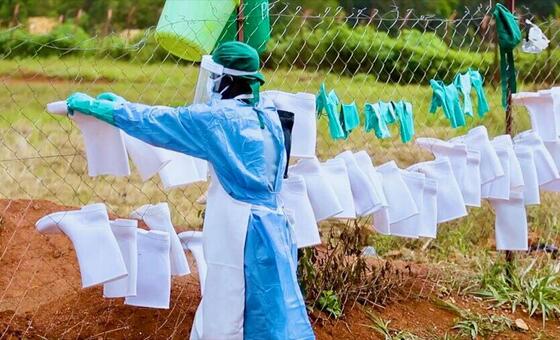
UN agencies are on high alert as the Bundibugyo Ebola strain infects 19 displaced people in DRC camps, with 5 deaths confirmed. Here's what's happening and why it matters.
The news cycle has been heavy lately, and this latest development from the Democratic Republic of the Congo (DRC) is one that deserves our full attention. United Nations humanitarian agencies have just raised their alert level to maximum, and the reason is sobering. The rapidly spreading Bundibugyo strain of Ebola has now reached some of the most vulnerable people on the planet: internally displaced persons (IDPs) living in crowded camps.
According to the UN Refugee Agency (UNHCR), at least 19 displaced individuals have been infected with the virus. Tragically, five of them have already lost their lives. When you think about the conditions inside these camps—tight quarters, limited sanitation, and scarce medical supplies—the math becomes terrifyingly simple. A virus like this doesn't need an invitation; it just needs proximity.
### Why the Bundibugyo Strain Is Different
You might be wondering why health officials are so concerned about this specific strain. Unlike the more famous Zaire strain that dominated headlines a few years ago, Bundibugyo is less well-known but equally dangerous. It spreads through direct contact with bodily fluids, and symptoms—fever, headache, muscle pain, and unexplained bleeding—can take up to three weeks to appear. That delay is a killer.
By the time someone shows symptoms, they may have already interacted with dozens of people. In a displacement camp where families share cooking areas, sleeping quarters, and water sources, containment becomes a logistical nightmare. Health workers aren't just fighting a disease; they're fighting against the very design of these temporary settlements.
### The Human Toll Behind the Numbers
Let's pause for a second and think about what these numbers actually mean. Nineteen people infected. Five dead. These aren't just statistics on a spreadsheet. These are mothers, fathers, children, and elders who have already survived unimaginable hardship just to reach a place of relative safety. Now, they're facing a new enemy, one that doesn't care about their trauma or their resilience.
The UNHCR is working around the clock to set up isolation units and deploy rapid response teams. But here's the hard truth: the infrastructure in these camps was never designed for a biohazard event. There aren't enough gloves, masks, or chlorine tablets to go around. Every day of delay means the virus gets another chance to jump to a new family.
### What's Being Done Right Now
Humanitarian organizations are pulling every lever they have. Here's a quick look at the immediate response efforts:
- **Emergency isolation wards** are being constructed within the camps to separate suspected cases from the general population
- **Contact tracing teams** are working to identify anyone who may have interacted with the infected individuals
- **Safe burial protocols** are being implemented to prevent transmission during funeral ceremonies
- **Public health messaging** is being translated into local languages to educate camp residents on symptoms and prevention
The challenge is that these camps are often in remote areas, miles from the nearest functioning hospital. Moving patients is risky, but leaving them in place is riskier. It's a no-win scenario that requires constant triage and impossible decisions.
### Why This Should Matter to You
It's easy to feel disconnected from a health crisis happening thousands of miles away. But here's the thing about infectious diseases: they don't respect borders. The global health community learned this lesson the hard way with COVID-19. An outbreak anywhere is a threat everywhere, especially when it involves a pathogen with a mortality rate this high.
Beyond the immediate health concerns, there's also the economic angle. Displacement camps are often located near trade routes and regional markets. If the virus spreads beyond the camps into the broader community, it could disrupt supply chains and destabilize an already fragile region. That instability has a way of rippling outward, affecting commodity prices and international aid budgets.
### The Road Ahead
Right now, the focus is on containment. Every hour counts. The UNHCR is calling for additional funding and resources, but as always, the gap between what's needed and what's available is wide. The coming weeks will be critical in determining whether this outbreak is controlled or becomes another full-blown epidemic.
For those of us watching from afar, the best thing we can do is stay informed and support credible humanitarian organizations working on the ground. This isn't a problem that's going to solve itself. It's going to take coordinated effort, sustained funding, and a lot of hard work from people who are already stretched thin.
We'll keep monitoring this story and update you as new information becomes available. In the meantime, let's keep the displaced families and the brave health workers in our thoughts. They're fighting a battle that none of us would wish on our worst enemy.