Ebola Outbreak in DR Congo Reaches Displacement Camps—What Happens Next?
Michael Johnson ·
Listen to this article~4 min
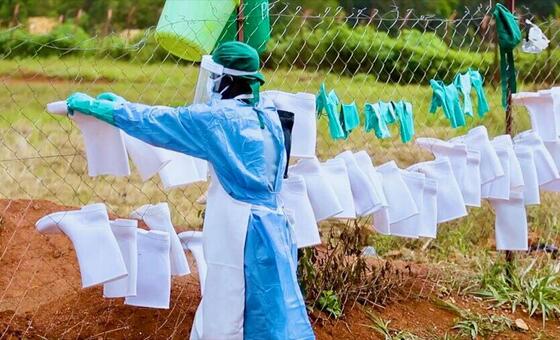
Ebola's Bundibugyo strain has spread to DR Congo displacement camps, infecting 19 displaced people and killing 5. Here's why this is a dangerous turn and what's being done.
The Democratic Republic of Congo is facing a health crisis that just took a more dangerous turn. Ebola, specifically the Bundibugyo strain, has now spread to camps for internally displaced people (IDPs). That's a big deal, and here's why.
The United Nations refugee agency (UNHCR) confirmed that 19 displaced individuals have been infected, and five of them have already died. These aren't just numbers on a spreadsheet. These are real people who fled violence and conflict, only to find themselves facing a deadly virus in overcrowded, under-resourced camps.
### Why This Matters Right Now
When Ebola hits a displacement camp, the situation becomes infinitely more complicated. Think about it: camps are packed, sanitation is often poor, and access to clean water is limited. Those are exactly the conditions where a virus like Ebola can spread like wildfire.
The UN humanitarian agencies are now on high alert. They're not just monitoring the situation—they're preparing for a worst-case scenario. The fact that the outbreak has moved into these camps means containment just got a whole lot harder.
### The Bundibugyo Strain: Not Your Average Ebola
Most people have heard of the Zaire strain of Ebola, which caused the devastating 2014-2016 outbreak in West Africa. But the Bundibugyo strain is different. It's less deadly, with a fatality rate around 25-50%, but it's still highly contagious and can cause severe hemorrhagic fever.
The symptoms are brutal: sudden fever, intense weakness, muscle pain, headaches, and a sore throat. Then comes vomiting, diarrhea, rash, and in some cases, internal and external bleeding. It's not a pleasant way to go, and it's even worse when you're in a cramped camp with limited medical care.
### The Challenges of Containing Ebola in Camps
Containing Ebola requires strict isolation, contact tracing, and safe burial practices. In a normal community, that's tough. In a displacement camp, it's nearly impossible. Here's what humanitarian workers are up against:
- **Overcrowding**: Camps are often at 150% capacity, making social distancing a joke.
- **Limited Medical Staff**: There's rarely enough trained healthcare workers to handle even routine illnesses, let alone an Ebola outbreak.
- **Fear and Stigma**: People are scared. They may hide symptoms or avoid treatment centers because they fear being ostracized.
- **Movement**: Displaced people move around frequently, making contact tracing a logistical nightmare.
### What's Being Done About It
The UNHCR and other humanitarian agencies are not sitting idle. They're scaling up their response, which includes setting up isolation units, distributing protective equipment, and launching community awareness campaigns. But they need more resources, and they need them fast.
There's also the question of vaccines. The Ebola vaccine (Ervebo) is effective against the Zaire strain, but it's not clear how well it works against Bundibugyo. That's a critical gap that needs to be addressed quickly.
### The Bigger Picture
This outbreak is happening in a country that's already dealing with multiple crises. The DR Congo has been plagued by armed conflict, political instability, and other disease outbreaks like measles and cholera. Ebola is just one more burden on a system that's already stretched to its limits.
For the displaced people in these camps, this is a double tragedy. They fled violence, and now they're facing a deadly virus. The international community needs to step up, not just with words, but with real, tangible support.
### What You Can Do
You might be reading this from the comfort of your home, thousands of miles away. But that doesn't mean you're powerless. You can:
- **Donate** to reputable humanitarian organizations working in the region.
- **Stay informed** and share accurate information about the outbreak.
- **Advocate** for more international aid and attention to this crisis.
This isn't just a problem for the DR Congo. In our interconnected world, a health crisis anywhere is a potential threat everywhere. The sooner we contain this outbreak, the safer we all are.
The next few weeks will be critical. Humanitarian agencies are racing against time to prevent this from becoming a full-blown catastrophe. Let's hope they get the support they need.