Ebola's Hidden Toll: Why the DRC Outbreak Is Far From Over
Michael Davies ·
Listen to this article~4 min
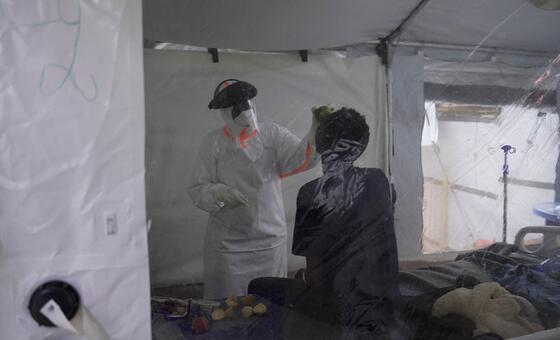
Ebola deaths in the DRC have surpassed 2,000, with half occurring in just 20 days. Here's why this outbreak is accelerating and what it means globally.
The numbers coming out of the Democratic Republic of the Congo (DRC) are sobering. What started as a localized health crisis has spiraled into one of the deadliest Ebola outbreaks the country has ever seen. And here's the part that should grab your attention: half of all deaths happened in just the last three weeks.
That's not a slow burn. That's a wildfire.
### The Current Situation on the Ground
According to a recent report from the United Nations, citing DRC health authorities, the death toll from the Ebola virus—specifically the Bundibugyo strain—has now surpassed 2,000 people. To put that in perspective, that's roughly the population of a small town. And it's not just the number of cases that's alarming; it's the speed at which the virus is moving.
Here's what we know right now:
- **Over 2,000 confirmed deaths** linked to the current outbreak
- **Half of those fatalities** occurred in the last 20 days alone
- The virus is spreading rapidly through densely populated areas
- Health officials are struggling to keep up with contact tracing
This isn't just a medical emergency. It's a logistical nightmare, a humanitarian crisis, and a test of global preparedness all rolled into one.
### Why the Bundibugyo Strain Is Different
You've probably heard of Ebola Zaire, the strain that caused the devastating West Africa outbreak in 2014. But the Bundibugyo strain is a different beast. While it's historically been less lethal in terms of case fatality rate, it presents unique challenges for healthcare workers on the ground.
The symptoms can be trickier to identify early on, which means patients often don't seek treatment until the virus has already spread to family members and caregivers. And in a region where trust in health authorities is fragile, that delay can be deadly.
### The Human Cost Beyond the Numbers
Behind every one of those 2,000 deaths is a family torn apart. A mother who lost her child. A breadwinner who never came home from work. A community that's now terrified to touch their own neighbors.
The economic impact is just as devastating. Families are losing their primary earners, markets are shutting down, and children are being orphaned at an alarming rate. The ripple effects of this outbreak will be felt for years, even after the last case is treated.
> "We are not just fighting a virus. We are fighting fear, misinformation, and the breakdown of social trust." — A sentiment echoed by many frontline health workers.
### What's Being Done About It
International organizations are scrambling to ramp up their response. Mobile testing labs are being deployed, experimental treatments are being fast-tracked, and vaccination campaigns are underway. But here's the uncomfortable truth: the current infrastructure wasn't built for this scale of outbreak.
Health workers are facing exhaustion, supply shortages, and in some cases, outright hostility from communities that have been burned by broken promises before. It's a recipe for continued spread unless something fundamental changes.
### What This Means for the Rest of the World
You might be thinking, "This is happening thousands of miles away. How does this affect me?"
Well, consider this: diseases don't respect borders. A single infected traveler can carry the virus across oceans in a matter of hours. The DRC outbreak isn't just a regional problem—it's a global wake-up call.
In the United States, public health agencies are already monitoring the situation closely. Airports have increased screening protocols, and hospitals are reviewing their Ebola response plans. But preparation isn't just about stockpiling supplies. It's about investing in global health security before the next crisis hits.
### The Road Ahead
The next few weeks will be critical. If the current trajectory continues, we could see the death toll climb even higher. But there's also reason for hope. Every outbreak eventually ends, and lessons learned here could shape how we respond to future pandemics.
For now, the focus remains on containment, treatment, and most importantly, saving lives. The world is watching, and the stakes couldn't be higher.