Ebola's Hidden Surge: Why Half of All Deaths Came in Just 20 Days
Michael Wilson ·
Listen to this article~5 min
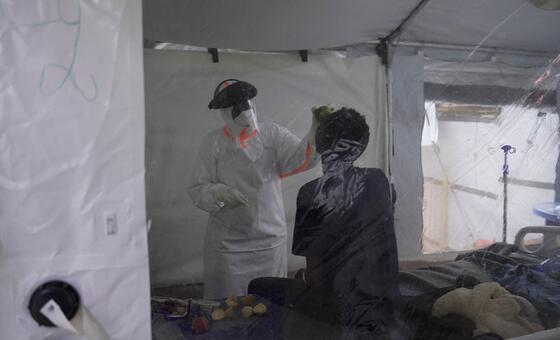
The DRC's Ebola outbreak has surpassed 2,000 deaths, with half occurring in just 20 days. Here's why this strain is spreading so fast and what it means.
The numbers are staggering, and they're getting worse by the day. According to the United Nations, which is citing official figures from the Democratic Republic of the Congo (DRC), the death toll from the Ebola virus—specifically the Bundibugyo strain—has now topped two thousand people. But here's the part that should really grab your attention: half of those deaths were recorded in the last twenty days alone. That's not a slow burn. That's a wildfire.
When we talk about Ebola, it's easy to get lost in the clinical jargon and the distant geography. But behind every one of those numbers is a family that's been torn apart, a community that's scrambling to protect its kids, and a healthcare system that's being pushed to its absolute limit. The DRC has been dealing with outbreaks for decades, but this particular flare-up feels different. It's moving faster, and it's showing no signs of slowing down.
### What Makes This Outbreak Different?
So, why is this one hitting so hard? For starters, the Bundibugyo strain isn't the same as the more famous Zaire strain that dominated headlines back in 2014. It's less well-known, which means there's less existing immunity in the population and less familiarity among local healthcare workers. On top of that, the response effort has been hampered by insecurity in the region. Aid workers are dealing with active conflict zones, which makes it nearly impossible to reach everyone who needs a vaccine or treatment.
There's also the simple math of transmission. Ebola spreads through direct contact with bodily fluids, and in crowded, resource-poor settings, that's a recipe for disaster. When you factor in that many people are hesitant to seek help because they don't trust the responders or because they're afraid of being stigmatized, you start to see why the virus keeps finding new hosts.
### The Human Toll Behind the Statistics
Let's step back for a second and think about what two thousand deaths actually means. That's roughly the population of a small town. Imagine your entire neighborhood—everyone you see at the grocery store, the mail carrier, the kids playing in the street—wiped out in a matter of months. That's the reality for the people living in the affected provinces.
And it's not just the deaths. The survivors often face long-term health issues, including joint pain, vision problems, and severe fatigue. Plus, there's the psychological weight of losing so many loved ones in such a short span. Communities are grieving, and they're doing it while still trying to protect themselves from further infection. It's a relentless cycle.
### Why the Next Few Weeks Are Critical
Here's the thing about outbreaks: they don't follow a straight line. They spike, they plateau, and sometimes they explode. The fact that half of all deaths occurred in the last twenty days suggests we're in the middle of an exponential curve. If that trend continues, the next month could be catastrophic.
Health officials are racing to contain the virus, but they're fighting an uphill battle. Vaccination campaigns are underway, but they require cold storage and trained personnel, both of which are in short supply. Public health messaging is also key, but it's hard to get the word out when roads are blocked and communication networks are spotty.
### What Can We Take Away From This?
I know this all sounds bleak, and honestly, it is. But there are glimmers of hope. The global community has learned a lot since 2014, and the response this time has been faster and more coordinated. Experimental treatments are being deployed, and there's a proven vaccine that works. The problem isn't a lack of tools; it's a lack of access.
If you're reading this from the United States, you might feel like this is a world away. And in some ways, it is. But infectious diseases don't respect borders. A virus that's spreading unchecked in one part of the world is a threat to everyone. That's why it's in our collective interest to pay attention and to support the organizations that are on the ground, even when the headlines fade.
### The Bottom Line
We're at a critical juncture. The next few weeks will determine whether this outbreak becomes a footnote in history or a full-blown catastrophe. The DRC needs more resources, more security, and more international cooperation. And we need to keep talking about it, because silence only helps the virus.
For now, the numbers are what they are: more than two thousand dead, with no end in sight. But numbers can change. With the right response, they can start to plateau and then fall. That's the goal. That's what everyone is fighting for.