Ebola Outbreak in Congo Reaches Displacement Camps, UN Warns
Emily Jones ·
Listen to this article~5 min
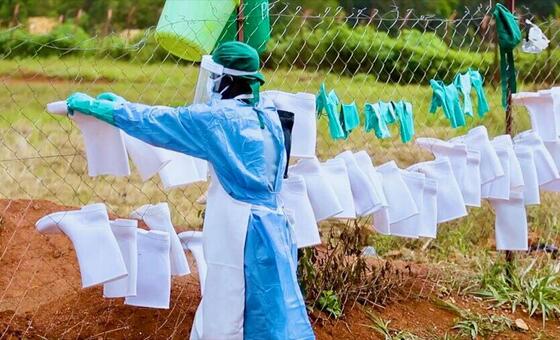
The UN warns that Ebola's Bundibugyo strain has reached displacement camps in the DRC, infecting 19 people and killing five. Here's why the situation is critical and what's being done.
The United Nations refugee agency is sounding the alarm after a fast-moving Ebola outbreak in the Democratic Republic of Congo (DRC) crossed into camps for displaced people. Nineteen internally displaced individuals have now tested positive for the Bundibugyo strain of the virus, and five of them have died, according to the UN High Commissioner for Refugees (UNHCR).
The news hit humanitarian teams like a cold splash of water. For months, aid workers had been watching the outbreak creep through rural communities, hoping it would burn out before reaching the crowded, fragile settlements that house hundreds of thousands of people who fled violence in the eastern part of the country.
That hope is now gone. The camps, already stretched thin on food, clean water, and medical care, are facing a new and terrifying threat. And the clock is ticking.
### Why the Camps Are a Perfect Storm
Displacement camps are not designed to stop a virus. They are designed to keep people alive after they have lost everything. That means tight quarters, shared latrines, communal cooking areas, and limited access to healthcare. In other words, it is a nightmare scenario for containing an outbreak.
When Ebola lands in an environment like this, it does not just spread. It explodes. Here is why:
- **Close contact**: Families live within arm's reach of each other, often in tents or makeshift shelters.
- **Limited sanitation**: Clean water and soap are scarce, making basic hygiene nearly impossible.
- **Weak health infrastructure**: Many camps have only a small clinic, if that, with no isolation wards or protective gear.
- **Fear and mistrust**: Communities that have been through war often distrust outsiders, including health workers, which slows down contact tracing.
Those factors combine to create conditions where a single undetected case can spark a chain reaction. And with 19 confirmed infections already, that chain reaction may be underway.
### The Bundibugyo Strain: What You Should Know
Ebola is not one single virus. It is a family of viruses, and the Bundibugyo strain is one of the lesser-known members. It was first identified in Uganda in 2007 and has caused several smaller outbreaks since then.
The good news? It tends to be less deadly than the Zaire strain, which caused the devastating West Africa epidemic in 2014. The bad news? It still kills a significant percentage of those infected, and it is just as contagious through bodily fluids.
Symptoms include fever, headache, muscle pain, vomiting, and diarrhea. In severe cases, it leads to internal and external bleeding. The incubation period is anywhere from two to 21 days, which means people can be infectious for weeks before they even know they are sick.
That long incubation window is what keeps public health officials up at night. It means that by the time a case is confirmed, the virus may have already been passed to dozens of others.
### What the UN Is Doing Now
Humanitarian agencies are not waiting for the situation to spiral out of control. The UNHCR has activated its emergency response protocols, which means more staff, more supplies, and more coordination with local health authorities.
The immediate priorities are simple but urgent:
- **Isolation units**: Setting up dedicated spaces where suspected cases can be kept away from the general population.
- **Contact tracing**: Finding everyone who may have come into contact with infected individuals, even if they show no symptoms yet.
- **Community education**: Working with local leaders to explain how the virus spreads and how people can protect themselves.
None of this is easy. In a camp where people are already scared and desperate, asking them to follow strict health protocols can feel like an added burden. But without cooperation, the outbreak will only get worse.
### A Race Against Time
What happens next depends on how fast the response can scale up. The DRC has dealt with Ebola outbreaks before, and its health workers are among the most experienced in the world. But they are also overstretched, underfunded, and working in a region where armed groups still control large areas.
Every day of delay means more infections. Every missed contact means another chance for the virus to slip through the cracks. The next few weeks will be critical.
For now, the world watches and waits. But for the thousands of families living in those camps, this is not a distant headline. It is a daily reality. And they are hoping, desperately, that help arrives in time.