Why the Latest Ebola Outbreak in Congo Is Raising Global Alarm
David Williams ·
Listen to this article~5 min
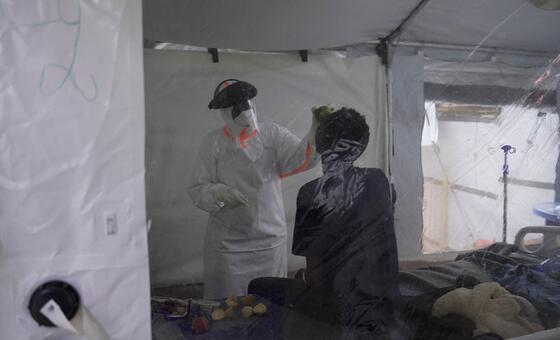
More than 2,000 people have died from the Bundibugyo strain of Ebola in Congo, with half of those deaths in the last 20 days. Here's what's driving the rapid spread and what it means globally.
The numbers are staggering, and they're climbing faster than anyone hoped. More than two thousand people have now died from Ebola in the Democratic Republic of Congo, with half of those deaths occurring in just the last three weeks. That's not a slow burn — that's a wildfire.
Health officials from the United Nations, citing data from Congolese authorities, are sounding the alarm about the virus strain known as Bundibugyo. It's a lesser-known variant of Ebola, but it's proving just as deadly. And the speed of transmission is what's keeping public health experts up at night.
### What Is the Bundibugyo Virus, Anyway?
Most people have heard of Ebola, but few know that there are actually several distinct species of the virus. Bundibugyo is one of them, first identified in Uganda back in 2007. It's less common than the Zaire strain that caused the devastating West Africa outbreak in 2014, but it's no less dangerous.
The virus spreads through direct contact with bodily fluids — blood, saliva, sweat, even contaminated surfaces. In crowded communities where clean water and medical supplies are scarce, that's a recipe for rapid transmission. Health workers on the ground are facing a double battle: fighting the virus itself and fighting misinformation that keeps people away from treatment centers.
### Why the Sudden Spike in Deaths?
The last 20 days have been particularly brutal. Nearly half of all recorded deaths in this outbreak happened in that short window. That suggests the virus is moving through densely populated areas, possibly in or near major towns where people live in close quarters.
There's also the reality of limited healthcare infrastructure. Many patients are arriving at clinics too late, already severely dehydrated and showing advanced symptoms. Others are avoiding hospitals altogether, fearing stigma or mistrusting foreign medical teams. That's a deadly combination.
### The Response on the Ground
The UN and international partners are ramping up efforts. Mobile testing labs are being deployed, and community outreach teams are going door-to-door to explain how the virus spreads and why early treatment matters. Vaccination campaigns are underway, though the Bundibugyo strain requires a different vaccine than the one used in previous outbreaks.
Still, the challenges are immense. Remote villages are hard to reach, especially during the rainy season when roads turn to mud. Security concerns in certain regions also make it difficult for aid workers to operate safely. Every delay in containment means more chances for the virus to jump to new communities.
### What This Means for the Rest of the World
It's easy to think of Ebola as someone else's problem, but outbreaks anywhere are a global concern. Air travel means a single infected person can carry the virus across borders in a matter of hours. That's why international health agencies are treating this as a high-alert situation, not just a regional crisis.
- Neighboring countries are already screening travelers at border crossings
- Airports in major hubs are on heightened alert for symptoms
- Global stockpiles of protective equipment are being reviewed
This isn't about fear-mongering. It's about being prepared. The lessons from past outbreaks are clear: the faster the world responds, the fewer lives are lost.
### The Human Cost Behind the Numbers
Behind every statistic is a family mourning a parent, a child, a neighbor. The two thousand deaths represent thousands of broken households in a country that has already endured so much. Local health workers are exhausted but keep going, often risking their own lives to save others.
"We're not just fighting a virus," one aid worker on the ground said. "We're fighting fear, poverty, and a lack of trust. But we can't give up."
That's the reality of outbreak response — it's as much about building relationships as it is about medicine. Trust is the first vaccine, and without it, nothing else works.
### Looking Ahead
There's no easy answer here. The next few weeks will be critical in determining whether this outbreak can be contained or whether it spirals further out of control. Health officials are cautiously optimistic but realistic about the obstacles ahead.
For now, the focus remains on saving lives, one community at a time. And for the rest of us, it's a stark reminder that infectious diseases don't respect borders. In a connected world, everyone is a neighbor — and everyone's health matters.