Ebola Outbreak in DRC Is Doubling Every 20 Days—Here's What That Means
Carmen López ·
Listen to this article~5 min
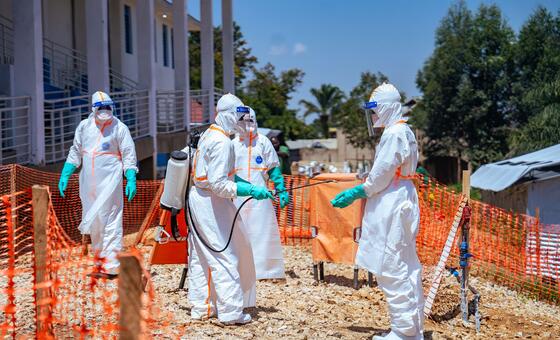
The Ebola outbreak in the DRC is doubling every 20 days, according to the UN. Here's what that means for the region and the world, and what humanitarian workers are doing to stop it.
The numbers are staggering, and they keep getting worse. The Ebola outbreak in the Democratic Republic of Congo is now doubling in scale every 20 days, according to the United Nations. That's not a typo, and it's not an exaggeration. It's a stark reality that humanitarian workers on the ground are grappling with right now.
On Wednesday, Tom Fletcher, the UN's Emergency Relief Coordinator, delivered that sobering update. His message was clear: the response effort is being ramped up, but the virus is moving fast—faster than the resources can keep up with.
### The Current Situation on the Ground
So, what does doubling every 20 days actually look like in practical terms? It means that if there were 100 confirmed cases today, there could be 200 in less than three weeks. Then 400 a month after that. The exponential curve is steep, and it doesn't leave much room for complacency.
Humanitarian teams are working around the clock to contain the spread. That means setting up treatment centers, training local health workers, and running community awareness campaigns. But in a region that's already dealing with conflict and displacement, every step forward comes with its own set of challenges.
The DRC has been here before. This is not the country's first rodeo with Ebola, and the lessons learned from previous outbreaks are being applied. But each new outbreak brings its own quirks, and this one is no different.
### Why This Outbreak Is Different
One of the biggest hurdles is geography. The affected areas are remote, with infrastructure that's seen better days. Roads are rough, and some communities are only reachable by foot or by small aircraft. That makes it incredibly difficult to move supplies, test samples, and medical personnel where they need to be.
There's also the human factor. Mistrust of outsiders runs deep in some communities, especially after years of instability. Health workers aren't just fighting a virus—they're trying to build bridges with people who have every reason to be skeptical.
And then there's the sheer speed of transmission. Ebola is not airborne, but it spreads through direct contact with bodily fluids. In crowded households or during traditional burial practices, that's a recipe for rapid spread.
### What the UN Is Doing About It
Fletcher's announcement wasn't just a warning—it was a call to action. The UN is scaling up its presence, bringing in more staff, more supplies, and more funding. But here's the thing: money only goes so far. What's really needed is a coordinated, community-led effort that meets people where they are.
That means training local leaders to spread accurate information. It means providing safe, dignified burials that respect cultural traditions while minimizing risk. And it means making sure treatment centers are actually accessible to the people who need them.
- Mobile labs are being deployed to speed up diagnosis
- Contact tracing teams are expanding their reach
- Vaccination campaigns are targeting high-risk areas first
### The Bigger Picture
The Ebola outbreak in the DRC is not just a Congolese problem—it's a global one. In a world where a virus can cross borders in a matter of hours, what happens in a remote village in Central Africa can end up affecting someone in New York or Los Angeles. That's why the international community needs to pay attention and step up.
There's also a broader lesson here about pandemic preparedness. The world has been through this cycle before: outbreak, fear, response, and then—too often—forgetting until the next one hits. We can't afford to keep doing that.
### What Comes Next
The next few weeks will be critical. If the doubling rate can be slowed, the outbreak can be brought under control. If not, we could be looking at a crisis that dwarfs anything we've seen in recent years.
For now, the humanitarian workers on the ground are doing what they do best: showing up, day after day, in difficult conditions, to save lives. They deserve our support, our attention, and our respect.
This isn't just a headline—it's a race against time. And the clock is ticking.