Ebola Outbreak in DRC Doubling Every 20 Days—Here's What It Means
Jennifer Smith ·
Listen to this article~5 min
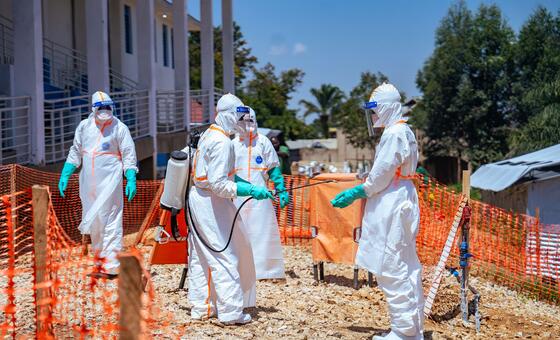
The Ebola outbreak in the DRC is doubling every 20 days, signaling an accelerating crisis. UN humanitarian workers are scaling up their response, but time is critical. Here's what's happening and why it matters globally.
When you hear about an Ebola outbreak, it's easy to feel a wave of distant concern. But the latest numbers coming out of the Democratic Republic of Congo (DRC) should grab your attention a little tighter. The scale of the outbreak is doubling every 20 days, and that's not just a statistic—it's a warning sign that demands a closer look.
United Nations humanitarian workers are ramping up their response on the ground, according to Tom Fletcher, the UN's Emergency Relief Coordinator, who spoke on Wednesday. This isn't a routine update; it's a signal that the situation is escalating faster than many anticipated.
### Why the Doubling Rate Matters
Doubling every 20 days might sound like a math problem, but in epidemiology, it's a red flag. It means the number of cases isn't just growing—it's accelerating. For every case we see today, we can expect roughly twice as many in less than three weeks. That kind of trajectory can quickly overwhelm local health systems, especially in regions that are already stretched thin.
Let's put that in perspective. If there are 100 cases today, that could mean 200 in 20 days, 400 in 40 days, and 800 in just two months. This isn't a linear climb; it's a steep curve that demands immediate, coordinated action.
### What the UN Response Looks Like
The UN's humanitarian arm isn't waiting around. Their strategy focuses on several key areas:
- **Surveillance and contact tracing**: Identifying who's been exposed and tracking their movements to break the chain of transmission.
- **Community engagement**: Working with local leaders to build trust and encourage safe practices, because top-down orders only go so far.
- **Medical supplies and treatment centers**: Ensuring that clinics have the protective gear, beds, and trained staff to handle the influx of patients.
- **Vaccination campaigns**: Deploying the Ebola vaccine to ring-vaccinate contacts and frontline workers, which has proven effective in past outbreaks.
These efforts aren't just about containment; they're about preventing a regional crisis from becoming a global one. In a world that's more connected than ever, a flare-up in one corner can ripple across borders in a matter of days.
### The Human Side of the Numbers
It's easy to get lost in the data, but behind every case count is a person—a parent, a child, a neighbor. The communities affected by this outbreak are facing fear, stigma, and loss. That's why the UN's approach isn't just medical; it's deeply human. They're working to ensure that families can access care without facing discrimination, and that funerals can be held safely and respectfully.
One thing that often gets overlooked is the toll on healthcare workers. These are the people who show up every day, often without adequate rest, to treat the sick and protect the healthy. They deserve more than our applause; they need our support and resources.
### What This Means for the Rest of Us
You might be wondering: why should I care about an outbreak thousands of miles away? Here's the thing—diseases don't respect borders. The global health community has learned that lesson time and again, from SARS to COVID-19. Investing in outbreak response now is far cheaper than dealing with a pandemic later. It's not just charity; it's self-interest wrapped in compassion.
There's also a practical angle. If you're planning travel to the region, it's wise to stay updated on health advisories. But for most of us, the best thing we can do is stay informed and support organizations that are on the front lines.
### The Road Ahead
The next few weeks will be critical. If the doubling rate continues unchecked, the DRC could face a major humanitarian crisis. But there's reason for cautious optimism. We have tools that didn't exist a decade ago—better vaccines, faster diagnostics, and more effective treatments. The question isn't whether we can stop this; it's whether we'll act quickly enough.
The UN's call to action is clear, and the clock is ticking. Every day of delay means more cases, more suffering, and a harder fight ahead. Let's hope the world listens.