Ebola Outbreak in DRC Is Doubling Every 20 Days—Here's What That Means
James Wilson ·
Listen to this article~5 min
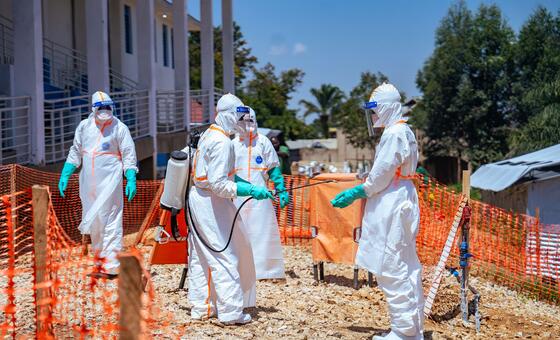
The Ebola outbreak in the DRC is doubling every 20 days, and the UN is ramping up its response. Here's what's happening on the ground and why early action is critical.
When you hear about an outbreak doubling every 20 days, it's easy to feel a knot in your stomach. That's exactly what's happening right now in the Democratic Republic of Congo (DRC), and the United Nations is stepping up its response in a big way.
On Wednesday, Tom Fletcher, the UN's Emergency Relief Coordinator, made it clear that humanitarian workers are ramping up efforts to contain the spread. It's a race against time, and every single day counts.
But here's the thing: numbers like "doubling every 20 days" can feel abstract. What does that actually mean for the people on the ground? And more importantly, what's being done to stop it? Let's break it down.
### The Reality of Exponential Growth
Exponential growth is tricky to wrap your head around. If you have 100 cases today and it doubles every 20 days, you'll have 200 cases in less than three weeks. Then 400. Then 800. It sneaks up on you.
That's why the UN's response isn't just about treating the sick—it's about stopping the chain of transmission before it spirals out of control.
Here's what that looks like in practice:
- **Deploying rapid response teams** to remote villages where the virus often goes undetected
- **Setting up treatment centers** with proper isolation protocols
- **Training local health workers** to recognize symptoms early and safely handle cases
- **Running community awareness campaigns** to combat misinformation and build trust
- **Tracking every single contact** of confirmed patients to break the chain of spread
### Why This Outbreak Is Different
This isn't the first time the DRC has faced Ebola. In fact, the country has dealt with more than a dozen outbreaks since the virus was first discovered there in 1976. But each outbreak brings its own set of challenges.
What makes this one particularly concerning is the geography. The affected regions are remote, with poor road infrastructure and limited access to healthcare. That means the virus can spread silently in communities before anyone even realizes it's there.
There's also the issue of trust. After years of conflict and displacement, some communities are wary of outsiders—including health workers. Building that trust takes time, patience, and a genuine commitment to listening.
### The Human Side of the Response
Behind every statistic is a person. A mother who's scared for her kids. A father who can't afford to miss work. A community that's tired of being told what to do by people who don't look like them.
The UN knows this. That's why the response isn't just about medicine—it's about showing up, being present, and earning the right to be heard.
Fletcher's statement on Wednesday wasn't just a status update. It was a commitment. A promise that the international community isn't going to look away while this crisis unfolds.
### What Can We Learn From This?
If there's one lesson from every Ebola outbreak, it's this: early action saves lives. The moment we get complacent, the virus gets a foothold. The moment we assume it's under control, it doubles back on us.
That's why the 20-day doubling rate is such a critical warning sign. It's not meant to scare us—it's meant to mobilize us.
For the people in the DRC, the next few weeks are going to be tough. But with the right resources, the right training, and the right partnerships, this outbreak can be contained.
It won't be easy. It never is. But it's far from hopeless.
### Staying Informed Without Spiraling
If you're following this story from the U.S., it's easy to feel overwhelmed. News about outbreaks can trigger anxiety, especially when the numbers keep climbing.
Here's a simple way to think about it: focus on what's being done, not just what's going wrong. The UN's response is real, it's coordinated, and it's backed by some of the best public health minds in the world.
That doesn't mean we should look away. It means we should stay informed, stay engaged, and support organizations that are making a difference on the ground.
Because at the end of the day, this isn't just about a virus. It's about people. And people are worth fighting for.