Ebola Outbreak in DRC Is Doubling Every 20 Days—What That Means
Michael Miller ·
Listen to this article~4 min
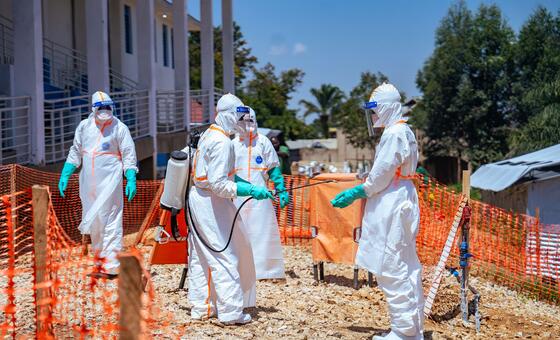
The Ebola outbreak in the DRC is doubling every 20 days, according to the UN's emergency relief chief. Here's why the growth rate matters and what's being done to stop it.
The Ebola outbreak in the Democratic Republic of Congo is growing at a pace that's hard to wrap your head around. According to Tom Fletcher, the UN's Emergency Relief Coordinator, the number of cases is doubling roughly every 20 days. That's not just a statistic—it's a warning sign that the situation is slipping out of control.
Fletcher made the announcement on Wednesday, and his words carried a clear sense of urgency. Humanitarian teams on the ground are ramping up their response, but they're fighting against time, geography, and a virus that doesn't wait for anyone.
### Why the Doubling Rate Matters
When a disease doubles every 20 days, it means the curve is steep. In practical terms, if there are 100 cases today, you can expect around 200 in less than three weeks. That kind of growth puts enormous pressure on medical facilities, supplies, and the people who are risking their lives to contain the spread.
It also means that every day of delay matters. A week of inaction now could translate into thousands of additional cases down the line. The math is brutal, but it's the reality that health workers are facing.
### The Response on the Ground
The UN and its partners are not sitting idle. Fletcher emphasized that humanitarian efforts are being scaled up, but scaling up in a region like eastern DRC comes with its own set of challenges. Remote villages, poor infrastructure, and ongoing conflict in some areas make it incredibly difficult to reach the people who need help the most.
Here's what the response currently looks like:
- Vaccination campaigns targeting high-risk communities
- Mobile treatment units being set up closer to outbreak zones
- Community education efforts to reduce transmission through safe burial practices
- Coordination with local health officials to track and isolate new cases
Despite these efforts, the virus keeps finding new footholds. Each new case is a reminder that the outbreak is far from contained.
### What's Driving the Spread
Ebola spreads through direct contact with bodily fluids, which means it can be stopped with the right precautions. But in crowded, under-resourced areas, those precautions are hard to maintain. People often don't have access to clean water, soap, or protective equipment. And when healthcare facilities are overwhelmed, the risk of transmission inside clinics goes up.
There's also the reality of community mistrust. After years of dealing with outbreaks, some locals are skeptical of outsiders in hazmat suits. Building trust takes time, and time is exactly what the responders don't have.
### The Bigger Picture
This isn't just a Congolese problem. If the outbreak continues to grow, it could spill across borders. Neighboring countries are already on alert, and international health agencies are watching closely. The world has seen what happens when an outbreak is ignored—it becomes a global crisis.
The good news is that we have tools that didn't exist in previous outbreaks. Vaccines, experimental treatments, and better tracking systems are all available. The challenge is deploying them fast enough and far enough.
Fletcher's warning is a call to action. The next few weeks will be critical. If the international community steps up with funding and resources, there's still a chance to turn this around. If not, the doubling rate will keep climbing, and the cost—in lives and in dollars—will only get higher.
For now, the focus remains on the brave health workers who are on the front lines, often at great personal risk. They're the ones who will determine whether this outbreak becomes a footnote or a catastrophe.