The Ebola Outbreak in DRC Is Doubling Faster Than Anyone Expected
Emily Wilson ·
Listen to this article~4 min
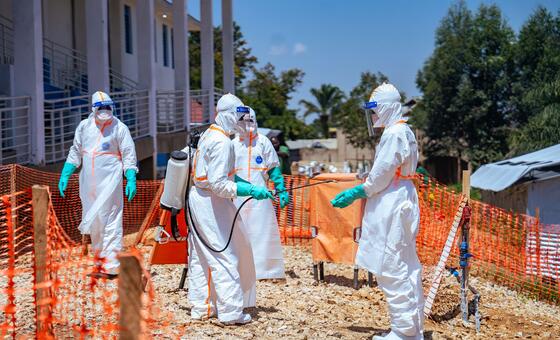
Ebola cases in the DRC are doubling every 20 days, and UN relief teams are racing to contain the spread. Here's what's happening on the ground and why the window to act is closing fast.
The numbers are hard to wrap your head around. In the Democratic Republic of Congo, the Ebola outbreak is doubling in scale every 20 days. That's not a slow creep. That's a wildfire moving through dry brush.
United Nations humanitarian workers are scrambling to keep up, and on Wednesday, Tom Fletcher, the UN's Emergency Relief Coordinator, made it clear that the response is being ramped up significantly. But here's the thing: when a crisis doubles this fast, every single day of delay costs lives.
### Why This Outbreak Is Different
Ebola isn't new. We've seen it before, and we know how to fight it. But this outbreak in the DRC is throwing curveballs that make the standard playbook harder to execute.
For starters, the affected region is a hotspot of instability. Armed conflict and community mistrust have made it dangerous for health workers to reach the people who need help the most. You can't vaccinate people if you can't get to them safely.
- **Insecurity**: Attacks on health facilities have forced teams to pause operations.
- **Mistrust**: Some communities are skeptical of outside help, which slows down contact tracing.
- **Geography**: Dense forests and poor roads turn a 30-mile trip into a two-day ordeal.
### What Doubling Every 20 Days Really Means
Let's put that in perspective. If the outbreak doubles every 20 days, then a small cluster of 100 cases becomes 200 in less than three weeks. In two months, that's 800 cases. In four months, you're looking at over 6,000. That's not just a health crisis anymore. That's a regional catastrophe.
And it's not just about the people who get infected. Every case means dozens of contacts to trace, monitor, and potentially isolate. Every death leaves grieving families and communities that are understandably scared.
The UN's response is about more than just treating the sick. It's about building trust, training local workers, and making sure the supply chain for protective gear and vaccines doesn't break. Fletcher's announcement on Wednesday signals that the international community is finally treating this with the urgency it demands.
### The Human Cost Behind the Numbers
It's easy to get lost in statistics, but behind every number is a person. A mother who can't hold her sick child. A father who has to bury his brother alone because of the risk of infection. A nurse who puts on a hazmat suit in 95-degree heat, knowing that one mistake could be fatal.
These are the people the UN is trying to reach. And they're not just fighting a virus. They're fighting fear, misinformation, and the legacy of past crises that left communities wary of outsiders.
> "We cannot afford to look away. This is not a problem that will solve itself."
That's the message from humanitarian workers on the ground, and it's one that should resonate far beyond the borders of the DRC. In a world where a virus can cross oceans in hours, an unchecked outbreak anywhere is a threat everywhere.
### What Needs to Happen Next
The UN's push is a good start, but it's not enough. Here's what experts say is critical in the coming weeks:
- **More funding**: The response is underfunded, and every dollar counts when you're racing against a doubling curve.
- **Local leadership**: Community health workers who speak the language and understand the culture are the most effective bridge.
- **Sustained political pressure**: The international community needs to keep the spotlight on this crisis, even when other headlines compete for attention.
This isn't a problem that's going to disappear on its own. It's going to take coordination, resources, and a willingness to stay engaged for the long haul. The clock is ticking, and every 20 days, the stakes get higher.