Ebola Outbreak Reaches Displacement Camps in Congo: What Comes Next
David Williams ·
Listen to this article~5 min
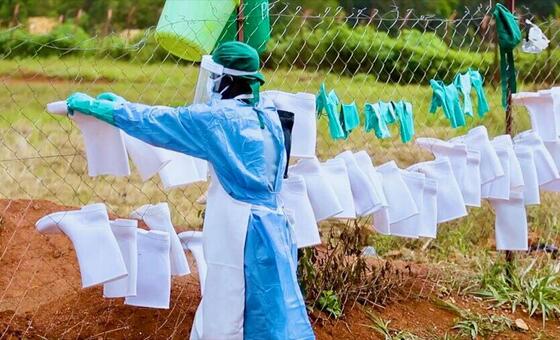
UN agencies are on high alert as the fast-moving Bundibugyo Ebola strain reaches displacement camps in the DRC, infecting 19 displaced people and killing five.
The news cycle has been heavy lately, and the latest reports out of the Democratic Republic of the Congo (DRC) are no exception. United Nations humanitarian agencies are on high alert as the fast-moving Bundibugyo strain of Ebola has now spread to camps for internally displaced people. According to the UN Refugee Agency (UNHCR), 19 displaced individuals have been infected, and tragically, five of them have died.
This isn't just another headline. It's a stark reminder that disease doesn't respect borders, especially within a country already grappling with instability and displacement. When you're living in a crowded camp with limited access to clean water and healthcare, a virus like Ebola can move like wildfire. Let's break down what we know, why this matters, and what the coming weeks might hold.
### The Current Situation on the Ground
The confirmation that Ebola has reached these camps is a major concern for aid workers. The camps, which house thousands of people who have fled violence, are notoriously difficult environments for containing infectious diseases. The UNHCR's report of 19 cases and five deaths among the displaced population signals that the virus is not just present but actively spreading.
Here's what makes this particularly challenging:
- **High population density:** Camps are often overcrowded, making social distancing nearly impossible.
- **Limited infrastructure:** Many camps lack adequate sanitation, clean water, and medical facilities.
- **Mobile populations:** People move in and out of camps for various reasons, which can inadvertently carry the virus to new areas.
### Why the Bundibugyo Strain Is Different
You might have heard of Ebola in the past, but the Bundibugyo strain has its own characteristics. It's generally considered less lethal than the Zaire strain, which caused the devastating West Africa outbreak in 2014-2016. However, it's still a serious threat, with a fatality rate that can range anywhere from 25% to 50% depending on the quality of care available.
The key difference here is the speed of spread. Reports indicate that this strain is moving quickly, which puts a premium on rapid response. Every day of delay in identifying new cases and tracing contacts gives the virus more room to operate.
### The Human Toll Behind the Numbers
It's easy to get lost in statistics, but behind those 19 cases are real people—mothers, fathers, children—who have already survived unimaginable hardship only to face this new threat. They've been displaced from their homes due to conflict, and now they're fighting for their lives in a crowded camp.
"We are deeply concerned about the potential for further spread within these vulnerable communities," a UNHCR spokesperson said in a statement. "Our priority is to ensure that those affected receive immediate medical attention and that we can contain the outbreak before it escalates further."
### The Global Response and What's Being Done
Humanitarian agencies are not sitting idle. They're mobilizing resources, setting up isolation units, and deploying medical teams to the affected areas. Vaccination campaigns are also being considered, though the logistics of reaching remote camps can be daunting.
However, there's a critical gap between what's needed and what's available. Funding remains a constant challenge, and the DRC's health system is already stretched thin by other ongoing crises, including measles outbreaks and a persistent cholera problem.
### What This Means for the Region and Beyond
The spread of Ebola to displacement camps is a worrying development, but it's not entirely unexpected. Conflict and displacement create the perfect storm for disease outbreaks. The international community needs to step up, not just with words of concern, but with concrete financial and logistical support.
For those of us watching from afar, this is a reminder that global health is a shared responsibility. A virus doesn't need a passport to cross borders, and an outbreak anywhere is a threat everywhere. The coming weeks will be critical in determining whether this can be contained or if it will spiral into a larger regional crisis.
In the meantime, the best thing we can do is stay informed, support reputable humanitarian organizations working on the ground, and hope that the swift action being taken will be enough to protect the most vulnerable among us.