Ebola Outbreak Reaches Displacement Camps in Congo: What We Know
Emily Jones ·
Listen to this article~6 min
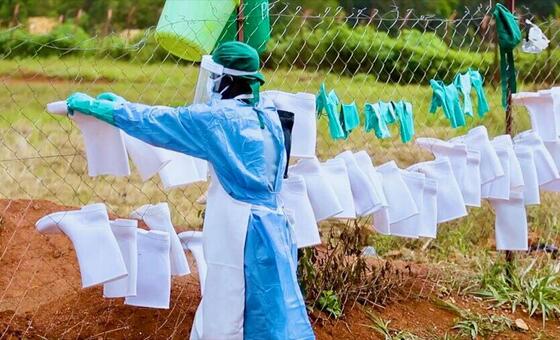
Ebola's Bundibugyo strain has reached displacement camps in the DRC, infecting 19 people and killing 5. Here's what humanitarian agencies are doing to stop the spread.
The humanitarian world is holding its breath right now. Reports out of the Democratic Republic of Congo (DRC) confirm that the deadly Ebola virus has now reached some of the most vulnerable people on the planet: internally displaced persons (IDPs) living in crowded camps. The United Nations refugee agency, UNHCR, has confirmed that 19 displaced individuals have tested positive for the Bundibugyo strain of Ebola, and tragically, five of them have already died.
This isn't just another headline about a distant outbreak. This is a wake-up call about how quickly disease can spread when people are packed into temporary shelters with limited access to clean water, sanitation, and healthcare. When Ebola lands in a displacement camp, it's not just a health crisis anymore—it becomes a race against time to stop a chain reaction that could spiral out of control.
### Why This Strain Is Different
You've probably heard of Ebola before, mostly the Zaire strain that caused the massive West Africa outbreak in 2014. But the Bundibugyo strain is a different beast, and it deserves your attention for a few reasons.
- It's less well-known, which means fewer existing protocols and less public awareness
- It has a lower mortality rate than Zaire, but it's still deadly—roughly 25 to 50 percent of cases end in death
- It spreads the same way: through direct contact with bodily fluids of infected people or contaminated surfaces
The fact that this strain is now circulating in camps is deeply concerning. In these settings, people share water sources, sleeping quarters, and even latrines. Social distancing is a luxury that simply doesn't exist here. Every handshake, every shared cup, every crowded prayer service becomes a potential transmission point.
### The Reality Inside the Camps
Let me paint you a picture of what these camps look like. Imagine rows upon rows of tarpaulin shelters, each housing a family that fled violence or disaster. There's no running water in most areas, so people queue for hours at tanker trucks. There's no electricity, so nighttime is dark and dangerous. And healthcare? It's a small tent staffed by overworked medics who have to make impossible triage decisions every single day.
Now add Ebola to that equation. The symptoms start like a common flu—fever, headache, muscle pain—so people don't realize they're infected until it's too late. By the time they seek help, they may have already exposed dozens of others. That's why UNHCR is on high alert. They're not just worried about treating the sick; they're worried about containing a wildfire before it consumes the entire region.
### What Humanitarian Agencies Are Doing
On the ground, the response is already shifting into high gear. Here's what that looks like in practical terms:
- Setting up isolation units within or near the camps to separate suspected cases
- Training local community health workers to spot early symptoms and report them immediately
- Distributing hygiene kits with soap, chlorine tablets, and water storage containers
- Launching public awareness campaigns in local languages to counter myths and misinformation
The big challenge here is trust. After decades of conflict and exploitation, many displaced people are deeply skeptical of outsiders in uniforms, even if those outsiders are aid workers. If people don't trust the medical teams, they won't report symptoms, they won't accept vaccines, and they won't follow quarantine guidelines. Building that trust takes time—time that Ebola doesn't give you.
### Why You Should Care
You might be sitting in the United States, thousands of miles away, wondering if this really affects you. Here's the honest answer: it does, more than you might think. Outbreaks don't respect borders. A single infected traveler can board a plane in Kinshasa and be in New York within 24 hours. The global health community learned that lesson the hard way in 2014, and we can't afford to forget it.
Beyond the immediate threat, there's a moral dimension here. These 19 people didn't choose to be in a camp. They were forced there by violence and instability that they had no hand in creating. They are the collateral damage of a crisis that the world has largely ignored for years. Now they're paying the price with their lives, and we have a choice: we can look away, or we can demand that our governments and international organizations step up their response.
### The Road Ahead
The next few weeks will be critical. If the outbreak can be contained within the camps, the death toll might stay relatively low. If it spills out into the surrounding communities, we could be looking at a much larger catastrophe. The World Health Organization has already deployed additional teams, and neighboring countries are on alert, but resources are stretched thin.
For now, all we can do is watch, wait, and hope that the response is fast enough. But hope isn't a strategy. What we need is sustained international funding, better surveillance systems, and a genuine commitment to reaching the people who need help the most. The people in those camps deserve nothing less, and frankly, neither do we.
If you want to stay informed on this developing story, I'll be updating this post as new information comes in. In the meantime, take a moment to appreciate the simple things—clean water, a safe home, access to a doctor—because for 19 people in the DRC, those basics just became a matter of life and death.