Ebola Outbreak Reaches Displacement Camps in DR Congo
Amanda Moore ·
Listen to this article~5 min
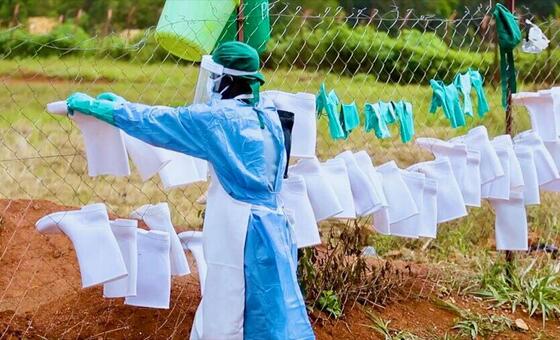
UN agencies are on high alert as Ebola's Bundibugyo strain hits displaced persons camps in the DRC, infecting 19 people and killing five. Here's what's happening and why it matters.
The Democratic Republic of Congo (DRC) is facing a worrying new chapter in its ongoing battle against Ebola. United Nations humanitarian agencies have been placed on high alert after reports confirmed that 19 internally displaced people contracted the Bundibugyo strain of the virus, with five of them tragically losing their lives. The UN Refugee Agency (UNHCR) broke the news, and it's sending ripples of concern through the international community.
This isn't just another headline about a distant outbreak. It's a story about people who have already lost everything, now facing a threat they can't outrun. The camps were supposed to be safe havens, but now they're becoming ground zero for a new wave of infections.
### Why This Matters More Than You Think
The situation in the DRC is delicate, to say the least. Displacement camps are crowded by nature. Families live in close quarters, sharing water sources, food, and everything else. That's a recipe for rapid viral spread. When you add the Bundibugyo strain—which is less common than the Zaire strain but just as deadly—you've got a public health nightmare on your hands.
Here's what we know so far:
- 19 confirmed cases among internally displaced persons (IDPs)
- 5 deaths reported, putting the mortality rate at roughly 26 percent
- The outbreak has crossed from rural areas into camp settings
- UNHCR and partner agencies are now scrambling to contain the spread
### The Human Toll Behind the Numbers
Behind those statistics are real people. Mothers who fled violence with nothing but their children. Fathers who walked hundreds of miles to find safety. Kids who've never known a stable home. Now they're facing an invisible enemy that doesn't care about their suffering.
The five deaths are more than just numbers on a spreadsheet. They represent families shattered again, communities grieving once more, and a system that's being pushed to its absolute limit.
### What UNHCR Is Doing Right Now
UNHCR isn't waiting around. They've activated emergency protocols and are working with local health authorities to set up isolation units within the camps. The agency is also ramping up community awareness campaigns, because in a place like this, information is just as critical as medicine.
"We're in a race against time," one field officer noted. "Every hour counts when you're dealing with a virus this aggressive." The goal is simple: identify cases early, isolate them quickly, and trace every single contact before the virus gets another foothold.
### The Bigger Picture: A Region Under Siege
The DRC has been dealing with Ebola outbreaks for decades. But this one feels different. The country is already grappling with armed conflicts, political instability, and one of the largest displacement crises in Africa. Now, on top of all that, they're fighting a virus that doesn't respect borders or boundaries.
What makes this especially challenging is the mobility factor. Displaced people move. They travel between camps, visit relatives, trade at markets. Each movement is a potential bridge for the virus to cross. That's why containment efforts need to be aggressive, coordinated, and immediate.
### What Can Be Done
There's no easy fix here, but there are steps that can make a real difference:
- **Vaccination drives:** The Ebola vaccine has proven effective, though supply remains limited
- **Enhanced surveillance:** Tracking every case and contact is non-negotiable
- **Community engagement:** Local leaders need to be part of the solution, not just recipients of aid
- **Cross-border coordination:** Neighboring countries like Uganda and Rwanda need to be on alert
### Looking Ahead
The coming weeks will be critical. If the outbreak stays contained within those camps, there's a fighting chance. But if it spills out into the wider community, we could be looking at a much larger crisis.
For now, the world watches and waits. The UN has called for increased funding and support, but the reality is that the people on the ground are the ones doing the heavy lifting. They're the ones who deserve our attention, our resources, and our respect.
This is a story that's still unfolding. And while the headlines may fade, the impact on these families will last a lifetime. Stay informed, stay engaged, and remember that behind every outbreak statistic is a human being who just wants to survive.