Ebola Outbreak Reaches Displacement Camps in DR Congo: What It Means
David Davis ·
Listen to this article~6 min
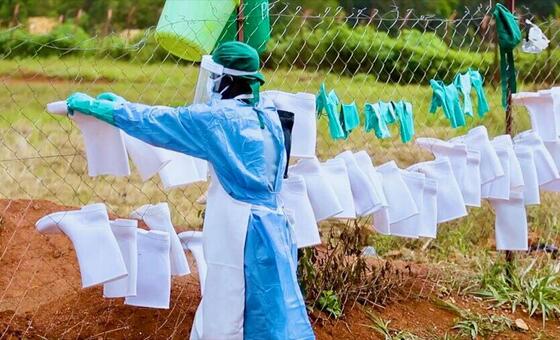
Ebola has reached displacement camps in the DR Congo, infecting 19 people and killing 5. UNHCR is on high alert as the Bundibugyo strain spreads rapidly.
The Democratic Republic of the Congo is facing a serious new chapter in its ongoing battle with Ebola. The virus, specifically the Bundibugyo strain, has now spread to camps housing internally displaced people, and the United Nations is on high alert.
The UN Refugee Agency, known as UNHCR, reported that 19 displaced individuals have been infected, and five of them have died. That's a grim reminder of how quickly this disease can move through crowded, vulnerable communities. When you're living in a temporary camp with limited access to clean water, sanitation, and healthcare, the odds are stacked against you from the start.
### Why This Strain Is Different
You might have heard about Ebola before, but the Bundibugyo strain is a bit of a different beast. It's less common than the Zaire strain that caused the massive 2014-2016 West Africa outbreak, but it's still deadly. The symptoms are similar: fever, severe headache, muscle pain, vomiting, and in some cases, internal and external bleeding.
The tricky part is that Bundibugyo can be harder to diagnose quickly because it's rarer. That means health workers might not immediately recognize what they're dealing with, giving the virus a head start. And when it moves into a displacement camp, that head start can turn into a full-blown crisis.
### The Reality Inside the Camps
Life in a displacement camp is already incredibly difficult. People are there because they've fled violence or disaster, often leaving everything behind. Now, imagine adding a highly contagious virus to that mix. Social distancing? Nearly impossible when families are sharing small tents. Handwashing? A luxury when water is scarce.
The camps in eastern DR Congo, particularly in North Kivu province, are home to hundreds of thousands of people. They're overcrowded, under-resourced, and now they're becoming a hotspot for Ebola transmission. The UNHCR is working with local health authorities to set up isolation units, train staff, and spread awareness, but they're racing against the clock.
### What's Being Done Right Now
Humanitarian agencies are pulling out all the stops. Here's a quick look at the key actions in motion:
- **Rapid response teams** are being deployed to the affected camps to identify new cases early and trace their contacts.
- **Vaccination campaigns** are underway, targeting both health workers and the camp populations. The vaccine used is the same one that proved effective against the Zaire strain, and early data suggests it offers some cross-protection.
- **Community engagement** is a huge focus. Health workers are going tent-to-tent to explain how Ebola spreads and what people can do to protect themselves. Trust is a big issue here, and it takes time to build.
- **Safe burial teams** are being organized to handle the deceased properly, reducing the risk of transmission during funeral rituals.
It's a massive logistical challenge. The terrain is rough, roads are poor, and security is a constant concern due to ongoing armed conflict in the region. But the teams on the ground are determined.
### Why This Matters Beyond the Region
You might be thinking, "Why should I care about an outbreak thousands of miles away?" The honest answer is that diseases don't respect borders. An outbreak in a displacement camp in the DRC is a global health security issue. If the virus isn't contained there, it could spread to neighboring countries, and from there, well, anyone with a plane ticket.
International airports are just a short flight away from the affected areas. That's why the WHO and other agencies are treating this with the same urgency as a potential pandemic threat. They've learned from past mistakes, and they're not waiting for the situation to spiral out of control.
### The Human Toll
Behind the statistics are real people. A mother who lost her child to a fever she couldn't explain. A father who watched his wife deteriorate in an isolation ward. These are the stories that don't make the headlines but should. The UNHCR report mentions 19 cases and five deaths, but every number represents a family torn apart.
There's also the stigma issue. People who survive Ebola often face discrimination when they return to their communities. They're treated as pariahs, even though they're no longer contagious. That fear can drive people to hide their symptoms, which only makes the outbreak worse.
### A Call for Global Support
Humanitarian funding is stretched thin, and the UNHCR is appealing for more resources. They need money for medical supplies, staff salaries, and logistics. They need support for education campaigns and mental health services. And they need it now, not after the outbreak has already peaked.
If you're in a position to donate or advocate, this is a critical moment. Organizations like Doctors Without Borders, the Red Cross, and the UNHCR are all on the ground and can put your contribution to immediate use.
### Looking Ahead
It's easy to feel overwhelmed by the scale of this crisis, but there's also reason for hope. We've seen in the past that Ebola can be contained when the response is fast, coordinated, and community-driven. The tools exist. The knowledge exists. What's needed now is political will and financial backing.
The next few weeks will be crucial. If the response teams can get ahead of the transmission chains, they can stop this outbreak in its tracks. If not, we could be looking at a much larger humanitarian disaster. Either way, the world is watching, and the stakes couldn't be higher.