Ebola Outbreak Reaches Displacement Camps in Congo: What Happens Next?
William Smith ·
Listen to this article~5 min
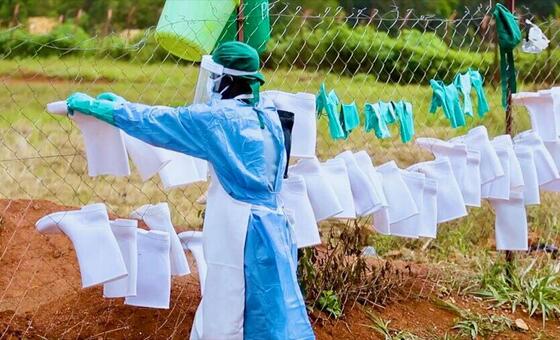
Ebola has reached displacement camps in the DRC, with 19 cases and 5 deaths confirmed. UN agencies are racing to contain the outbreak before it spirals out of control.
The Democratic Republic of Congo is facing a fresh health emergency, and this time it's hitting the most vulnerable people. United Nations humanitarian agencies are on high alert after reports confirmed that 19 internally displaced persons have contracted the Bundibugyo strain of Ebola. Five of those infected have already died, according to the UN Refugee Agency (UNHCR).
This isn't just another headline about a distant outbreak. It's a story about how a fast-moving virus can tear through communities that are already struggling to survive. When you're living in a crowded camp with limited access to clean water or medical care, a disease like Ebola doesn't just spread—it explodes.
### The Situation on the Ground
The camps in question are home to thousands of people who fled violence and instability in other parts of the country. Now, they're facing a new threat that's even harder to escape. The Bundibugyo strain is one of the lesser-known types of Ebola, but it's still deadly, with a fatality rate that can reach 50 percent or higher in some outbreaks.
Health workers are scrambling to contain the spread, but they're up against serious challenges. Here's what they're dealing with:
- Limited testing supplies and lab capacity in remote areas
- Community mistrust of medical teams, which has hampered past responses
- Overcrowded shelters where social distancing is simply not possible
- A lack of basic protective gear for frontline staff
These aren't small hurdles. They're the kind of obstacles that can turn a manageable outbreak into a full-blown catastrophe if not addressed quickly.
### Why This Outbreak Feels Different
If you've followed Ebola news over the years, you know the drill: an outbreak starts, agencies respond, and eventually, it gets contained. But this time feels different. The fact that the virus has reached displacement camps changes the game entirely.
Think about it this way: a camp is like a pressure cooker. People live shoulder to shoulder, share water points, and rely on communal latrines. One infected person can expose dozens within days. And when residents are constantly moving in and out—looking for work or family members—the virus can hitch a ride to new locations before anyone even realizes it's there.
UNHCR is working with local health authorities and other partners to set up isolation units and trace contacts. But they're also asking a tough question: how do you contain a virus when you can't even guarantee that people will stay put?
### The Human Cost Behind the Numbers
It's easy to get lost in the statistics—19 cases, 5 deaths—but behind each number is a real person. A mother who just lost her husband. A child who's now an orphan. A community that's terrified of the next fever or headache, wondering if it's just malaria or something far worse.
One of the biggest challenges in these outbreaks is convincing people to seek help early. In past Ebola responses, some families hid sick relatives because they feared being stigmatized or taken to treatment centers they didn't trust. That's a deadly mistake with a virus this contagious.
Health teams are now going door to door, not just to screen for symptoms but to build trust. They're using local translators, working with community leaders, and explaining in plain terms why early treatment matters. It's slow, painstaking work, but it's the only way to stop the chain of transmission.
### What Could Happen Next
The next few weeks will be critical. If health workers can identify new cases quickly and isolate them, there's a real chance this outbreak can be contained. But if the virus keeps spreading through the camps, we could be looking at a much larger crisis.
Here's what experts are watching for:
- Whether new cases emerge outside the camps
- If the current stock of vaccines (for the related Zaire strain) proves effective against Bundibugyo
- Whether neighboring countries tighten border controls
- How quickly international funding arrives to support the response
So far, the World Health Organization hasn't declared this a public health emergency of international concern, but that could change at any moment. For now, the focus is on containment and saving lives.
### A Call for Global Attention
This outbreak may not dominate the news cycle, but it deserves our attention. The people in these camps didn't choose to be there. They fled violence, only to face a new enemy that's invisible and relentless.
If you're reading this and wondering what you can do, the simplest answer is to stay informed and support reputable humanitarian organizations working on the ground. They need funding, supplies, and most importantly, they need the world to not look away.
Because the truth is, a virus anywhere is a threat everywhere. And the sooner we treat outbreaks like this with the urgency they deserve, the safer we all become.