Ebola Outbreak Reaches Displacement Camps in DRC — Here's What It Means
Jessica Brown ·
Listen to this article~5 min
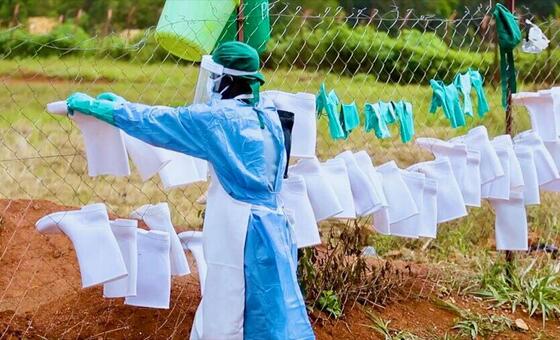
UN agencies are on high alert after Ebola (Bundibugyo strain) hit displacement camps in DRC, infecting 19 displaced people and killing 5. Here's what this means for global health.
The Democratic Republic of Congo is facing a worrying new chapter in its ongoing fight against Ebola. United Nations humanitarian agencies are on high alert after reports confirmed that the rapidly spreading Bundibugyo strain of the virus has infected 19 internally displaced people living in camps, with five deaths already recorded. The UN Refugee Agency (UNHCR) broke the news, and it's raising serious questions about how we contain a deadly disease in some of the most vulnerable communities on Earth.
### What We Know Right Now
Here's the situation broken down simply: the Ebola virus, specifically the Bundibugyo strain, has jumped into displacement camps. These are temporary settlements where people who've fled violence or disaster are living in close quarters. That's a recipe for rapid transmission, and it's exactly what health officials feared.
The numbers might seem small — 19 cases and 5 deaths — but in a camp setting, those figures can explode overnight. The Bundibugyo strain is less deadly than the more famous Zaire strain, but it's still a serious threat, especially for people who are already malnourished, stressed, and far from proper medical care.
### Why Displacement Camps Are a Perfect Storm
Think about what a displacement camp is like. You've got hundreds or thousands of people packed together, sharing water sources, latrines, and cooking areas. There's limited access to soap, clean water, and medical supplies. Now add Ebola to that mix, and you've got a public health nightmare.
Here's why this situation is so dangerous:
- **Close contact**: Families live within feet of each other, making person-to-person transmission almost unavoidable
- **Limited healthcare**: Most camps lack isolation units, protective gear, or trained medical staff
- **Mobility**: People move in and out of camps for food, water, or to check on their homes, which can spread the virus to surrounding communities
- **Mistrust**: Some displaced communities are wary of outsiders in uniforms, which can slow down contact tracing and vaccination efforts
### The Human Toll Behind the Numbers
It's easy to get lost in statistics, but let's remember what these numbers actually mean. Nineteen people are fighting for their lives right now, and five families are grieving. These are people who already lost their homes, their livelihoods, and often their loved ones to conflict. Now they're facing a virus that spreads through the very hugs and care that make us human.
The UNHCR is working alongside local health authorities to set up isolation units and train community health workers. But they're operating in a region that's been battered by decades of instability, and resources are stretched thin. Every day counts when you're racing against a virus that can double its case count in just a couple of weeks.
### What Happens Next?
Health officials are focusing on three key priorities right now. First, they're tracing everyone who came into contact with the infected individuals, which is a massive undertaking in a crowded camp. Second, they're ramping up community education to explain how Ebola spreads and how to protect yourself. Third, they're preparing vaccination campaigns — the rVSV-ZEBOV vaccine is effective against the Zaire strain, but there's less data on how well it works against Bundibugyo.
The next few weeks will be critical. If the outbreak stays contained to these 19 cases, it'll be a testament to the hard work of local health workers. If it spreads further, we could be looking at a much larger crisis that stretches well beyond the camps.
### Why This Matters to You
You might be sitting thousands of miles away, but here's the thing: diseases don't respect borders. We saw with COVID-19 how quickly a local outbreak can become a global pandemic. Ebola is harder to spread than the flu, but air travel means any outbreak is just a plane ride away from anywhere in the world.
What's happening in the DRC is a reminder that global health security starts with protecting the most vulnerable people. When we invest in healthcare for displacement camps, we're not just being charitable — we're building a firewall against the next global health emergency.
For now, the focus is on containing this outbreak and saving lives. The humanitarian workers on the ground deserve our support and our attention. This story isn't over, and the coming weeks will tell us a lot about whether we've learned the lessons from past Ebola outbreaks.
Stay informed, and remember that behind every statistic is a person who deserves dignity, care, and a fighting chance. That's what this is really all about.