Ebola's Spread to Refugee Camps Raises Alarm in Congo
Jeroen de Vries ·
Listen to this article~4 min
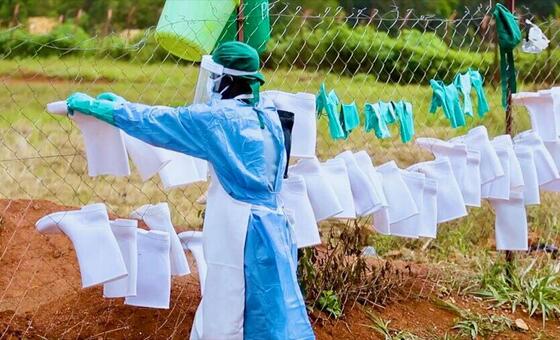
UN agencies are on high alert as Ebola spreads to displacement camps in the DRC, with 19 displaced people infected and 5 deaths confirmed.
The Democratic Republic of the Congo is facing a new and worrying chapter in its ongoing battle with Ebola. Reports from the United Nations refugee agency (UNHCR) confirm that the virus, specifically the Bundibugyo strain, has now reached camps for internally displaced persons (IDPs). This is a significant development that has put humanitarian agencies on high alert.
According to UNHCR, 19 displaced individuals have been infected, and sadly, five of them have died. These are people who have already fled violence and instability, only to face a new and invisible threat in the places they sought refuge. The situation is fluid, and the numbers could change as more testing is done.
### Why This Spread Matters
This isn't just another headline about Ebola. The movement of the virus into these camps changes the nature of the response. Think about it: a camp is a densely populated area with limited access to clean water, proper sanitation, and healthcare. It's a perfect storm for a virus like Ebola to spread quickly.
Here's what makes this particular situation so concerning:
- **High population density:** People are living in close quarters, which makes social distancing nearly impossible.
- **Limited resources:** Camps often lack the medical infrastructure needed to isolate and treat patients effectively.
- **Mobile population:** People move in and out of camps for various reasons, making contact tracing a logistical nightmare.
### The Bundibugyo Strain
The strain identified is Bundibugyo. It's not the same as the more well-known Zaire strain that caused the devastating 2014-2016 outbreak in West Africa. While it's generally considered less lethal, it's still a serious threat, and its behavior in a camp setting is largely unknown.
Humanitarian workers are now racing against time. The focus is on containment. This means setting up isolation units, ramping up community education about symptoms, and ensuring safe burial practices are followed. It's a brutal, unglamorous grind, but it's the only way to stop the chain of transmission.
### The Human Toll Behind the Numbers
It's easy to get lost in the statistics, but let's pause for a second. Nineteen people infected. Five families who have lost a loved one. These are people who have already endured unimaginable hardship. They left their homes to escape conflict, and now they're facing a health crisis in a place that was supposed to be a safe haven.
One of the biggest challenges is trust. In many affected regions, there is a deep-seated suspicion of health workers, often fueled by misinformation and past experiences. Convincing people to come forward with symptoms, or to accept vaccination, is a delicate task that requires building genuine relationships with community leaders.
### The Road Ahead
This outbreak is a stark reminder that disease knows no borders. It doesn't care about conflict zones or political boundaries. The international community's response in the coming weeks will be critical. It's not just about sending medical supplies; it's about supporting the local health systems and community networks that are on the front lines.
For now, the priority is clear: contain the virus within the camps and prevent it from spreading further into the wider community. The UN and its partners are mobilizing resources, but they need sustained support and attention from the rest of the world. This is a crisis that could easily spiral out of control if we look away.