Ebola's Spread to Displacement Camps Raises Alarm in Congo
Sarah Atkinson ·
Listen to this article~6 min
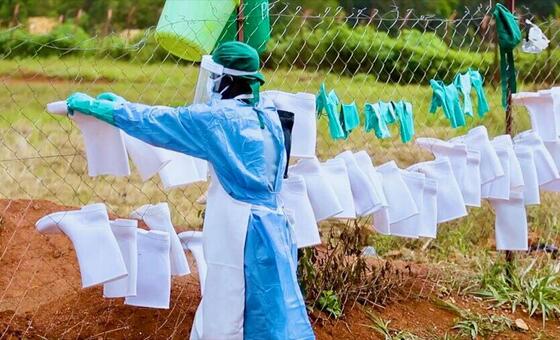
Ebola's Bundibugyo strain hits displacement camps in the DRC, infecting 19 and killing 5. UN agencies are on high alert as the outbreak threatens vulnerable populations.
The news out of the Democratic Republic of the Congo (DRC) is sobering, and it's the kind of story that deserves our full attention. Reports from the United Nations refugee agency (UNHCR) confirm that the rapidly spreading Bundibugyo strain of Ebola has now reached vulnerable populations living in displacement camps. At least 19 internally displaced people have been infected, and tragically, five of them have already died. This isn't just a statistic; it's a stark reminder of how fragile life becomes when people are forced from their homes and left without adequate protection.
When a deadly virus like Ebola finds its way into a camp, the consequences can be catastrophic. These camps are often overcrowded, with limited access to clean water, sanitation, and healthcare. That's a perfect storm for any infectious disease, but especially for one as lethal as Ebola. The UN humanitarian agencies are now on high alert, and for good reason. The situation demands a rapid, coordinated response to prevent what could become a much larger outbreak.
### What Is the Bundibugyo Strain?
You might be more familiar with the Zaire strain of Ebola, which has caused the largest outbreaks in history. But the Bundibugyo strain is a different animal, so to speak. It was first identified in Uganda back in 2007 and has a slightly lower mortality rate than the Zaire strain, but it's still incredibly dangerous. The symptoms are similar: sudden fever, intense weakness, muscle pain, headaches, and a sore throat. This is followed by vomiting, diarrhea, rashes, and in severe cases, internal and external bleeding.
The challenge with Bundibugyo is that it can be harder to detect early on because its symptoms mimic other common illnesses like malaria or typhoid fever. That delay in diagnosis gives the virus more time to spread silently through a community. In a crowded camp setting, that's a terrifying prospect.
### Why Displacement Camps Are a Ticking Time Bomb
Think about the logistics of a displacement camp for a moment. You have thousands of people living in close quarters, often in makeshift shelters. There's limited running water, so handwashing—the most basic defense against Ebola—becomes a luxury. Healthcare facilities are stretched thin, and there's a shortage of trained medical staff and protective equipment.
Now, layer on top of that the fact that many of these people have fled violence and are dealing with trauma and distrust of authorities. That makes contact tracing and community engagement incredibly difficult. People might hide symptoms out of fear of being quarantined or stigmatized. This is exactly the kind of environment where Ebola thrives.
### What the UN and Aid Groups Are Doing
UNHCR and its partners are not sitting idle. They're ramping up surveillance, setting up isolation units, and deploying rapid response teams to the affected areas. They're also working on community outreach, trying to build trust and educate people about the signs of Ebola and the importance of seeking care early.
- **Surveillance:** Active case finding and contact tracing are being intensified to identify new infections quickly.
- **Isolation and Treatment:** Dedicated Ebola treatment centers are being established to isolate patients and provide supportive care, which can significantly improve survival chances.
- **Safe Burial Practices:** Teams are working with communities to ensure that burials are conducted safely and respectfully, as traditional burial rites have been a major source of transmission in past outbreaks.
- **Water and Sanitation:** Efforts are underway to improve access to clean water and hygiene supplies, including soap and chlorine solutions.
### The Bigger Picture
The DRC is no stranger to Ebola. This is the country's 14th recorded outbreak since the virus was discovered in 1976. However, the combination of a new strain, ongoing conflict in the region, and a massive displaced population makes this situation particularly complex. The world has learned a lot about fighting Ebola over the past decade, especially during the devastating 2014-2016 West Africa epidemic. Vaccines and treatments exist now, but they are not always easy to deploy in the middle of a crisis zone.
There's also the risk of the virus crossing borders. The DRC shares borders with several other countries, and displaced populations don't recognize political boundaries. This is a regional threat, not just a national one. It requires a coordinated international response.
### What We Should Take Away From This
This isn't just a story about a virus; it's a story about the consequences of conflict and displacement. It's about how the most vulnerable people on the planet are often the ones who bear the brunt of these public health emergencies. We can't prevent every outbreak, but we can invest in stronger health systems, better conflict resolution, and more robust support for refugees and internally displaced persons.
For now, the focus is on containment and saving lives. The next few weeks will be critical in determining whether this outbreak can be controlled or if it will spiral into something much worse. The international community needs to step up with funding, resources, and political will. Because when Ebola spreads in a camp, it's not just a health crisis—it's a test of our collective humanity.