The Final Act: Global Leaders Gather for UN Assembly Amid Transition
Sarah Miller ·
Listen to this article~5 min
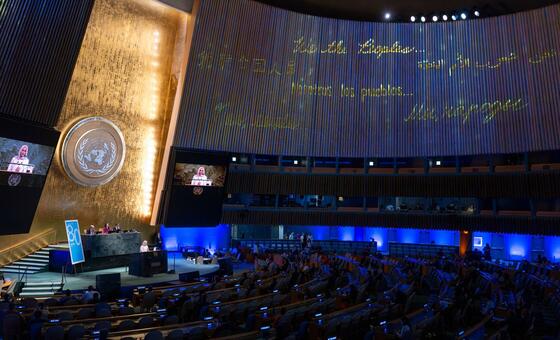
Over 170 world leaders, including 71 heads of state, converge in New York for the 81st UN General Assembly. With Brazil's President Lula opening debates and US President Trump speaking, the session also marks Secretary-General Guterres's final assembly before his term ends.
You can feel the weight of history settling over New York City this week. It's that time of year again, when the world's attention turns to a stretch of Manhattan along the East River. The flags are up, the motorcades are rolling, and the global conversation is about to begin in earnest. The 81st session of the United Nations General Assembly is officially underway, and this year carries a particularly poignant significance.
It's more than just a diplomatic meeting. It's a massive convergence of power, perspective, and policy. Think about it—leaders from nearly every corner of the planet, all under one roof. The agenda is always packed, but the unscripted moments, the hallway conversations, and the subtle shifts in tone often reveal more than the prepared speeches.
### A Staggering Assembly of Global Power
Let's talk about the sheer scale of this gathering. We're not just looking at a few ambassadors and ministers. The participant list reads like a who's who of international leadership:
- 71 heads of state
- 45 heads of government
- 50 ministers
- 11 vice-presidents
- One crown prince
That's over 170 of the world's most powerful individuals, all converging on a few city blocks. The logistics alone are a monumental feat, requiring coordination between multiple security agencies and city officials. For New Yorkers, it means a week of adjusted commutes and a tangible buzz in the air—a reminder that their city truly is a global capital.
### The Opening Day Tradition and Key Voices
The first day sets the tone, and it follows a long-standing tradition. Kicking off the general debate will be President Luiz Inácio Lula da Silva of Brazil. There's a symbolic weight to this—Brazil has often been seen as a bridge between developed and developing nations, and its opening remarks will likely touch on themes of global inequality and climate justice, issues that resonate deeply across the Global South.
Following President Lula, the podium will see one of the most anticipated speeches. President Donald Trump of the United States will address the assembly. Given the current geopolitical climate and America's pivotal role on the world stage, his remarks will be dissected line by line in capitals from Brussels to Beijing. What tone will he strike? Will it be one of collaboration or confrontation? The world will be listening closely.
As one seasoned diplomat once told me, "The first speeches are like the opening moves in a chess game. They don't determine the outcome, but they define the board."
### A Chapter Closes for the UN's Top Diplomat
Perhaps the most emotionally charged element of this session is that it marks the end of an era. This will be the final General Assembly for Secretary-General António Guterres, whose term concludes on December 31st. He's led the organization through some of its most challenging years—a global pandemic, escalating conflicts, and a relentless climate crisis. His tenure has been defined by a steady, often quiet, diplomacy, pushing for action even when consensus seemed out of reach.
His final address to the member states will undoubtedly be a reflective one. He'll likely assess the state of the world he's leaving to his successor, highlighting both the progress made and the daunting work that remains. It's a moment of transition that underscores a fundamental truth about international institutions: they are only as strong as the collective will of their members.
### What This Means Beyond the Headlines
So why does this matter to anyone outside the diplomatic bubble? Because the discussions that happen here, the alliances that are tested, and the resolutions that are passed (or blocked) have real-world consequences. They influence everything from international trade agreements and environmental accords to humanitarian aid and peacekeeping missions.
The debates can seem abstract, but they trickle down. They affect supply chains, market stability, and global security. For professionals in fields like international business, logistics, or non-profit work, understanding the undercurrents of this assembly is crucial. It provides context for the decisions that will shape the operating environment for the next year and beyond.
This session, with its changing of the guard at the very top, feels like a turning point. It's a moment to take stock. The world is watching to see not just what is said from the famous green marble podium, but what happens in the conversations that occur after the cameras click off. The future of multilateral cooperation, in many ways, is being written this week in New York.