From Pakistan to Afghanistan: A First Journey to a Homeland Known Only Through Stories
James Johnson ·
Listen to this article~5 min
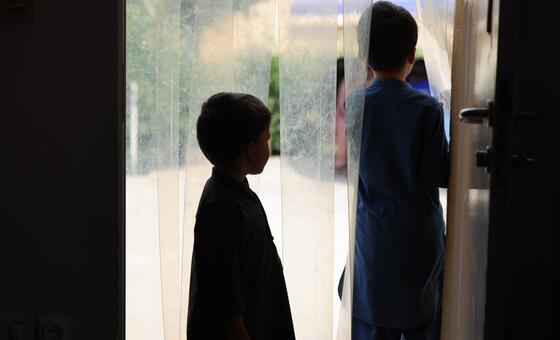
Thirty-five-year-old Shahnaz, a mother of seven, grew up in Pakistan hearing stories of Afghanistan. This year, she finally traveled to her ancestral homeland for the first time. Her journey spans three generations shaped by forced displacement.
Thirty-five-year-old Shahnaz, a mother of seven, always thought of Afghanistan as her homeland. But her knowledge of it came entirely from the stories her parents told. She was born and grew up in Pakistan, the daughter of Afghan refugees who fled their country forty years ago. This year, she finally set foot on the land of her ancestors for the very first time. Her story spans three generations, each shaped by the harsh reality of forced displacement.
### The Weight of a Dream
For Shahnaz, Afghanistan wasn't just a place on a map. It was a collection of vivid images painted by her parents—the scent of fresh bread from village ovens, the sound of laughter echoing in mountain valleys, and the deep resilience of a people who never stopped hoping. But those were just stories, not memories. Growing up in Pakistan, she felt the pull of a country she had never seen, a country that felt both impossibly close and painfully distant.
Her parents rarely spoke of the journey that brought them to Pakistan. When they did, it was in hushed tones, as if the past were a wound too tender to touch. They described the chaos of leaving everything behind, the long days of walking, and the uncertainty of what lay ahead. For Shahnaz, these fragments were the only connection she had to a place she was told was home.
### A Journey of Three Generations
Shahnaz's story is not just her own. It's the story of her grandparents, who made the agonizing decision to leave their homeland in search of safety. It's the story of her parents, who built a new life in Pakistan while holding onto the hope of return. And now, it's the story of her children, who are growing up with a different understanding of identity and belonging.
- **The First Generation**: Shahnaz's grandparents fled Afghanistan during the Soviet war. They arrived in Pakistan with little more than the clothes on their backs, carrying the weight of their culture and traditions.
- **The Second Generation**: Her parents were raised in refugee camps and later in urban centers. They learned to navigate life in Pakistan while preserving their Afghan heritage.
- **The Third Generation**: Shahnaz and her siblings were born in Pakistan. They grew up speaking Pashto at home and Urdu in school, straddling two worlds that often felt at odds.
### Stepping Into the Unknown
This year, Shahnaz finally crossed the border into Afghanistan. It was a moment she had dreamed of for decades, but nothing could have prepared her for the reality. The landscape was both familiar and foreign—the rugged mountains, the dusty roads, the faces of people who looked like her but spoke with different accents. She visited the village her parents had described, a place that existed only in their memories. The houses were different now, but the soil felt the same beneath her feet.
"I felt like I was home, but also like a stranger," she says. "Everything I knew about this place came from stories. Now I have my own stories to tell."
### The Complexity of Return
For many refugees, returning to a homeland is not a simple homecoming. It's a complex emotional journey filled with joy, grief, and a sense of dislocation. Shahnaz's experience reflects a broader reality for millions of displaced people around the world. According to the United Nations High Commissioner for Refugees (UNHCR), there are over 35 million refugees globally, many of whom have never seen the countries their families call home.
The act of returning can be healing, but it also raises difficult questions. What does it mean to belong to a place you've never known? How do you reconcile the stories you've been told with the reality you find? For Shahnaz, these questions don't have easy answers. But she is grateful for the chance to create her own connection to her heritage.
### A New Chapter
Shahnaz's journey is far from over. She plans to return to Afghanistan regularly, bringing her children so they can experience the land of their ancestors firsthand. She wants them to understand that their identity is not just a collection of stories—it's a living, breathing part of who they are.
"My parents gave me the gift of their memories," she says. "Now I want to give my children the gift of their own experiences."
Her story is a powerful reminder that home is not just a place. It's a feeling, a memory, and a hope for the future. And sometimes, the most important journeys are the ones that bring us back to where we started.