Gaza's Farmland Is Disappearing: What Three Percent Really Means
Klaus Richter ·
Listen to this article~4 min
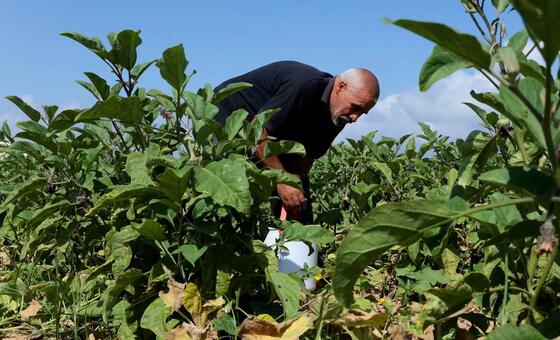
Only 3% of Gaza's farmland remains usable amid ongoing conflict. Here's what that means for food security, local farmers, and the region's future.
When you think about Gaza, images of crowded cities and ongoing conflict probably come to mind. But there's another story unfolding there that doesn't get nearly enough attention: the slow, heartbreaking disappearance of farmland that once fed hundreds of thousands of people.
Recent assessments paint a grim picture. Only about three percent of Gaza's arable land remains usable for farming. That's not just a statistic—it's a crisis that touches every single meal, every family, and every child who depends on local food production.
### The Numbers Behind the Headlines
Let's put this in perspective. Gaza isn't a huge territory. It's roughly 141 square miles total, about twice the size of Washington, D.C. Of that, maybe a quarter was traditionally considered arable—land where farmers could grow tomatoes, cucumbers, olives, citrus, and wheat.
Now imagine losing 97 percent of that. We're talking about thousands of acres of farmland that have become either too dangerous to access or completely destroyed by shelling, bulldozing, and the physical remnants of war.
A farmer who once tended a two-acre plot near the border now finds that same ground riddled with craters, littered with unexploded ordnance, or simply cut off by military zones. You can't exactly plant a crop when you're not sure if the ground beneath your feet is safe.
### Why This Matters Beyond the Fields
Here's the thing about farming: it's not just about growing food. It's about livelihoods, community stability, and a sense of normalcy. When farmers can't work, the ripple effects spread fast.
- Food prices skyrocket because imports become the only option
- Families lose their primary source of income
- Young people leave the land, breaking generational traditions
- The entire local economy takes a hit, not just the agricultural sector
And let's be honest—importing food into a conflict zone isn't exactly reliable. Checkpoints, restrictions, and security concerns mean that even when aid trucks arrive, they can't fully replace what local farms used to provide.
### The Human Cost of Losing Farmland
I've spoken with people who've lived through this kind of displacement, and one thing stands out: the emotional weight of watching your family's land become unusable. For many Gazan farmers, that land wasn't just dirt—it was inheritance, identity, and proof of resilience passed down through generations.
One farmer described it simply: "My grandfather planted those olive trees. My father watered them. I was supposed to do the same for my sons. Now I can't even walk to see if they're still standing."
That's the kind of loss that doesn't show up in official reports but matters just as much as the acreage numbers.
### What Could Change the Trajectory
It's easy to feel hopeless when the numbers are this stark, but there are glimmers of possibility. Humanitarian organizations are exploring ways to support urban farming—growing food on rooftops, in greenhouses, and in protected pockets of land that remain accessible.
There's also talk of soil rehabilitation programs that could help bring damaged land back to life once the fighting stops. But here's the honest truth: none of that happens without a ceasefire and a real commitment to reconstruction.
Until then, the three percent figure isn't just a number. It's a daily reality for families who wake up wondering where their next meal will come from—and whether the land that once provided for them will ever be safe to work again.
### A Call for Awareness
If you're reading this from somewhere safe, it's easy to feel disconnected from the situation. But awareness matters. The more people understand what's happening on the ground, the harder it becomes to look away.
Gaza's farmers aren't asking for sympathy. They're asking for the chance to do what they've always done: work the land, feed their communities, and keep a fragile food system alive against all odds.
That three percent represents more than just surviving soil. It represents hope—and right now, hope is the scarcest resource of all.